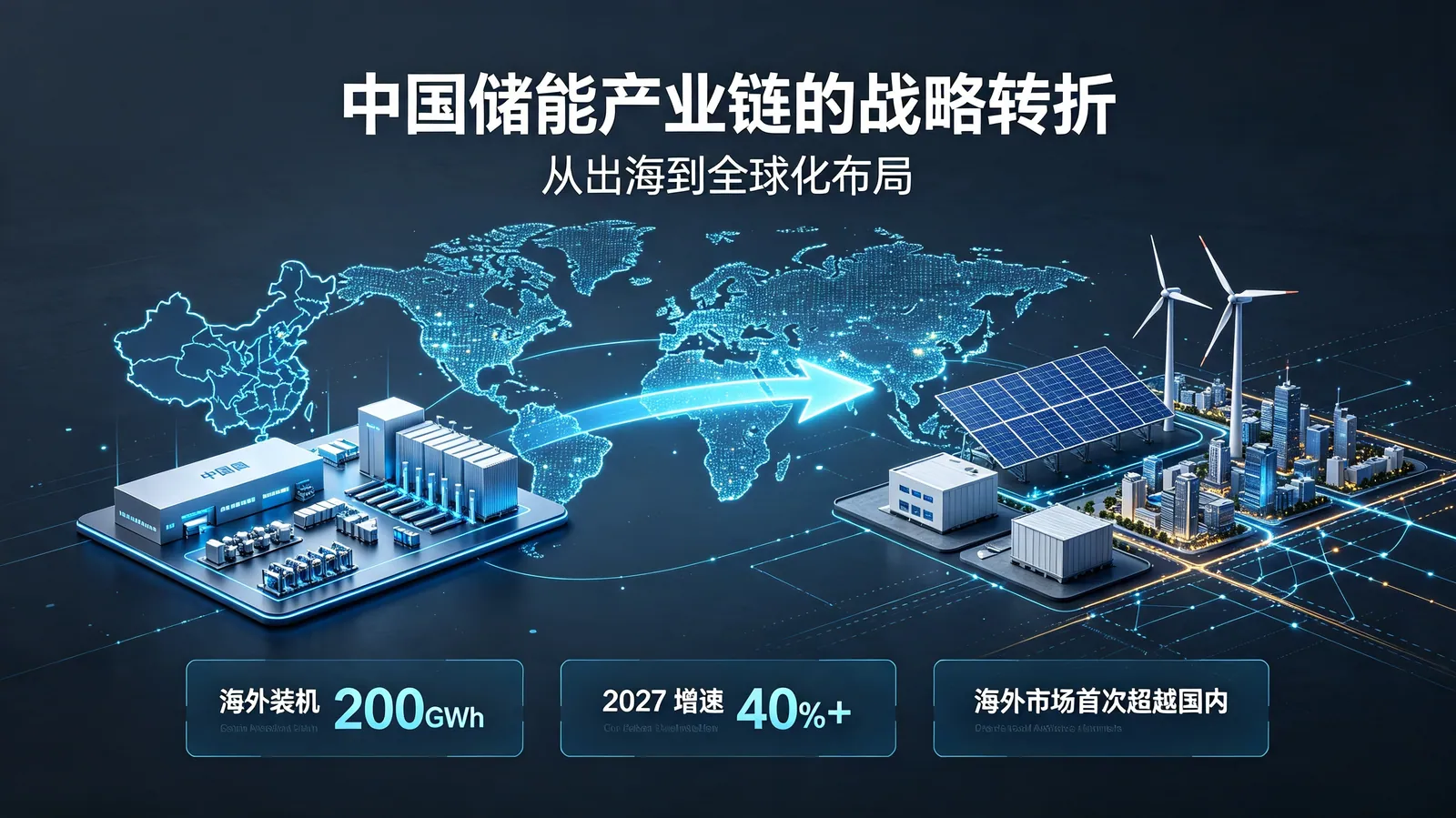
In 2026 the global energy storage industry is undergoing a geographic shift: overseas markets (excluding China) have for the first time overtaken China as the main engine of storage cell shipments and installation growth. Overseas installations are expected to approach 200 GWh this year and to grow by more than 40% again in 2027. This is no longer simply going abroad but a strategic turning point at which overseas markets become essential for China's storage industry.
1. Why have overseas markets suddenly boomed?
Three forces are accelerating overseas storage at the same time:
· Energy security concerns: with the aftermath of the Russia-Ukraine conflict, Europe's desire for energy independence has turned into hard demand for storage;
· Grid indigestion: rapidly rising wind and solar shares and frequent negative prices are creating gaps in frequency regulation and peak shaving that require large-scale storage;
· AI's appetite for power: storage for data centres has moved from nice-to-have to essential, with AIDC-related storage demand in North America growing more than 60% a year.
Most importantly, wider electricity price arbitrage has moved storage from policy dependence to market drive, the business model works.
2. Three main markets: who is leading and who is booming?
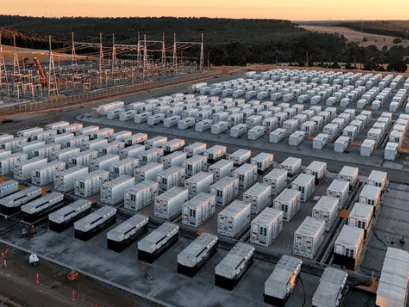
North America: high margins but the heaviest policy constraints
· Installations of 60-70 GWh expected in 2026, rising to 75-80 GWh in 2027.
· Storage paired with wind and solar remains the base, but data centres contribute growing increments, and in some states storage for new data centres already exceeds 40% of installed capacity.
· A sweet problem: IRA investment tax credits are generous, but FEOC (foreign entity of concern) compliance reviews and tariffs keep adding up, so Chinese companies earn more but work harder in this market.
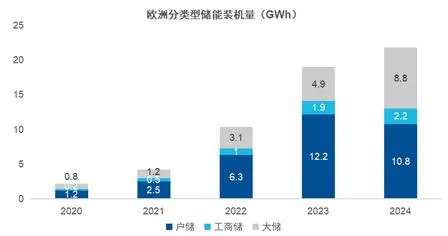
Europe: large-scale storage ramps up, residential diverges
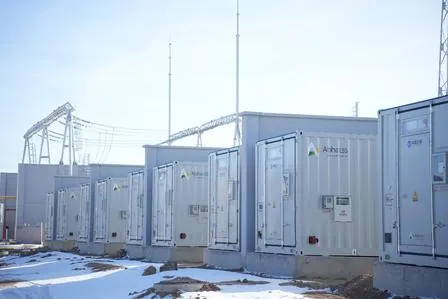
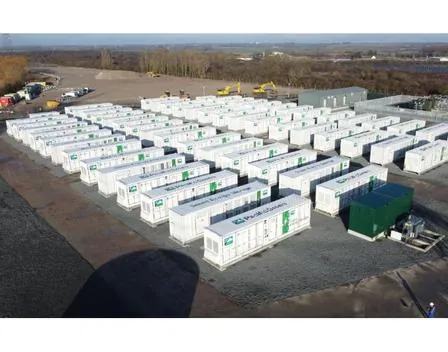
· Utility-scale storage is expected at 40-50 GWh in 2026, rising to 60 GWh in 2027, led by Germany, Italy and the UK, with capacity markets and ancillary services maturing and negative-price arbitrage now routine.
· Residential storage is mixed: growth in Germany has slowed as subsidies fall and household power prices ease, but balcony micro-storage (around 5 kWh) has suddenly taken off in the Netherlands and Austria. Australia's residential market is a standout, driven by high solar penetration, high power prices and federal subsidies (CHBP), with system sizes moving quickly to 20-30 kWh.
Middle East: mega-projects and a proving ground for long-duration storage
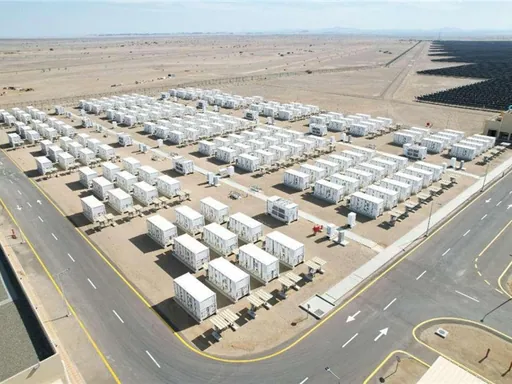
· Under 20 GWh in 2026, rising sharply to 30 GWh in 2027.
· Saudi and UAE solar-plus-storage projects often exceed 10 GWh, with durations of 4-10 hours and demanding high-temperature requirements, the best stage for leading Chinese companies to show extreme manufacturing capability.
Other emerging markets
Australia remains steady (12-15 GWh), while Southeast Asia, Latin America and Africa, with weak grids and power shortages, are steadily growing C&I and residential storage from a small base at impressive rates.
3. C&I storage: an underestimated hidden champion
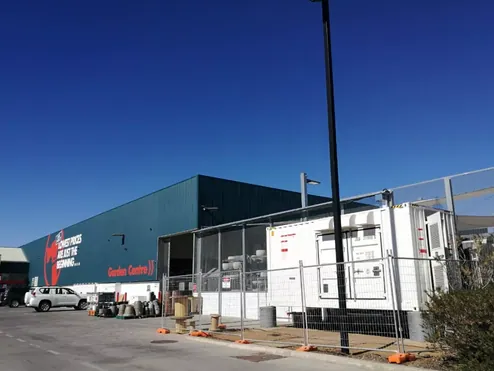
Compared with utility-scale and residential storage, commercial and industrial (C&I) storage is quietly heating up overseas. Factories, shopping centres and industrial parks in Europe, Australia and Southeast Asia use storage for peak shaving and self-consumption, plus ancillary service revenue, with very strong economics. With high C&I power prices in Europe, payback periods have fallen to 4-5 years, making storage standard for many small and medium businesses.
4. Chinese companies dominate, but competition has escalated
Chinese manufacturers hold the top shares in global storage cells and system integration, with names such as CATL, Sungrow and HiTHIUM appearing in major overseas orders. But there are many challenges:
· Localization pressure: Europe is considering origin requirements and the US strictly reviews Chinese content;
· A new dimension of competition: the industry has moved beyond price to lifecycle cost, brand reputation, local installer networks and after-sales service.
Leading companies are locking in customers with integrated solar-storage-charging solutions, while second-tier players differentiate with features such as low-temperature performance or ultra-long cycle life. Those who move first on local service will hold their share.
5. Prices and profitability: divergence
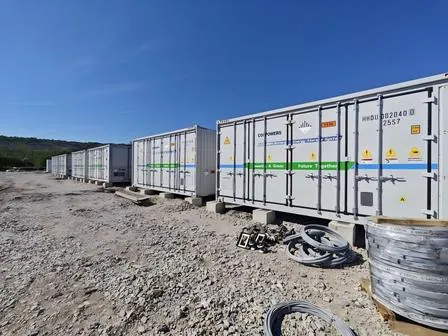
· Clear price bands: in Europe, DC-side FOB prices are about USD 90/kWh and systems USD 100-110/kWh; US systems about USD 100/kWh; price-sensitive emerging markets such as the Middle East and Latin America only USD 70-80/kWh for systems.
· Profit trends: utility-scale margins should gradually recover with lower cell prices and scale, while residential and C&I storage, with strong demand and smooth cost pass-through, maintain higher gross margins and are cash cows for many companies.
6. Outlook for 2027: certain growth, uncertain variables
High growth in overseas storage is highly certain, the energy transition is irreversible, grid needs are expanding and AI's power demand never stops. But variables cannot be ignored: policy swings after the US election, European protection of local manufacturing and escalating trade barriers could change the rules at any time.
For Chinese companies, going abroad is no longer just exporting products but localizing capacity, service, brand and standards. Those who adapt fastest to this glocal rhythm will become true world-class players in the 200 GWh+ wave.