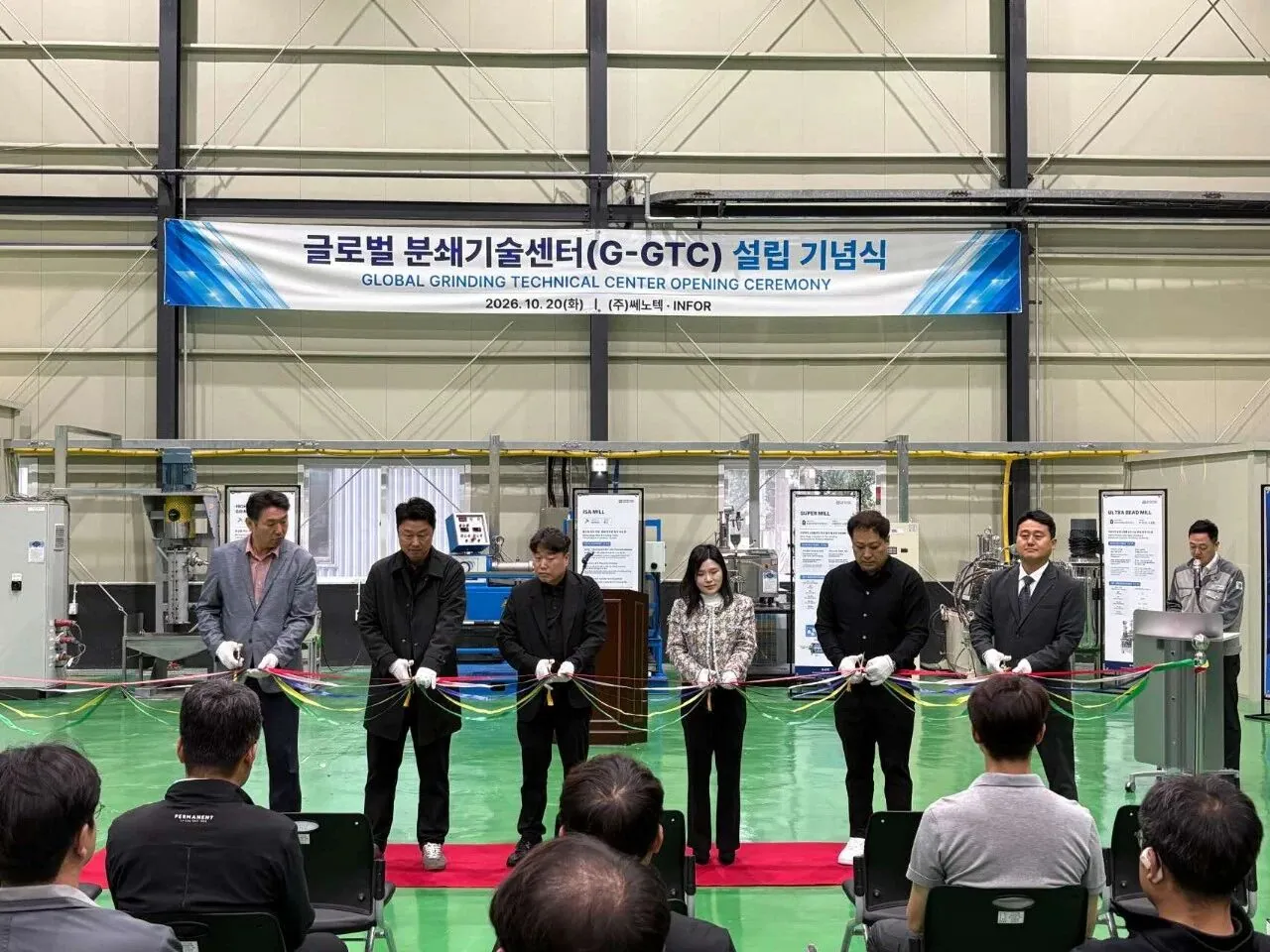
On October 20, the inauguration ceremony of the CENOTEC & INFOR Global Grinding Technology Center (G-GTC) was successfully held.
On one side is a leading Korean maker of high-end ceramic grinding media; on the other is a process-driven Chinese bead mill (sand mill) manufacturer taking its equipment global. When CENOTEC's zirconia beads meet INFOR's bead mills, it is not simply about "putting accessories together", it is about turning "equipment + media + process" into a single technical axis.
This day was more than a ribbon-cutting. It marks the point where the two companies moved their cooperation from a "buyer-seller relationship" to a "joint R&D relationship" across new-energy materials, nano grinding, battery cathodes and solid-state electrolytes.
1. From meeting at trade shows to being in sync on process
The connection between INFOR and CENOTEC began with repeated encounters at industry exhibitions and project sites.
At that time, INFOR was continuously iterating its vertical bead mills and nano-dispersion equipment, treating "how to grind materials finer, more uniformly and more stably" as its core question. South Korea's CENOTEC, meanwhile, has focused since 1999 on ceramic grinding media such as zirconia and zirconium silicate. It is listed on KOSDAQ and recognized by high-end customers worldwide as a "bead expert".
What truly moved the two from "knowing" to "trusting" each other was one shared customer pain point:
What customers buy is neither a machine nor a bag of zirconia beads, but a workable grinding-process result, particle size distribution, specific surface area, slurry consistency, equipment wear and media consumption all have to be accounted for.
However powerful the machine, mismatched beads cannot deliver stable data; however good the beads, if the equipment's flow field and separation system fall short, the media's performance cannot be realized.
So the "equipment maker" and the "media maker" began to sit at the same table.
2. From supplying together to a long-term partnership as each other's customer and supplier
If the relationship between the two companies were filmed as a short movie, it would not open with a "strategic cooperation" but with a plain industrial scene:
"You make zirconia beads, I make grinding equipment, and the customer calls both of us in to commission."
In the early days, CENOTEC's ceramic grinding media (zirconia beads, zirconia-alumina composite beads, etc.) had a solid reputation in Korea and overseas; INFOR's vertical and horizontal bead mills were also running on more and more new-energy materials lines.
Customers often asked:
"Which CENOTEC beads go with an INFOR bead mill? What filling ratio? Will 0.1 mm media clog? How do we control the temperature rise of high-solid-content slurry?"
So it started with matching products, then moved to mutual validation: CENOTEC used INFOR equipment to test its media's wear rate, breakage rate and contamination; INFOR used CENOTEC beads to validate its separation system, particle size distribution and continuous-run stability. Later the two became each other's customer and supplier: in projects, INFOR recommends CENOTEC media to customers, and CENOTEC gives priority to recommending INFOR bead mill solutions to material makers.
From product matching to "you help define my process boundaries, I help scale up your equipment capability", the roles of the two parties began to flow into one another, and trust sank from the commercial level to the technical level.
3. Turning trial and error into co-creation: what problem does the Global Grinding Technology Center (G-GTC) solve?
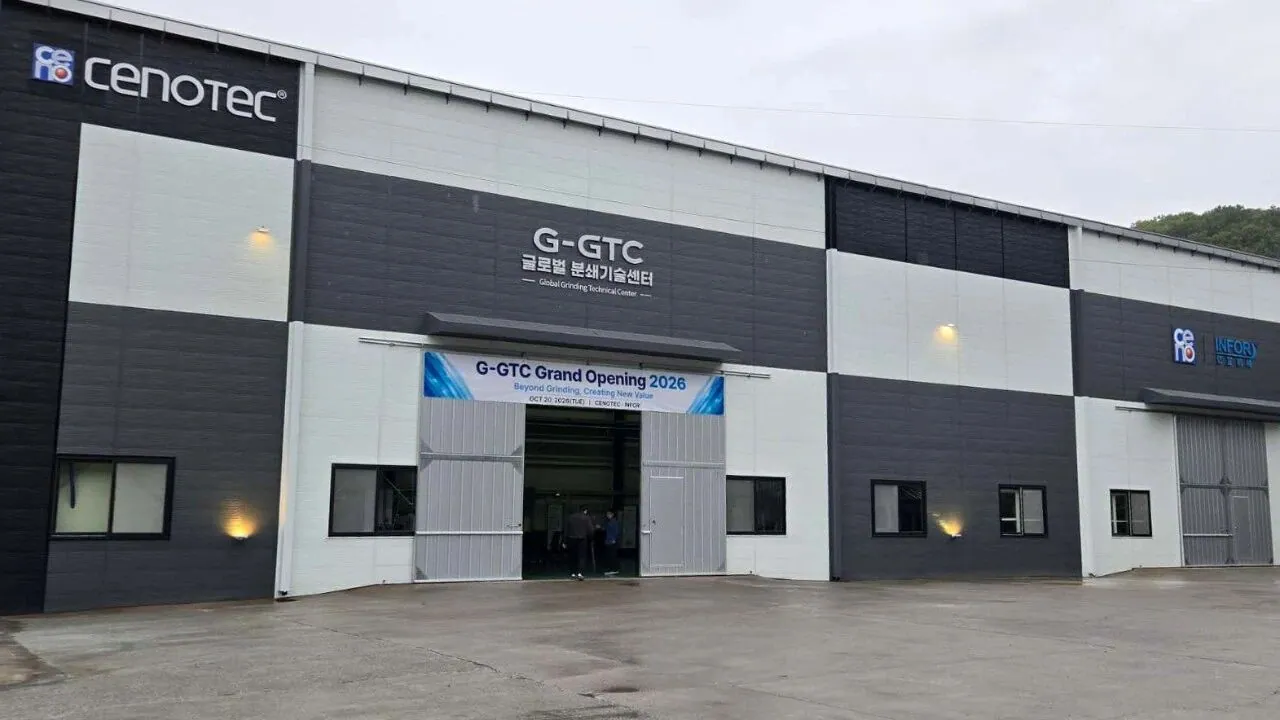
The CENOTEC & INFOR Global Grinding Technology Center (G-GTC), established on October 20, essentially turns the "tacit experience" once scattered across customers' production lines into capabilities that are reusable, verifiable and deliverable.
The center focuses on three things:
1. Real-material testing
Not a demo with water and calcium carbonate, but runs with the customer's own cathode slurry, anode slurry, solid-electrolyte precursors and electronic-ceramic slurry. Different materials call for different bead sizes, speeds, temperature curves and numbers of cycles.
2. Process parameter optimization
Through multiple rounds of comparative experiments, the "machine - beads - material - viscosity - temperature - particle size distribution" relationships are built into a parameter matrix. The output is not an "equipment manual" but a process card telling you how your material should be ground.
3. Joint validation of equipment and media
INFOR provides the bead mills, flow-field and separation systems, and operating data; CENOTEC provides the ceramic media, wear analysis, and media-life and contamination assessment. Both sides then judge together:
• Is the material ground finer but the beads broken?
• Is efficiency higher but metal impurities in the slurry above the limit?
• Does it work in the lab but drift when scaled up to 60 L / 150 L / 1000 L?
This is the value of the Global Grinding Technology Center:
Before buying equipment or media, customers can first quantify the process risk, and the answer is written in the G-GTC report.
4. Beyond Korea: making "equipment + media" a common language for Asia's battery materials
Why Korea?
South Korea is home to leading battery and materials groups such as LG Energy Solution, Samsung SDI, SK On, Ecopro, L&F and POSCO. Customer validation there is rigorous, the data culture is strong, and traceability is almost an obsession. That is precisely why INFOR and CENOTEC chose Korea to get the G-GTC up and running, training on the toughest market to build the toughest process.
Going forward, the two companies will not sell separately, but will:
• For Korean customers: provide integrated trials combining "bead mill + CENOTEC zirconia beads + process report";
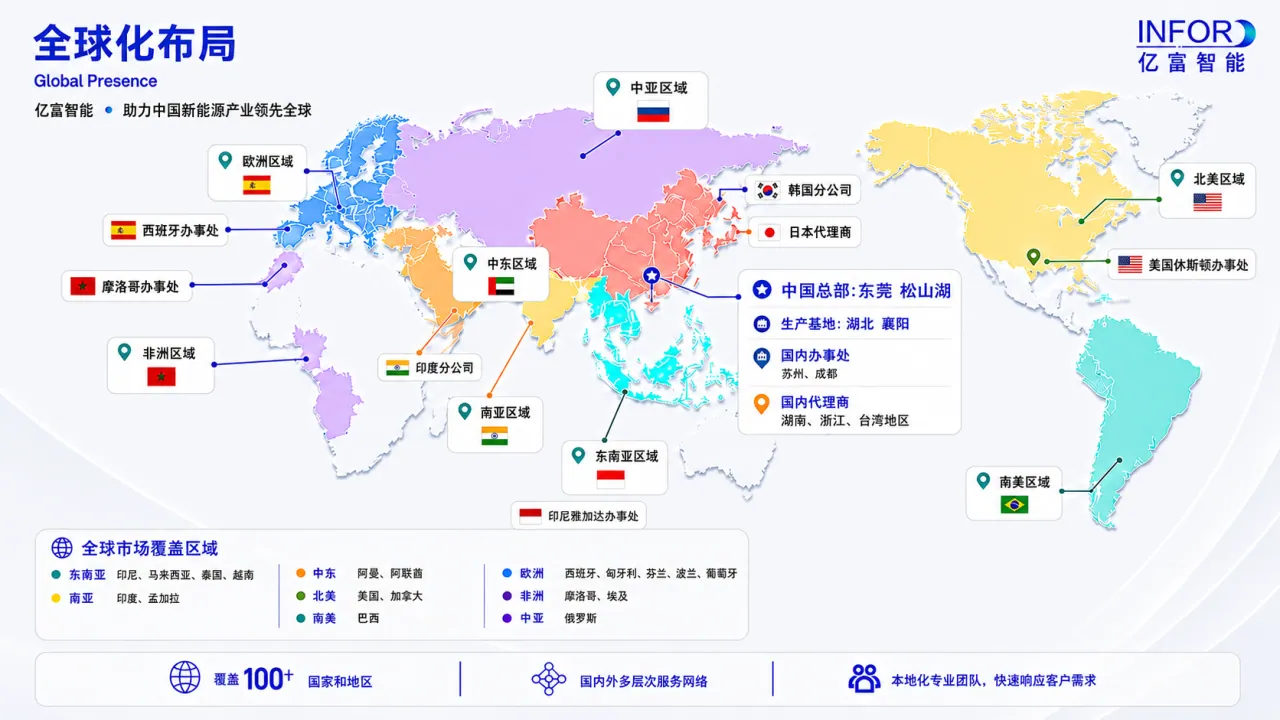
• For Chinese customers going overseas: replicate the process packages validated in Korea to production lines in Southeast Asia, Europe and North America;
• For material companies worldwide: build a joint "equipment - media - particle size - dispersion stability" database for systems such as all-solid-state, silicon anode, high-nickel and LFP.
Before, INFOR helped customers choose machines and CENOTEC helped them choose beads; now the two help customers win on production-line yield together. Korea is the training ground, the G-GTC is the arsenal, and next-generation battery materials worldwide are the real battlefield.
5. The ribbon-cutting is complete, globalization has only just begun
"The establishment of the Global Grinding Technology Center (G-GTC) will bring us closer to customers' actual needs."
The ceremony has ended, but the alignment of the two technology systems, Chinese and Korean, has only just started.
For INFOR, this is a step from a pure equipment supplier to a "process partner";
for CENOTEC, it is a step from a Korean high-end media material supplier to a "process solution provider";
for customers, it means one less blind purchase and one more shared back end that produces real data.
The CENOTEC & INFOR Global Grinding Technology Center (G-GTC) is more than a cooperation ceremony; it is a signal:
It is not only about grinding materials finer, but about deepening cooperation, mastering the market, and raising the process ceiling of new-energy materials a little higher.
And INFOR's next stop is to bring its Korean experience to production lines around the world.