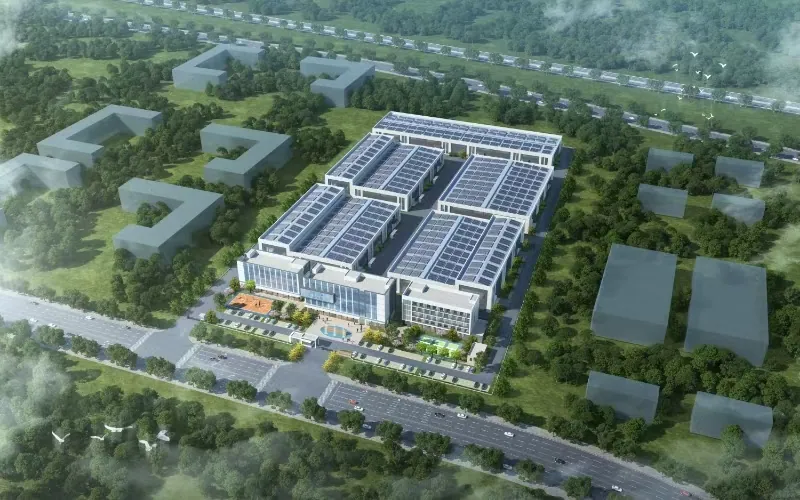
On 1 July 2026, the core area inside Hanoi's Ring Road 1 pressed pause on petrol motorbikes. There was no surprise and no back-and-forth, it is part of an electrification plan whose roadmap was laid out years ago.
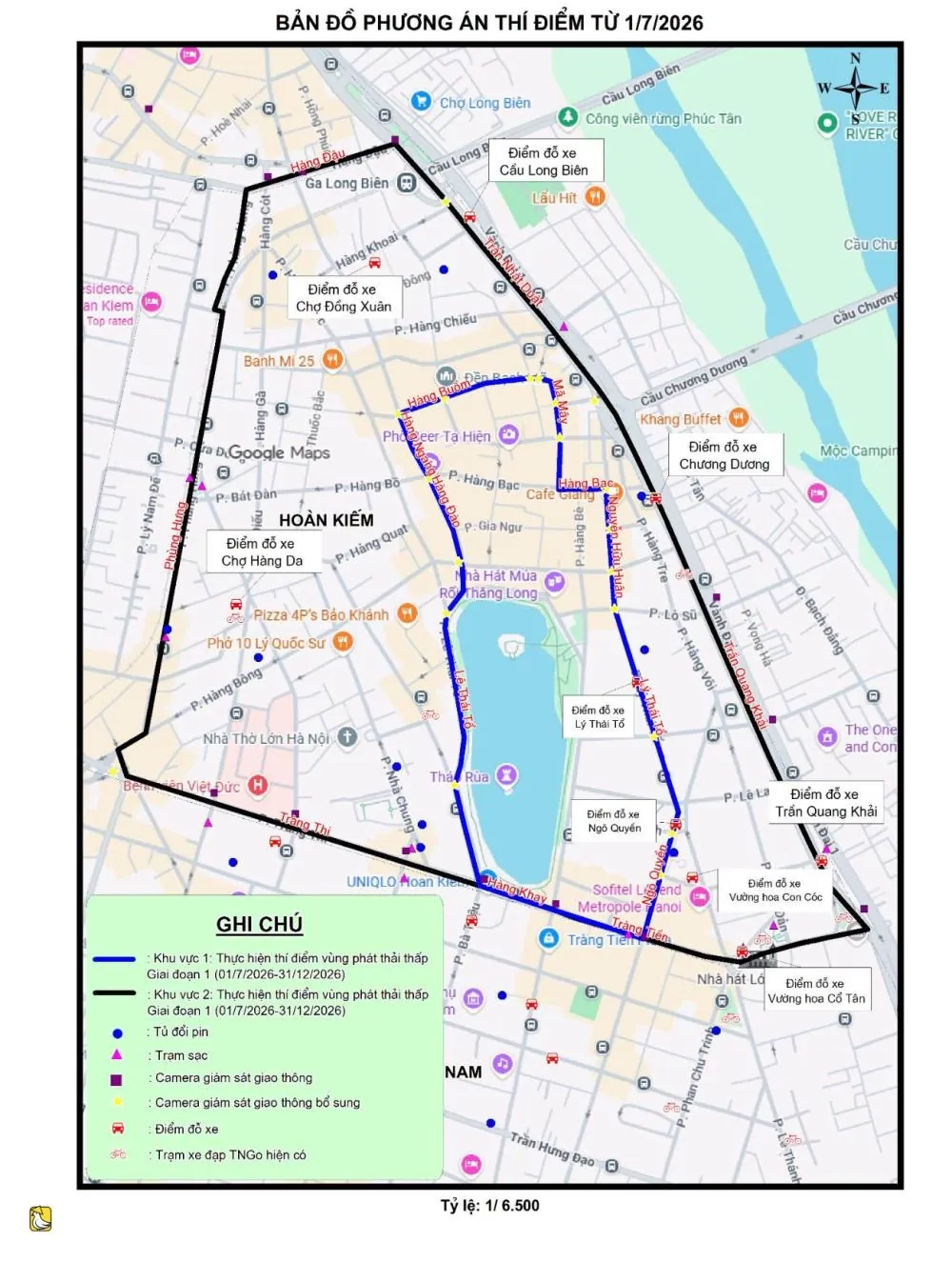
Official master plan for the low-emission zone
On 1 July 2026, the core area inside Hanoi's Ring Road 1 pressed pause on petrol motorbikes. There was no surprise and no back-and-forth, it is part of an electrification plan whose roadmap was laid out years ago.
Industry has responded more strongly than expected: LFP material makers are scrambling for land, and Chinese companies once focused on Indonesia are turning north. Vietnam is becoming the most certain growth market in Southeast Asia's new energy sector.
1. Not a sudden ban but a ten-year phased replacement
Many people mistake Vietnam's policy for a sudden ban, but it follows a careful timetable:
· July 2026: petrol motorbikes banned from the core area inside Hanoi's Ring Road 1;
· 2028: the ban extends to Ring Road 2, and all petrol delivery and ride-hailing motorbikes are phased out;
· 2030: petrol motorbikes restricted throughout the area inside Ring Road 3;
· Ho Chi Minh City: following at essentially the same pace.
The government is also offering generous trade-in subsidies that lower the cost of switching to an e-motorbike. This is not encouragement but enforcement: several million petrol motorbikes will be cleared from city centres within four years, and electric two-wheelers are the only alternative.
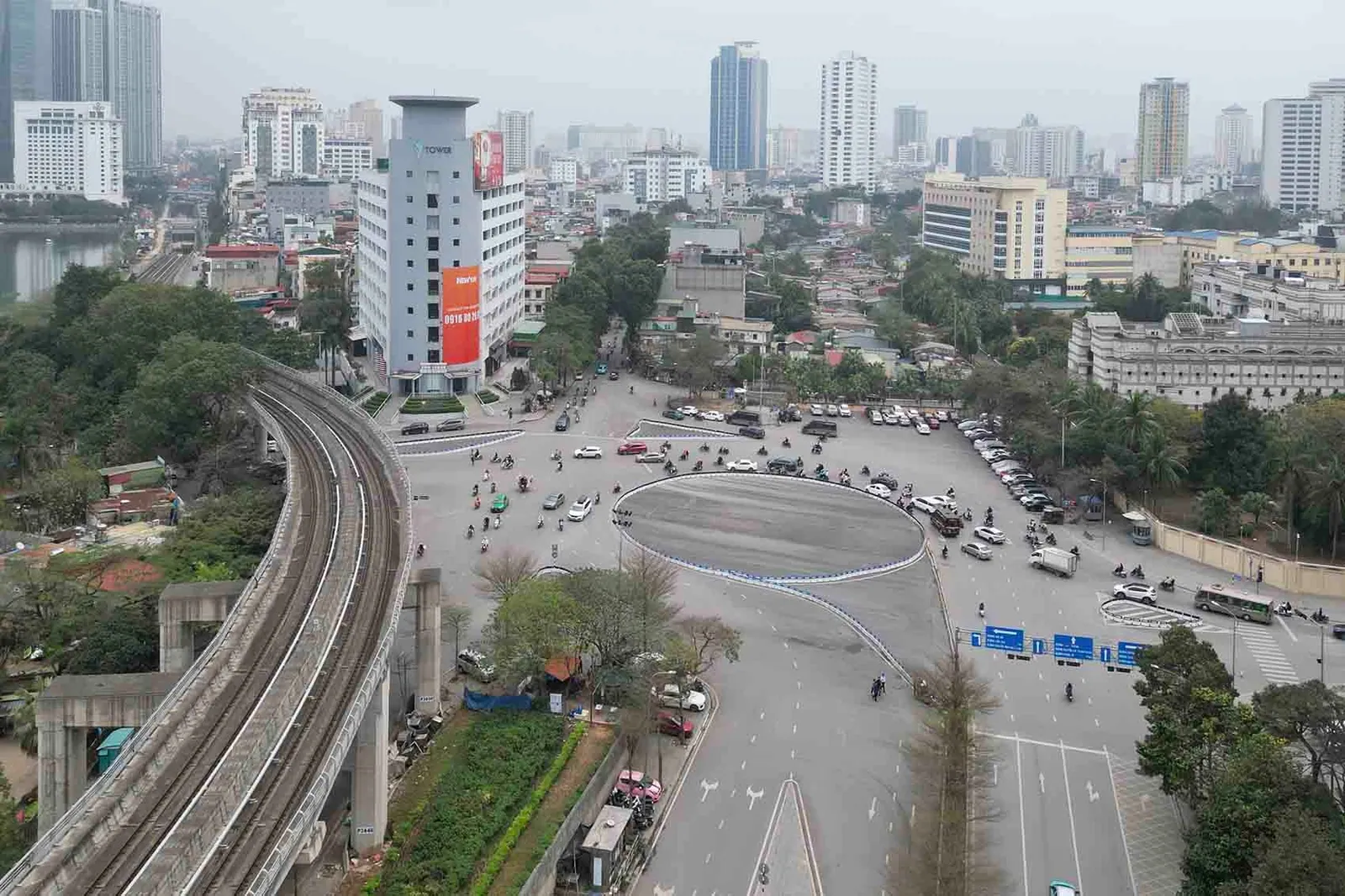
Aerial view of Hanoi's Ring Road 1
2. LFP emerges as the big winner
Vietnam's e-motorbike market has chosen LFP batteries almost unanimously, safe, heat-tolerant, long-lasting and far cheaper than NCM, a perfect fit for two-wheelers.
Replacement demand of several million vehicles is driving:
· a surge in demand for LFP cathode material;
· matching growth in anode materials, conductive agents and binders;
· battery pack volumes rising from tens of thousands to millions of units.
But Vietnam has almost no local battery capacity, so a wave of Chinese battery plant construction has followed:
· Gotion, BYD, Tianneng, Sunwoda and other leaders have set up battery and material lines;
· dozens of small and medium LFP suppliers are planning new capacity of 10,000 tonnes or more;
· from cells to cathode and anode, electrolyte and separators, the whole chain is rapidly localizing in Vietnam.
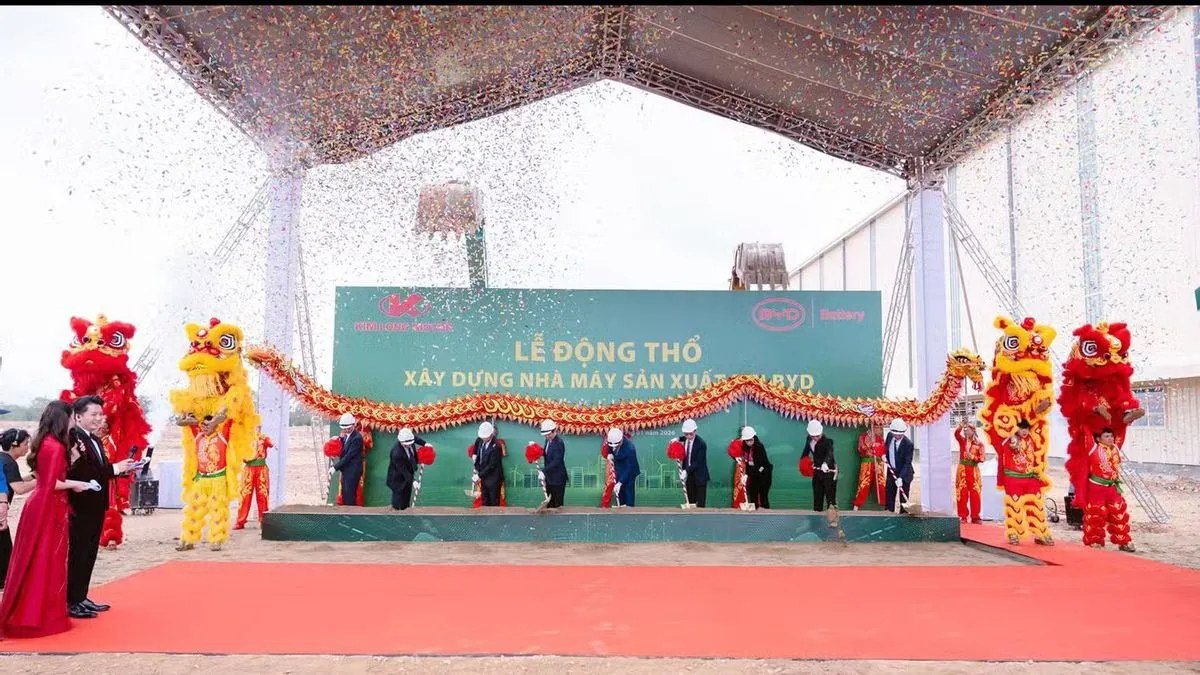
Groundbreaking ceremony for BYD's Vietnam battery base
3. Bead mills: a hidden champion caught up in the boom
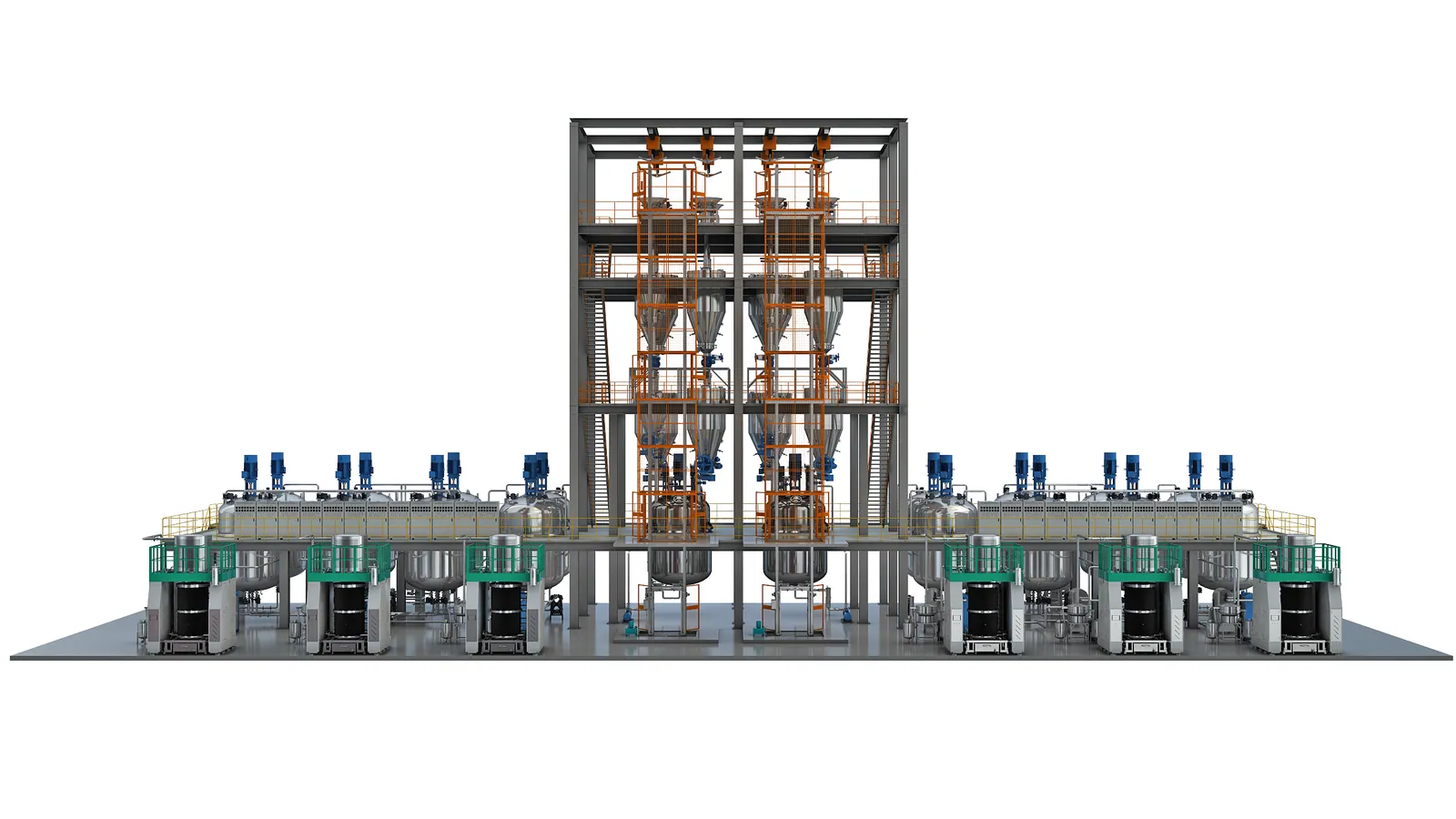
Battery material production depends on a core process, grinding and dispersion, and Vietnam cannot make a single high-end, large-volume bead mill.
1. 100% reliance on Chinese imports
Chinese bead mills now outperform established German and Japanese equipment on value, process fit, lead time and stability. New material lines in Vietnam are all equipped with large-volume bead mills, and Chinese equipment is the only choice.
2. Capacity comes in phases, but demand keeps rising
The ban is phased, and material makers expand in stages, so bead mill demand will not explode overnight, but new lines go out to tender every quarter, making orders highly sustainable: a long runway with deep snow.
3. Indonesia cooling, Vietnam heating up
Many Chinese material makers had invested in Indonesia, but policy swings, foreign exchange restrictions and quota uncertainty have led some to move to Vietnam, whose more stable business environment and friendlier foreign exchange rules are absorbing this overflow capacity and further raising demand for Chinese battery equipment.
4. Three certainties for Chinese companies going abroad
1. A certain dividend: a super window for the next 5-10 years
Electrification of Vietnam's two-wheelers combined with the energy storage boom gives Chinese battery and equipment companies a historic opportunity. Even more importantly, production in Vietnam can use ASEAN tariff advantages to export to Europe and North America, avoiding trade barriers, a strategic value far beyond the size of a single market.
2. A complete supply chain on the ground
Cells, cathode, anode, electrolyte, separators and complete grinding, sintering and drying equipment, China's supply chain is recreating a miniature version of its domestic battery ecosystem in Vietnam. Equipment makers follow their customers, orders are very sticky and demand for after-sales and technical service keeps growing.
3. A realistic view of the pace: steady long-term growth, not a short-term spike
The ban is a ten-year project, capacity comes online in stages and equipment purchasing is cyclical, but once started the trend is irreversible. Vietnam is now Southeast Asia's most certain new energy growth market, steadier than Indonesia, more urgent than Thailand and larger than Malaysia.
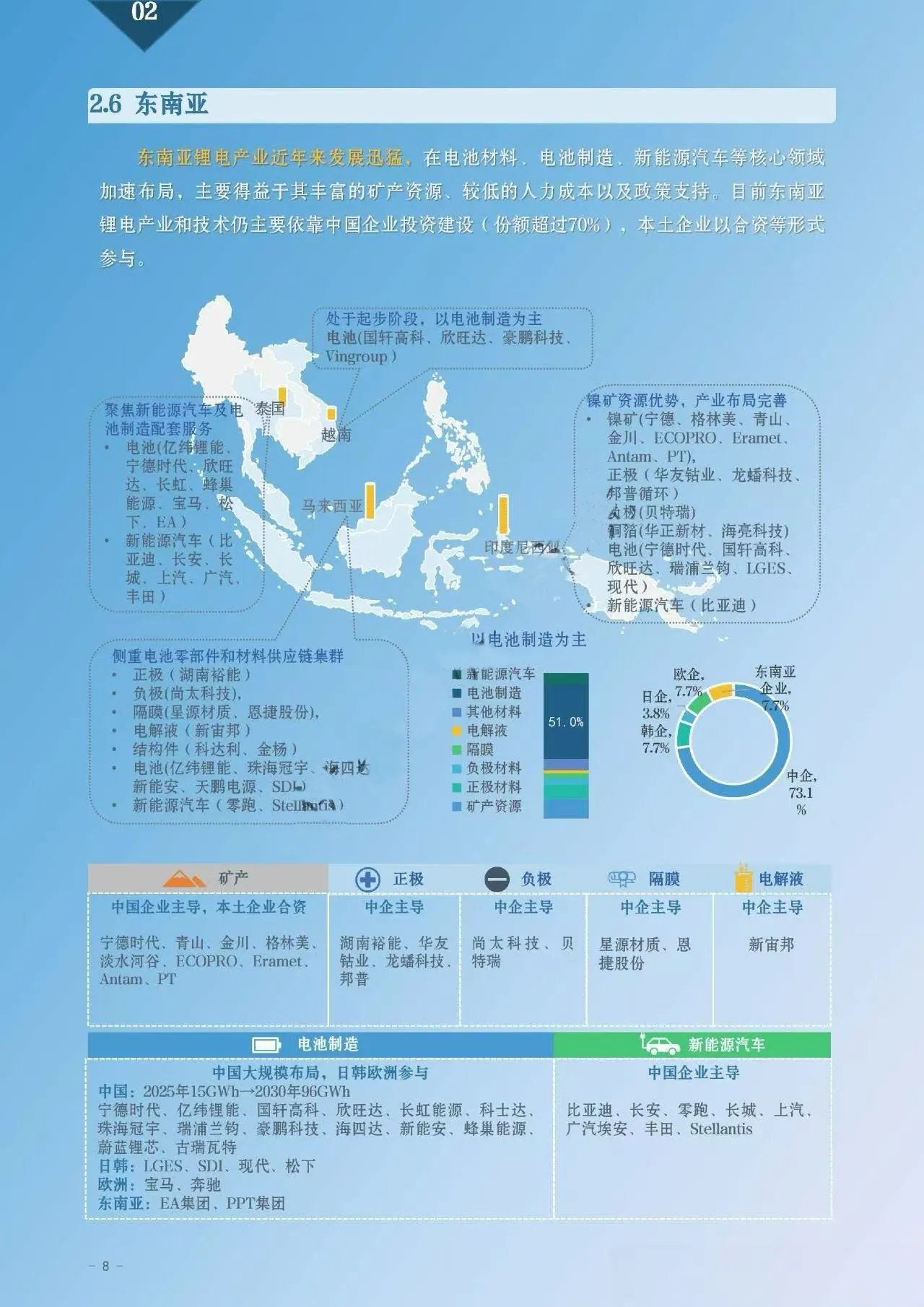
Southeast Asian battery market landscape
5. Stop treating Vietnam as a backup, it is becoming the main battleground
The quiet inside Hanoi's Ring Road 1 is not an end but a beginning. As millions of petrol motorbikes give way to e-motorbikes and LFP plants spread from north to south, every tonne of material will need an intelligent equipment line, the opportunity for Chinese equipment is not far away but in Vietnam.
Getting involved beats watching from the sidelines. This market will not make anyone rich overnight, but it offers steady, long-term certainty.