The Middle East broadly refers to the region from the eastern and southern Mediterranean to the shores of the Persian Gulf, roughly overlapping West Asia and including parts of North Africa. Linking the Atlantic and Indian Oceans at the junction of Asia, Europe and Africa, it is known as the land of "two oceans, three continents and five seas" and covers more than 15 million km². Its main countries include Saudi Arabia, Iran, Iraq, the UAE, Kuwait, Qatar, Oman, Bahrain, Turkey, Egypt, Israel, Jordan, Syria and Yemen. The climate is mainly tropical desert, the terrain mainly plateau, and the main rivers are the Nile, the Tigris and the Euphrates.
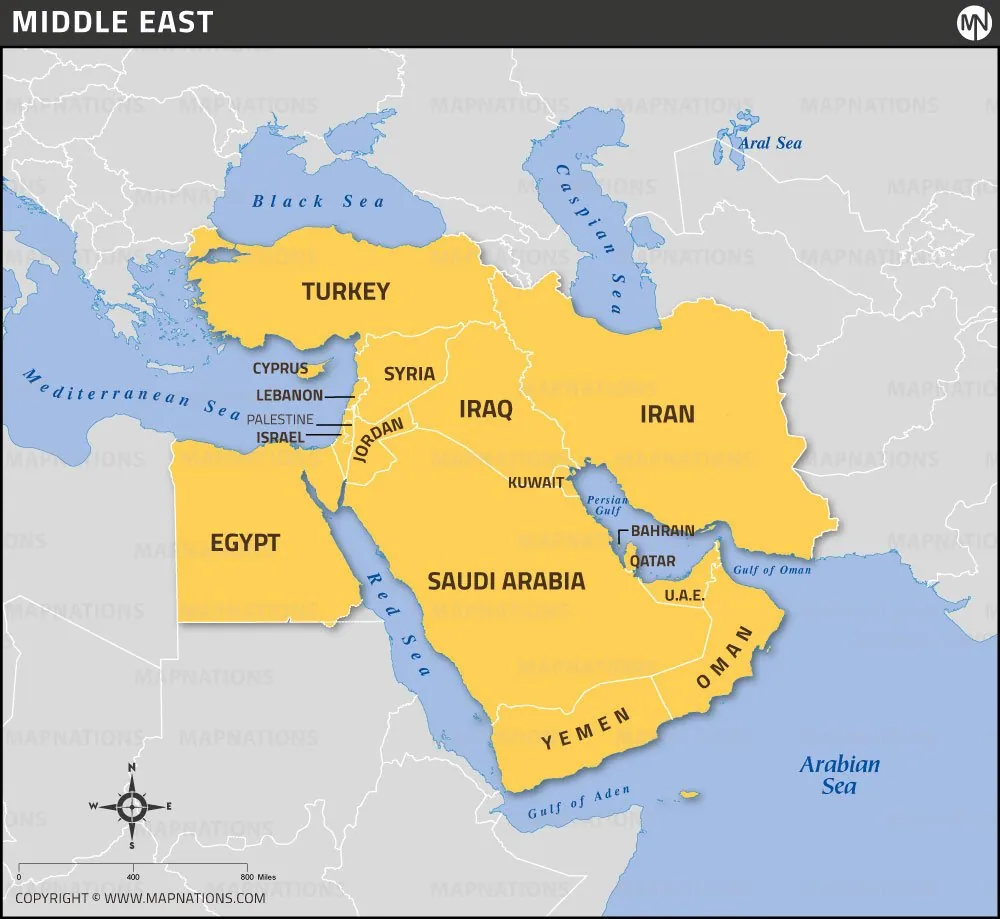
Political map of the Middle East
The Middle East is the world's oil reservoir, with the richest oil and gas resources on earth. Oil and gas remain the backbone of the regional economy: oil accounts for about 25% of Saudi GDP and 70% of government revenue; oil and gas for about 24% of UAE GDP; and oil for about 60% of Iraq's GDP and 90% of its revenue. In recent years, however, countries have been diversifying, and manufacturing and services in Gulf states such as Saudi Arabia, the UAE and Qatar are relatively mature. With its unique location, the region is moving from a traditional energy centre toward a global trade and shipping hub and an emerging digital infrastructure hub.
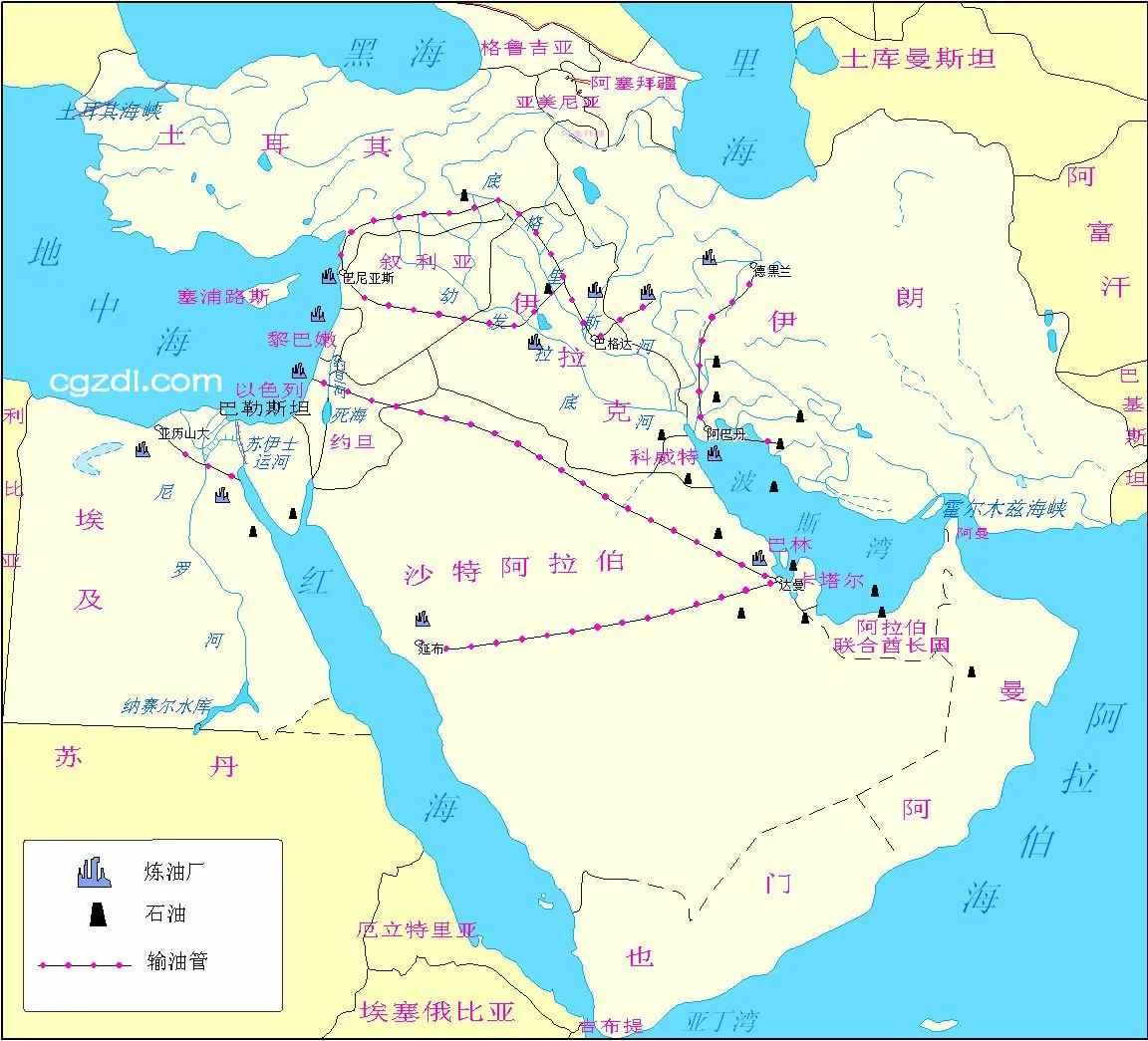
Map of Middle East oil-producing areas
1. Core geopolitical conflicts (the biggest recent flashpoints)
1. Direct US-Iran conflict puts shipping through the Strait of Hormuz at risk
The temporary US-Iran ceasefire has collapsed, and US forces have carried out air strikes on Iran over several nights, targeting coastal military surveillance, air defences, command centres, naval facilities and missile and drone storage, as well as civilian infrastructure including bridges, railways, airports, communication towers and a desalination plant. Six bridges in Hormozgan province were destroyed, 116 communication towers damaged, and a strike on a desalination plant cut drinking water to about 10,000 nearby residents. Iran retaliated with strikes on US bases in Bahrain, Kuwait and Jordan. Tankers have exploded and caught fire in the Strait of Hormuz, and the Islamic Revolutionary Guard Corps has declared the strait "completely closed". About 30% of the world's crude passes through the strait, and Brent crude rose to USD 91 a barrel, a five-week high. Yet five months of air strikes have not forced Iran to yield, and the conflict is at a stalemate.
2. The Houthis announce a blockade of Saudi sea routes, putting pressure on both the Red Sea and the Gulf
On the 20th, Yemen's Houthis announced an immediate "maritime embargo" on Saudi Arabia, warning ships not to sail to Saudi ports and threatening to "close the Bab el-Mandeb" to Saudi Arabia in response to the blockade against them. Saudi Arabia exports 75% of its crude via the Red Sea port of Yanbu, so a closure would threaten nearly 25% of global crude supply. Ship-tracking data showed five tankers changing course in the Red Sea on the 22nd, and the Saudi-led coalition said it would respond firmly to any threat.
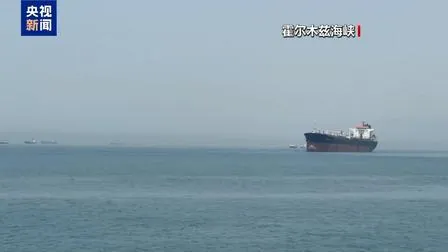
Shipping in the Strait of Hormuz
3. The US demands payment from the six Gulf states
On the 13th, President Trump said the US would charge a 20% fee on all cargo passing through the Strait of Hormuz as "compensation", at current oil prices, about USD 30 million per supertanker transit. The next day he said Gulf states could instead make large investments in the US. The episode was widely criticized as extortion and further eroded US credibility in the Gulf.
4. Saudi Arabia shifts its air defence strategy with Turkish counter-drone systems
Saudi Arabia had been using expensive US air defence missiles to intercept cheap drones, a serious cost mismatch. Saudi Arabia and Qatar have now signed agreements to buy ASELSAN's Korkut 100/25 air defence system from Turkey, designed for small drones, and Gulf states are accelerating purchases of Turkish short-range air defence and counter-drone technology.
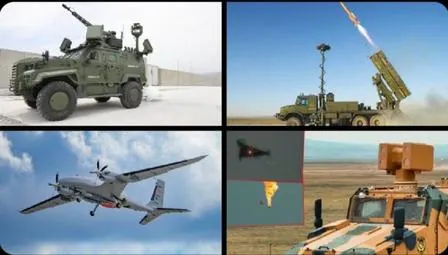
Turkey's Korkut air defence system
2. New trends in energy and the regional economy
1. The UAE and Iran restart economic cooperation
Even with the US and Iran in conflict, the UAE held a joint economic meeting with Iran and agreed cooperation in new energy, logistics and trade. The Gulf is visibly divided: Saudi Arabia aligned with the US, the UAE focused on economic pragmatism.
2. Saudi Arabia accelerates Vision 2030
Saudi Arabia continues to invest in green hydrogen, battery raw material processing and manufacturing, offering industrial land and tax incentives to attract foreign plants and gradually reduce the share of crude exports in GDP.
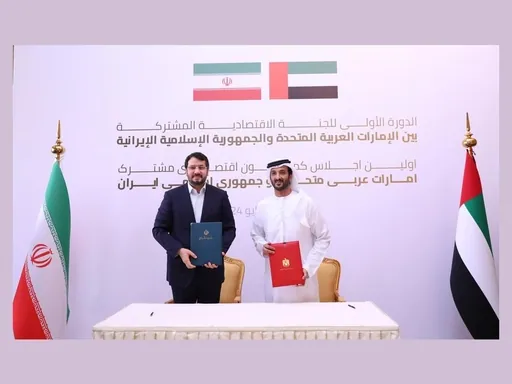
UAE-Iran economic cooperation talks
3. The Middle East doubles down on new energy
Saudi Arabia, Oman and the UAE are all expanding wind, green hydrogen and battery material capacity. The fiercer the conflict, the more determined Gulf states are to pursue the energy transition, earning cash from high oil prices while building new energy industries for the long term.
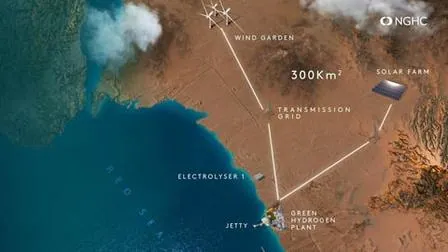
Saudi NEOM green hydrogen park
3. Latest Chinese projects
1. Oman: a closed loop of wind power, anode materials and storage
Shanghai Electric is building a wind turbine factory in Oman with annual capacity of 1,100 MW, and Shinzoom's integrated lithium-ion battery anode material base has started construction in the Sohar Free Zone. A USD 500 million Chinese silicon-based anode material project is also advancing in the Duqm Special Economic Zone, with 2,000 tonnes a year in phase one rising to 5,000 tonnes in phase two, directly supporting Shanghai Electric's turbine project.
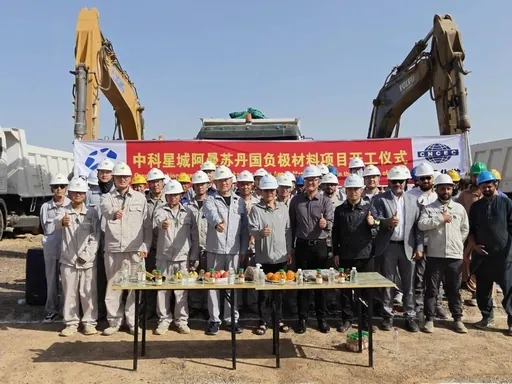
Groundbreaking of Shinzoom's anode project in Oman
2. UAE: two Chinese industrial parks break ground
China Railway Construction has won a USD 5 billion aviation infrastructure project in Dubai to build the world's largest civil aircraft maintenance hangar. In Ras Al Khaimah, the Mingcheng International Industrial Park, with a first phase of 1 million m², will focus on metal recycling, battery raw material refining and new materials manufacturing.
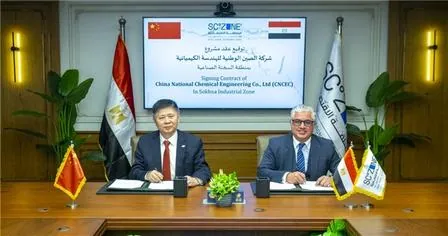
Signing ceremony for China Chemical's base in Egypt
3. Chinese projects in Kuwait and Egypt
China State Construction has won a USD 233 million contract for a 275-metre, 55-storey headquarters tower in Kuwait. China Chemical is building a chemical equipment manufacturing base in Egypt's Suez Economic Zone, with phase-one capacity of 20,000 tonnes of steel structures and 400,000 inch-diameters of pipe prefabrication.
The Middle East stands at the intersection of conflict and transformation. For Chinese companies, the industrial opportunities within the crisis, especially in new energy, battery materials and equipment manufacturing, deserve continued attention.