Valves may be small, but they play a major role in industry. Like the throat of industrial equipment, they control fluid flow and affect the smoothness and safety of the whole process. Here we look at valve types, performance and their use in bead mill production lines.
Valve types
Valves come in many types. Common ones include gate, globe, ball and butterfly valves.
The gate valve is like a steady goalkeeper. Its closing element is a gate that rises and falls to open or shut the flow. Gate valves have low flow resistance and, when fully open, little erosion of the sealing faces, suiting applications that need low resistance. However, they open and close slowly, are relatively complex and harder to maintain.
The globe valve is a precise regulator. Stem pressure presses the disc sealing face against the seat to stop flow. Globe valves regulate well and control flow and pressure precisely, but have higher flow resistance and are not suited to large-diameter pipes.
The ball valve is a nimble rotating dancer. The ball turns 90° about an axis perpendicular to the passage to open and close. Ball valves switch quickly and seal well, suiting frequent operation, and their simple structure makes them easy to maintain and widely used in industry.
The butterfly valve is like a light wing. The disc rotates about a fixed shaft in the body to open and close. Butterfly valves are compact, light and easy to operate, with good flow control characteristics, and are often used in large-diameter, low-pressure pipelines.
Valve performance
Valve performance directly affects results in production. Among the many indicators, sealing, flow characteristics, pressure rating and corrosion resistance are the most important.
Sealing is a core property. Good sealing prevents leakage and keeps the process safe and clean. Valve seals include the seat seal, formed by close contact between disc and seat, and the packing seal, which prevents leakage between stem and bonnet. Manufacturers use quality sealing materials and precision-machined sealing faces to improve sealing.
Flow characteristics reflect how well a valve controls flow. Globe valves have a fairly linear characteristic and control flow precisely, while ball valves have a quick-opening characteristic suited to rapid shut-off or opening. Understanding flow characteristics helps choose the right valve.
Pressure rating is the ability to work normally under pressure. Industrial pipelines often run at high pressure, so valves must have sufficient pressure capability, which depends on material, design and manufacturing; valves made of high-strength materials generally perform better.
Corrosion resistance is essential in harsh environments. In chemicals and pharmaceuticals the media are often corrosive, so valves use corrosion-resistant materials such as stainless steel or ceramics, or special surface treatments.
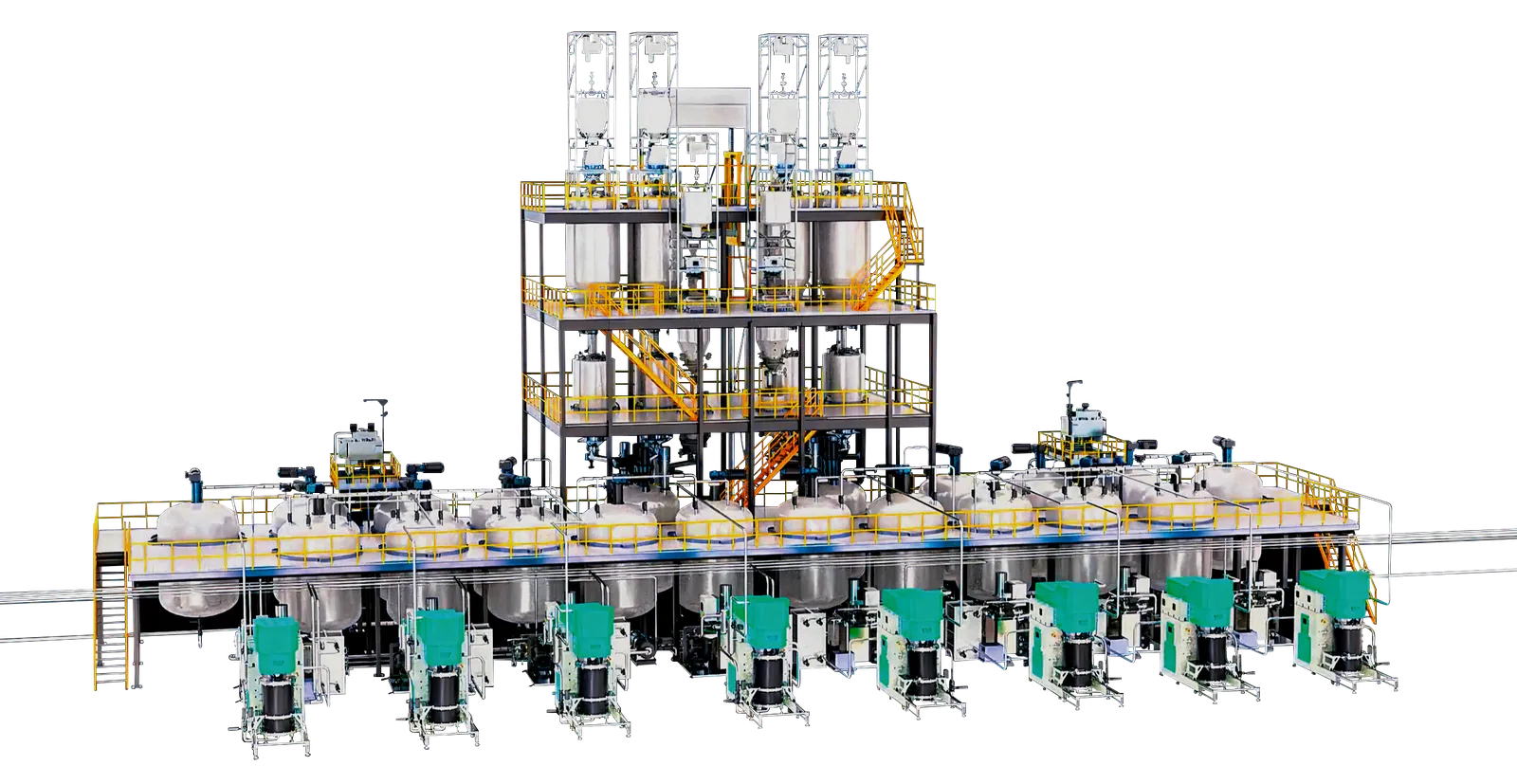
Key applications in bead mill lines
Bead mill lines grind and disperse materials and are widely used in coatings, inks and pigments. Valves control material inflow and outflow and regulate flow and pressure, keeping production stable and efficient.
At the feed stage, valves control material transfer. Choosing the right type and size allows precise control of flow rate and velocity so material enters the mill evenly, a globe valve for precise flow control, for example, or a ball valve to shut off feed quickly and prevent leaks.
During grinding, valves regulate pressure and temperature in the mill, which change continuously during operation. When pressure is too high, a safety valve releases the excess; when temperature rises, a control valve adjusts coolant flow to cool the mill.
At discharge, valves control the release of the ground product so it moves smoothly to the next process, and can also support filtering and separation to remove impurities and oversized particles.
Valves are diverse, high-performing and irreplaceable in bead mill lines and many other fields. As industrial technology advances, valve performance and quality keep improving, and smarter, more efficient valves will continue to support industrial production.