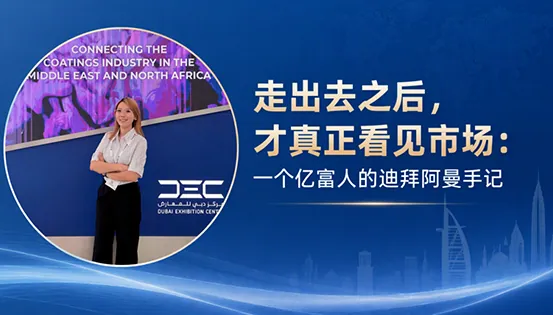
Hello everyone, I'm Zeng Jinyin, Bree in English. I'm responsible for Middle East market development at INFOR.
Before I left for Dubai, my picture of the region was honestly rather "flat": scorching weather, modern cities, abundant oil, and an "overseas market" that simply sounded big. But walking from the exhibition halls in Dubai to the streets of Oman, I realized that a market can never be summed up by a map and a few numbers.
A real market is made up of specific people, individual factories, distinct sales channels, and the complex business habits behind them.
For me, this trip to Dubai and Oman was more than a business trip. It felt like a field classroom that finally took me out of the office and into the market.
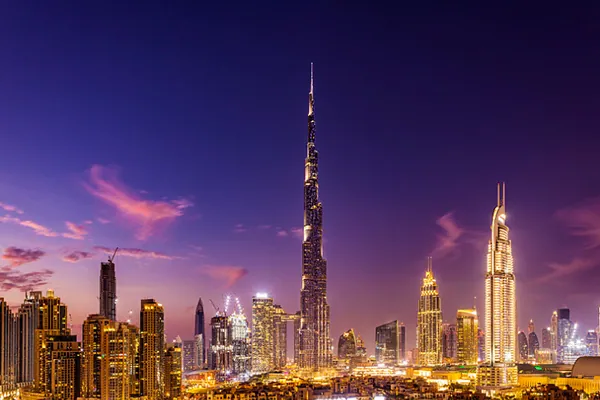
From the buzz of the exhibition hall to the reality of the streets
From late September to early October, I traveled with our international sales team from Dubai to Oman on a "trade show + field research" route.
In Dubai, we attended the Middle East Coatings Show 2026. There were more than 300 exhibitors, about one third of them from China. Standing in the aisles and looking around, I could see that almost all of our familiar peers in grinding and dispersion equipment were there. Visitor traffic was decent overall, but far fewer people than I expected were willing to stop and have an in-depth conversation.
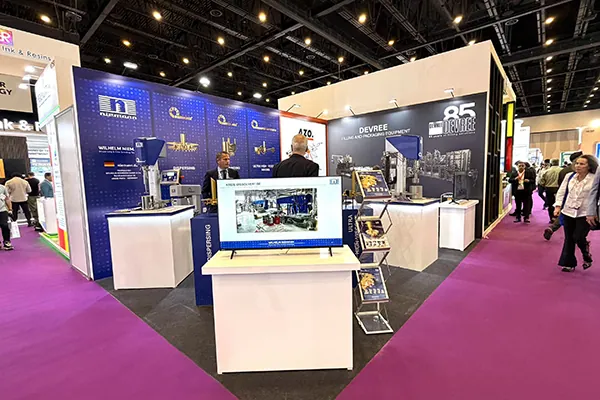
As the Middle East market lead, I wasn't "casting a wide net" at the show. I was observing with a filter: Which customers actually have projects underway? Which agents already have channels? Buyers from which countries have shorter decision chains? I added dozens of Gulf customers in traditional white robes on WhatsApp and LinkedIn, but what mattered more to me was how many of them would keep discussing process solutions after the show.
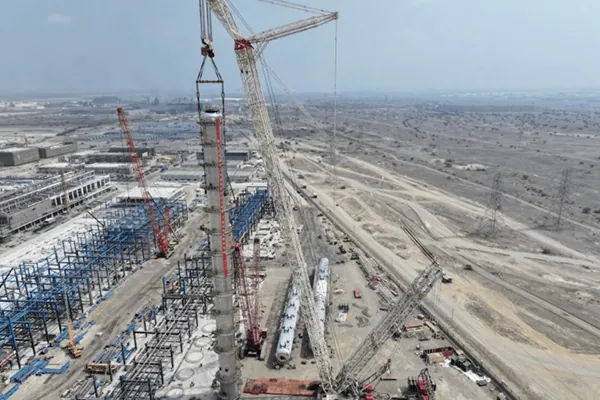
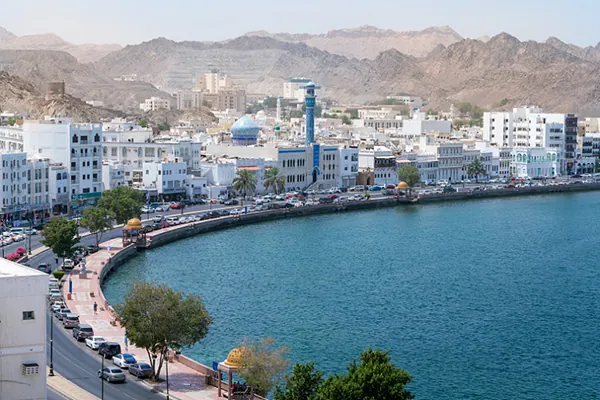
After the show, we moved on to Oman. It's a short flight from Dubai, but the moment we landed we could feel that this was a market with a completely different rhythm. Apart from a few high-rises, Muscat is mostly low, single-story buildings. We visited the Sohar Free Zone to meet local customers and see the industrial base for ourselves. Many small factories look almost identical to residential buildings from the outside; unless you look carefully, you can't tell them apart. Entering and leaving the free zone involves security checks, and the process isn't simple. English is not widely spoken, and getting around depends almost entirely on taxis.
Standing in Oman, I felt for the first time that market opportunities and market difficulties often hide together in the most inconspicuous details.
Going abroad is easy; staying is the real skill
My most immediate takeaway from the show was that Chinese manufacturing really has gone global, and more and more companies are following.
But going abroad is not the same as staying.
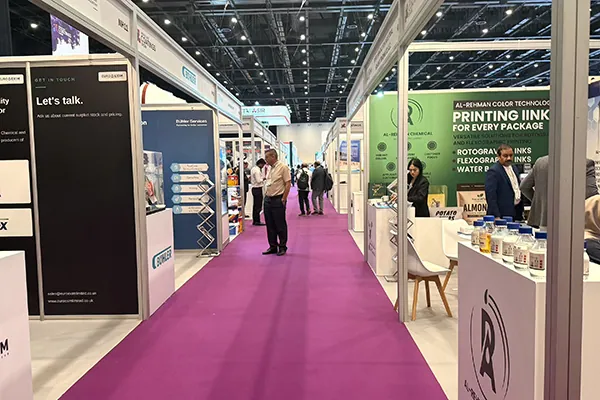
In the halls, some foreign brands had fairly small booths, yet local Middle Eastern buyers in white robes still stopped by on their own and gathered around the meeting tables to discuss process solutions. Many Chinese companies, by contrast, have good products and clear advantages in price, delivery and responsiveness, but customer awareness of and trust in a brand cannot be built by a single exhibition.
This gave me a new understanding of what "going global" means.
I used to think overseas business was just a matter of selling products abroad. But standing in that hall in Dubai, I realized that the product is only the beginning; trust is where business truly begins.
Some overseas customers have used European and American brands for many years and have built up habits and trust around them. Even as Chinese equipment keeps improving in performance, the barrier of brand perception remains. It can't be overcome with one trade show or one brochure.
So what are our strengths? Compared with imported European and American equipment, Chinese bead mills (sand mills) offer a price advantage, and China's complete supply chain means faster solution feedback, production response and delivery. But these strengths must become something customers can actually feel: real case studies, stable products, timely technical support, reliable after-sales service, and the reassurance that "someone will take care of me after I buy."
A price advantage only truly matters when it is built on trust.
In Oman, I felt this even more deeply. Local industrial support is limited, manufacturing equipment comes mainly from outside the country, and markets take longer to develop. You can't expect to hand over a business card today and sign a contract tomorrow. A bead mill is not a consumer product; behind it are production processes, equipment parameters, capacity planning, stability validation, spare parts supply and long-term operating costs. A market like this calls for patience: first understand it thoroughly, then build customer relationships, and grow projects one by one.
After returning, I redefined "customer development"
The trip also gave me a new perspective on my own work.
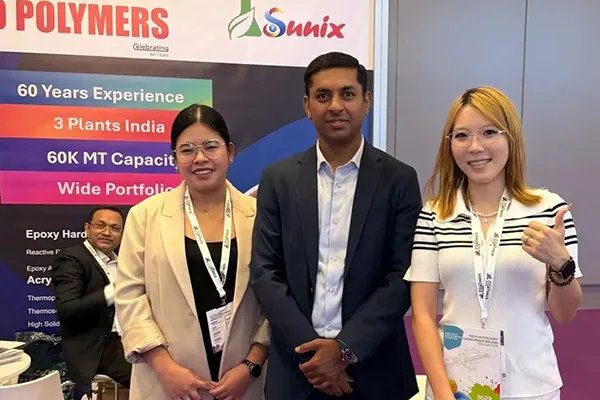
In the past, when developing customers, I mainly focused on questions like: Is this a target customer? Do they have purchasing needs? When can we close? But after going out into the market, I've come to believe that the first thing to learn in overseas business is how to understand the customer.
Dubai and Oman are both in the Middle East, yet their market environments differ this much, not to mention Saudi Arabia, Qatar and Kuwait. You can't simply treat "the Middle East" as one single market. Each country has a completely different economic level, industrial base, business culture, regulatory framework and channel structure.
Back to Middle East market development, I have set myself three directions for the next stage:
First, look at the Middle East country by country. Dubai is a window and a hub, well suited for brand exposure and screening agents. Oman is a long-term market that requires patience to build relationships and understand channels. Saudi Arabia is where future growth will come from, so we need to position ourselves early. Each country needs its own playbook; one sales pitch can't fit them all.
Second, move from "sending cold emails" to "delivering solutions." Customers no longer ask "How much is it?" but "Do you understand my process?" I need to translate INFOR's bead mill specifications into the production-line language customers understand: particle size, solids content, viscosity and capacity matching. Only when the conversation reaches that level will customers feel that you're not just there to sell, but to help solve their problems.
Third, shore up my own weaknesses. On this trip, when customers casually asked about an equipment parameter or an application, it was hard to go deeper without enough knowledge of my own. I used to find learning product knowledge dull; now I understand that only by truly understanding our products can I be confident in front of customers, and only by truly understanding their industries will I know what to talk about.
Truly going global takes time, patience and accumulation
Now that the trip to Dubai and Oman is over, my biggest gain is hard to measure in the number of customers met or business cards collected, because some of the changes happened inside me.
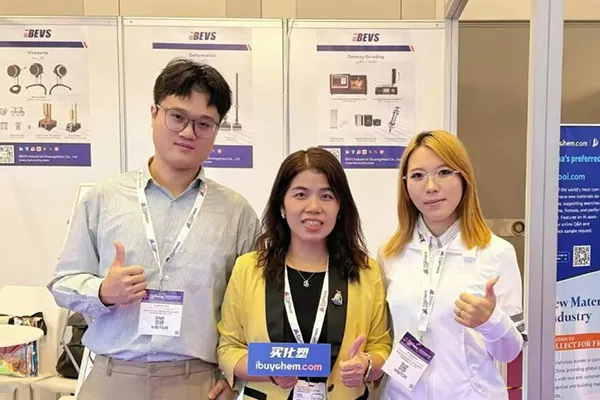
I used to see overseas markets through a screen; now I have actually stood in the cities where our customers are. I used to think "the Middle East market is huge"; now I know each country has its own market logic. I used to think a sale was complete once the product was sold; now I understand that real overseas business begins after the product is sold.
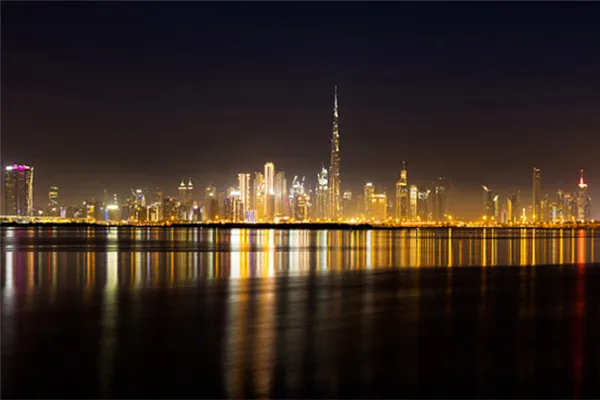
I remain optimistic about the long-term potential of the Middle East, but that optimism is no longer the simple judgment I had when I set out: "it's big, so there must be lots of opportunities." Now I see more clearly that a big market isn't necessarily an easy one, and plenty of opportunities don't necessarily belong to us.
As for INFOR's strategy in the Middle East, my thinking is this: use Dubai as a bridgehead, prioritize building agent channels and establish reference projects; treat Oman as a long-term incubation case to build experience with projects in regions with a weaker industrial base; then gradually expand into neighboring countries such as Saudi Arabia and Qatar. Rather than trying to be everywhere at once, we'll get one point right first, then turn points into lines, and lines into a network.
Truly going global takes time, patience, expertise and real experience accumulated step by step.
What I can do is start now: make every customer conversation count, understand every product detail, and carefully digest every piece of market information. One business trip may not change a market, but by going out again and again and building up experience each time, one day we will truly have the ability to go overseas and stay there.
I'm Zeng Jinyin, Bree.
Developing the Middle East market at INFOR starts with understanding one person and getting one point right.