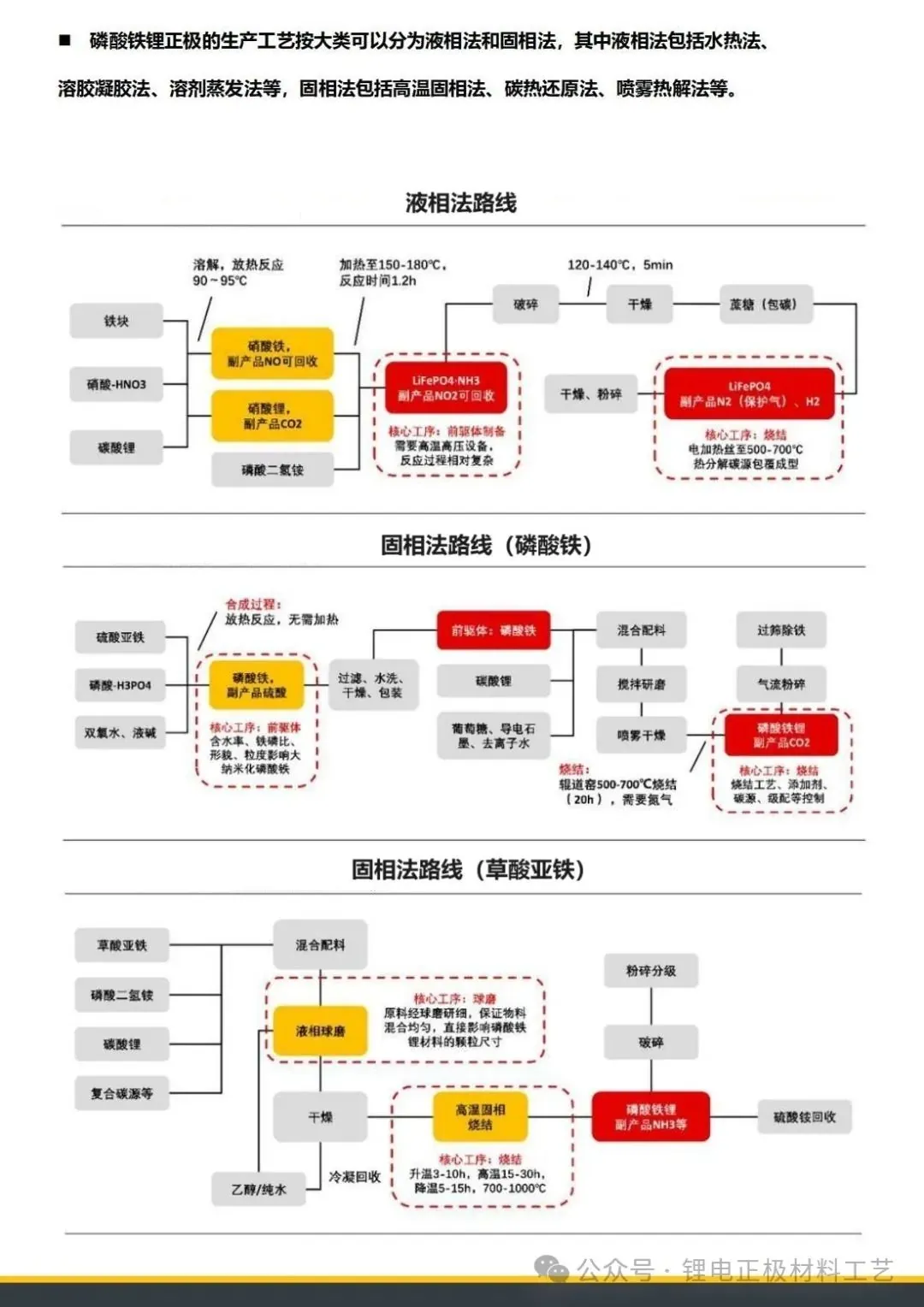
There are currently three mainstream routes for lithium iron phosphate (LFP): the iron phosphate solid-phase method, the ferrous oxalate solid-phase method and the liquid-phase method.
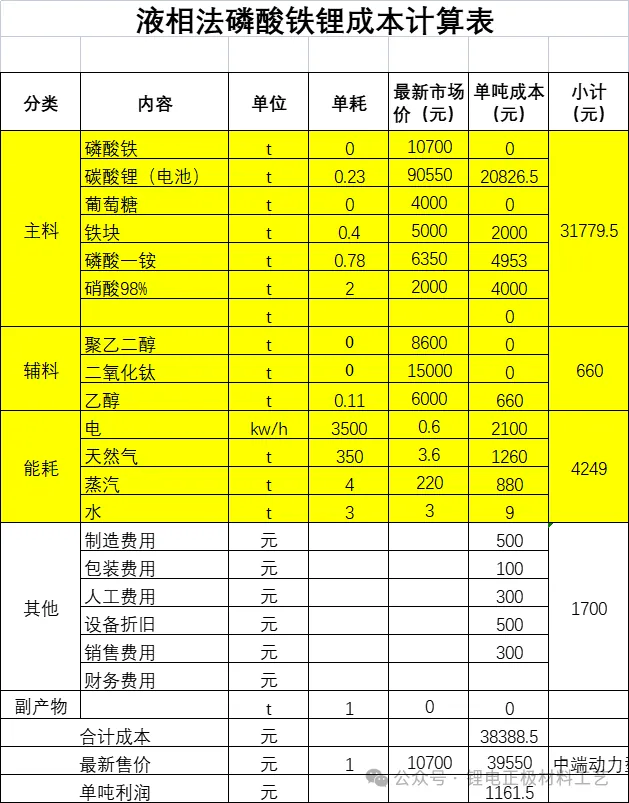
The cost advantages of the liquid-phase method are: 1) Lower energy consumption. Dynanonic uses a self-heating evaporation liquid-phase synthesis in which the precursor step needs no external heating, and because the particles are nano-sized no ball milling is needed; based on disclosed power consumption per tonne, Dynanonic has had the lowest energy use compared with solid-phase producers. 2) Raw material grade. The lithium source is the largest cost item for LFP and most companies buy battery-grade lithium carbonate, as did Dynanonic according to its prospectus. In theory, however, the liquid-phase reaction is more uniform, so lower-grade raw materials, lithium carbonate from salt lakes or lepidolite, or industrial-grade lithium carbonate, can be used while maintaining quality, which brings a cost advantage. 3) Lower lithium consumption. Solid-phase sintering can leave residual lithium, so 2-5% excess lithium is usually added, whereas the liquid-phase method doses elements more precisely.
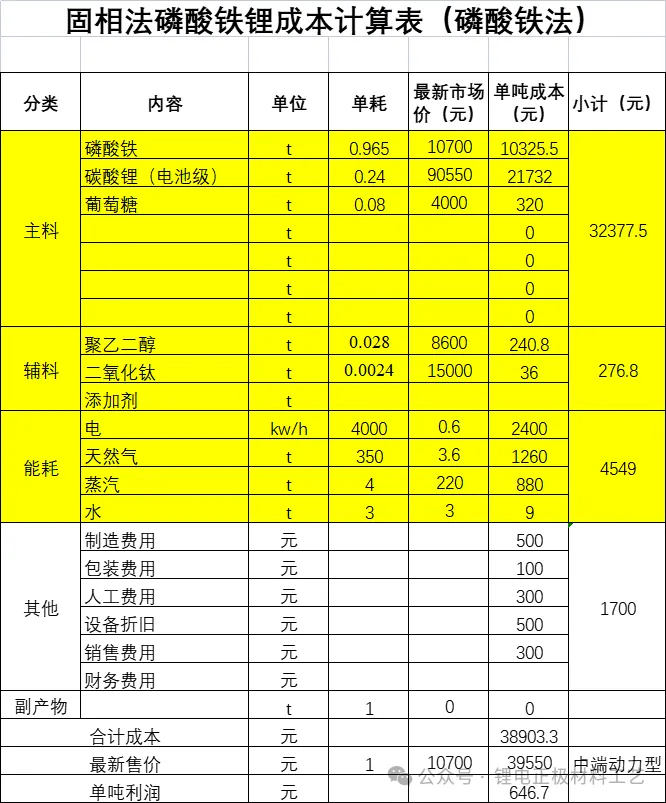
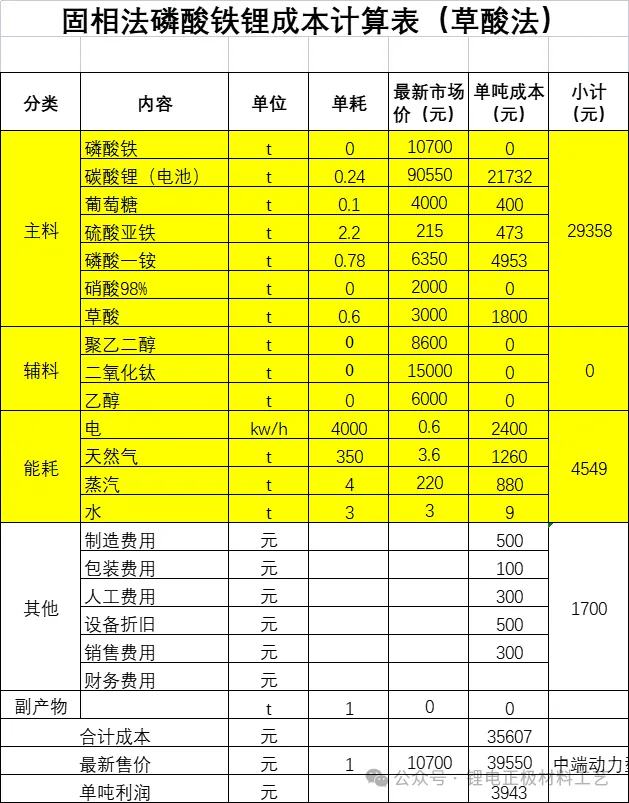
The cost advantages of the iron phosphate solid-phase route are: 1) The raw material elements are fully used and end up in the finished LFP or by-products, with essentially nothing emitted as waste gas or water, whereas nitrate in the liquid-phase method is largely released as nitrogen and oxalate in the oxalate route is released as carbon oxides. 2) Lower off-gas treatment cost: the liquid-phase method must recover NO/NO2 and the oxalate route must treat NH3. 3) The iron phosphate route can draw on more chemical by-products, ferrous sulfate, for example, is a by-product of titanium dioxide producers, so the iron source is very cheap, and all of its raw materials are bulk commodities. At current oxalic acid prices, the ferrous oxalate route has the lowest cost. Oxalic acid is a relatively niche chemical mainly used in pharmaceuticals and rare earths, so future prices will depend on the market; capacity plans point to significant new oxalic acid supply, which should improve the cost of the ferrous oxalate route.
In summary, the theoretical cost curves of the different LFP routes are fairly flat. When phosphorus chemical prices are high, the iron phosphate route costs more; when they are low, its use of iron-source by-products gives it a cost advantage. Because it uses nitric acid, the liquid-phase method synthesizes LFP in one step and skips repeated precursor filter-press washing, flash drying and sintering, bead milling and spray drying, so it uses less energy than the iron phosphate route, and if it can exploit differences in lithium source grade, its cost advantage becomes more pronounced. The oxalate route's position depends mainly on oxalic acid prices and is currently relatively low-cost.
Related: for the equipment needed at each step of an LFP cathode plant, see LFP cathode material plant: complete equipment list by process step.