For the complete step-by-step selection guide, see How to Choose a Bead Mill (Sand Mill) for Wet Grinding.
The long holiday has just ended, and social media feeds look different.
In past years, this was the time for crowded tourist sites, floor-to-ceiling windows at trendy guesthouses and late-night queues outside viral restaurants. This year the feeds are far more down-to-earth: people growing vegetables on the balcony, slow-cooking stews at home, or posting a photo captioned "Spent nothing at the service area, brought my own self-heating meal" with the line, "Skipping the crowds. Comfort is enough."
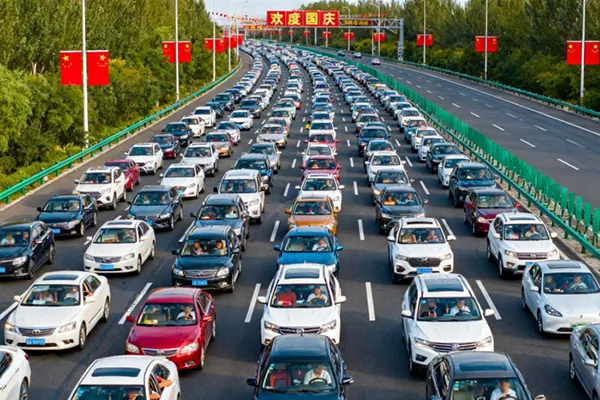
We rounded up the changes people noticed most over the holiday, and the more we looked, the clearer it became:
It's not that people won't spend. It's that they no longer want to pay for appearances.
1. Instant noodles at service areas aren't selling: people still eat, just not overpriced fast food
In the past, whenever the expressway jammed, the noodles, sausages and braised eggs at service areas sold out fast.
This year many drivers opened their trunks to reveal self-heating rice, fruit, thermos flasks and cold cuts. At the service area they did just two things: stretched their legs and used the restroom, then drove on.
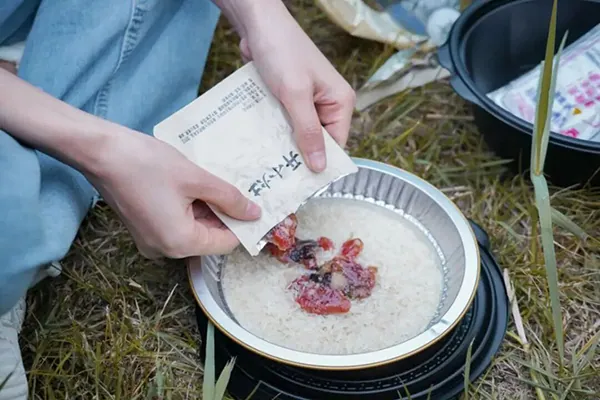
It's not about the price of a bowl of noodles. Rather than pay a premium for a so-so meal, people would rather bring something decent of their own.
2. No more "we're here anyway" at scenic spots: tickets are essential, add-ons get dropped
Entering the park is fine, but queuing for the cable car? Skip it and hike.
Boat rides too pricey? Stroll along the lake instead.
The "we've come all this way" spell has been broken by a new mindset: save where you can and don't pad the experience.
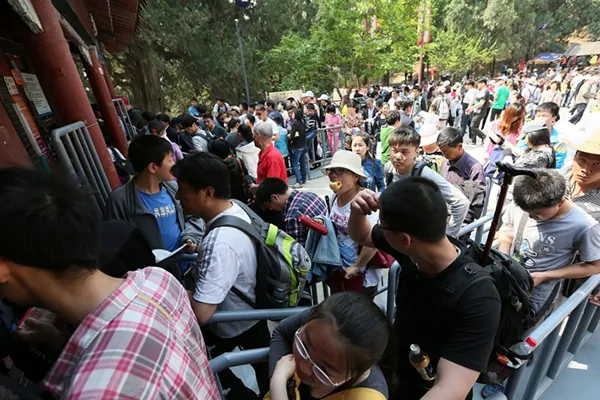
People still love to travel; they're just keeping a clear ledger:
The ticket is a fixed cost. Every extra has to prove it's worth it.
3. Check-in photos are out, staying home is in
Cooking stews, binge-watching shows, taking walks, cooking with parents.
Posts like these drew plenty of likes this year, more than the usual nine-photo scenery grids.

The point of a holiday has shifted from "proving I went" to "making sure I rested."
4. Mall dining trends downward, and casual eateries draw long lines
Sit-down restaurants upstairs sat empty while lines formed in the basement for malatang, river-snail noodles and jianbing.
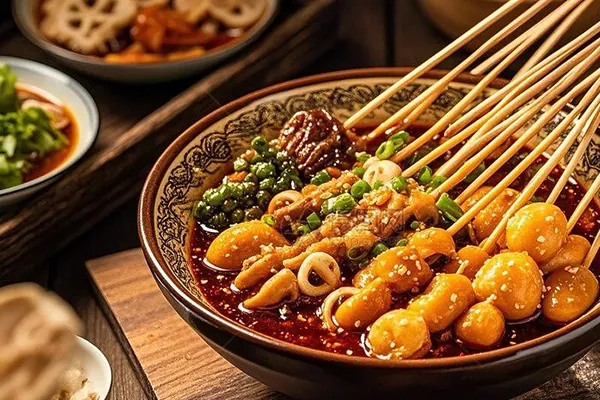
It's not that people can't afford better. They just see no need to pay for show. A filling, tasty meal for twenty or thirty yuan beats sitting stiffly through a hundred-yuan-a-head dinner.
5. Fewer wedding invitations, lighter gift money
National Day used to be peak wedding season. This year many young couples chose to register their marriage and take a short trip, or simply have a family dinner.

Gift money is no longer a contest of who gives most. Social obligations are returning to give-and-take without the burden.
6. Trunks heading home have changed: from health supplements to dish soap
People used to pack bags of showy gifts. This year it was rice, flour, cooking oil, tissues and laundry detergent.
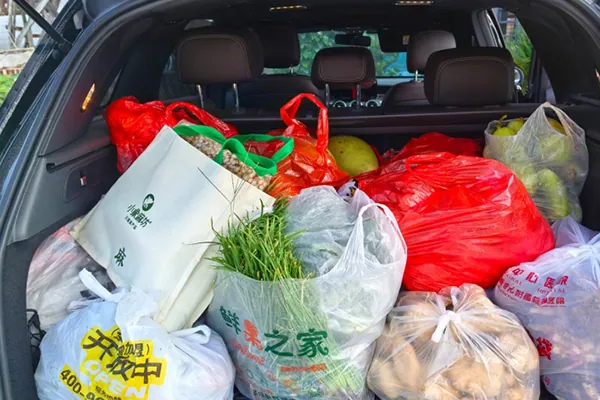
Parents may say "don't waste money," but they know that things used every day are the truest sign of care.
7. Viral guesthouses are out, but good manners and respect for boundaries are back
Some still chose guesthouses, but they cooked for themselves, took out the trash when they left and carried their empty bottles away.
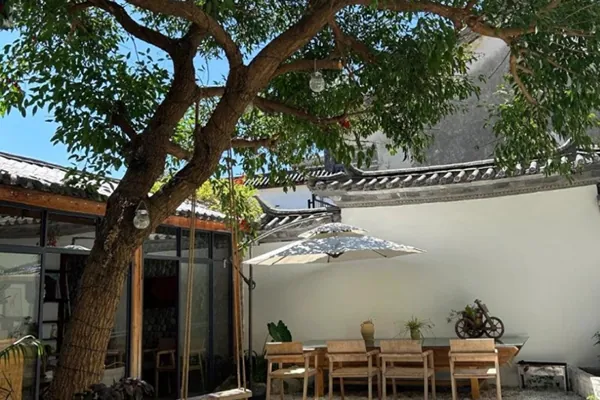
It's not stinginess. It's spending money where "I'm comfortable and I don't trouble anyone else."
8. Phone battery matters more than makeup
Fewer people queued to touch up makeup at scenic spots; more went hunting for shared power banks.
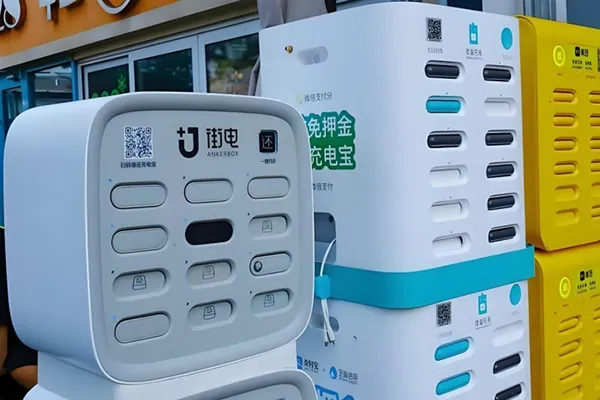
On the road, polish is a bonus. Battery life is what gives you peace of mind.
9. Long lines to charge, no wait to refuel
More people are taking new energy vehicles on long trips, and holiday charging stations jam up every time.
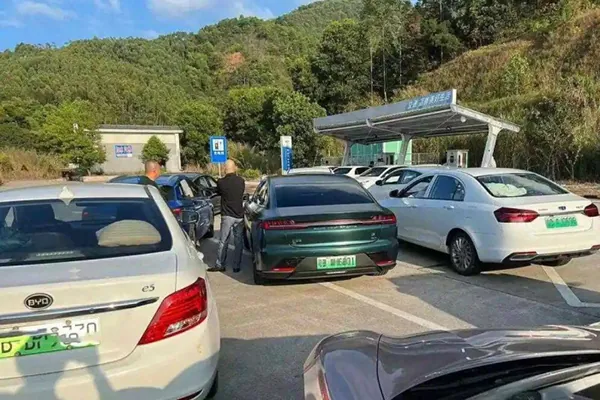
Yet nobody blamed the cars. People simply recalculated: when to top up, whether to leave the expressway and how much range to keep in reserve.
10. The most comfortable option: sleeping in at home
After two days of watching videos of others stuck on the expressway, people curled up on the sofa with a cup of hot tea.

As the holiday wound down, many admitted the truth:
Going out means worrying about price hikes and traffic, staying in risks boredom, but in the end, not rushing and not forcing it is what truly restores you.
It looks like everyday life, but it's also how you should buy equipment
After years in intelligent equipment, we've noticed that how a factory chooses equipment works a lot like how people spend a holiday. There's a saying we often repeat internally:
Don't fall for a single slide deck, and don't place an order based on a single quotation.
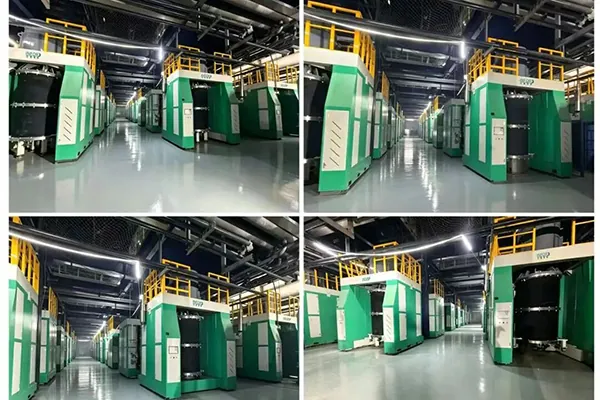
A safer approach comes down to four points:
1. Look at the material first, not the model number
What is the viscosity? The solids content? The initial particle size? The target D50/D90? Is the material sensitive to metal ions? To temperature rise?
If the material isn't clearly defined, choosing a model is a blind guess.
2. Run a trial grind first
Test it with your own slurry.
Reaching the target fineness isn't the end. Check whether the distribution is narrow, whether continuous operation is stable, whether the beads break and whether the chamber wall runs hot.
3. Match the machine to the process, not to the price
High viscosity and high solids, extreme fineness, contamination sensitivity, continuous production:
vertical, pin-type, turbine and nano ceramic-chamber designs each have their own battlefield.
The same machine can perform in completely different ways on a different material.
4. Judge delivery, not slogans
Can it arrive on time? Can it be commissioned with your material? Can it connect to the central control system and online particle size analysis? How quickly do spare parts arrive?
These are what keep you worry-free after the purchase.
Get led astray, and it's like forcing your way to a viral tourist spot over National Day: you either overspend for appearances or lose out for a low price.
So when buying a bead mill (sand mill), what should you trust?
Buying a bead mill is no different.
Don't chase the most expensive, don't grab the cheapest and don't be swayed by promotional videos.
More important than equipment specs is the fit capability behind them.
What INFOR has always focused on is building bead mills that fit the material, fit the process and fit your production line, not just a quotation.
Some concrete examples:
• A customer producing sodium-ion battery materials had been using horizontal mills. We ran our vertical mill in a side-by-side comparison under the same conditions: grinding efficiency was higher, the product particle size distribution was narrower, and temperature control and sealing were stable. The customer later sent a letter of praise and is now discussing equipment for follow-up lines.
• A leading LFP project needed to scale up to continuous production using 1000L vertical energy-saving bead mills for high flow rates, consistent fineness and low unit energy consumption. Experience from installations numbering in the hundreds isn't a figure on a slide; it was proven on site.
• From 1L laboratory mills to 150L, 400L and 1000L, and up to 2000L vertical mills: bigger isn't always better. We match the model to the rhythm of your production line.
The purpose of this fit capability is to get your material, your capacity and your process on the same wavelength as the equipment.
When it comes to equipment, it's just like a holiday
Just like what people figured out this National Day:
Don't follow the crowd blindly, don't jump on trends on impulse and don't waste money for the sake of appearances.
Choose what fits best, what can be verified and what comes with real support afterward.

And that is exactly what INFOR has been doing:
• Delivery you can count on: R&D in Dongguan and a manufacturing base in Xiangyang, with capacity to schedule both large and small machines. Not a case of samples on show but no delivery.
• Proven project experience: new energy cathode and anode materials, sodium-ion batteries, conductive agents, electronic pastes and ceramic inks, at leading material producers and lines running at tens of thousands of tonnes.
• A technical team that stays engaged: we don't disappear after the sale. Machine trials, process commissioning, fineness tracking and on-site support, working with you to dial in operating conditions.
• A brand that stands up: a national-level specialized and innovative "Little Giant" enterprise, focused on grinding alone for more than 20 years. Going global isn't about OEM labels; it's about taking complete production line solutions overseas.
No need to be swayed by a flashy slide deck, or to fixate on the lowest price line in a spec sheet.
Bring us your material, explain your process and put your target fineness and capacity on the table.
We'll run samples, compare results, then select the model, moving step by step from lab trials to pilot scale to full production.
When it comes to equipment, it's just like a holiday:
Success isn't about how far you go or how much you spend. It's what you come back to: a stable line, lower power consumption, precise fineness and peace of mind.