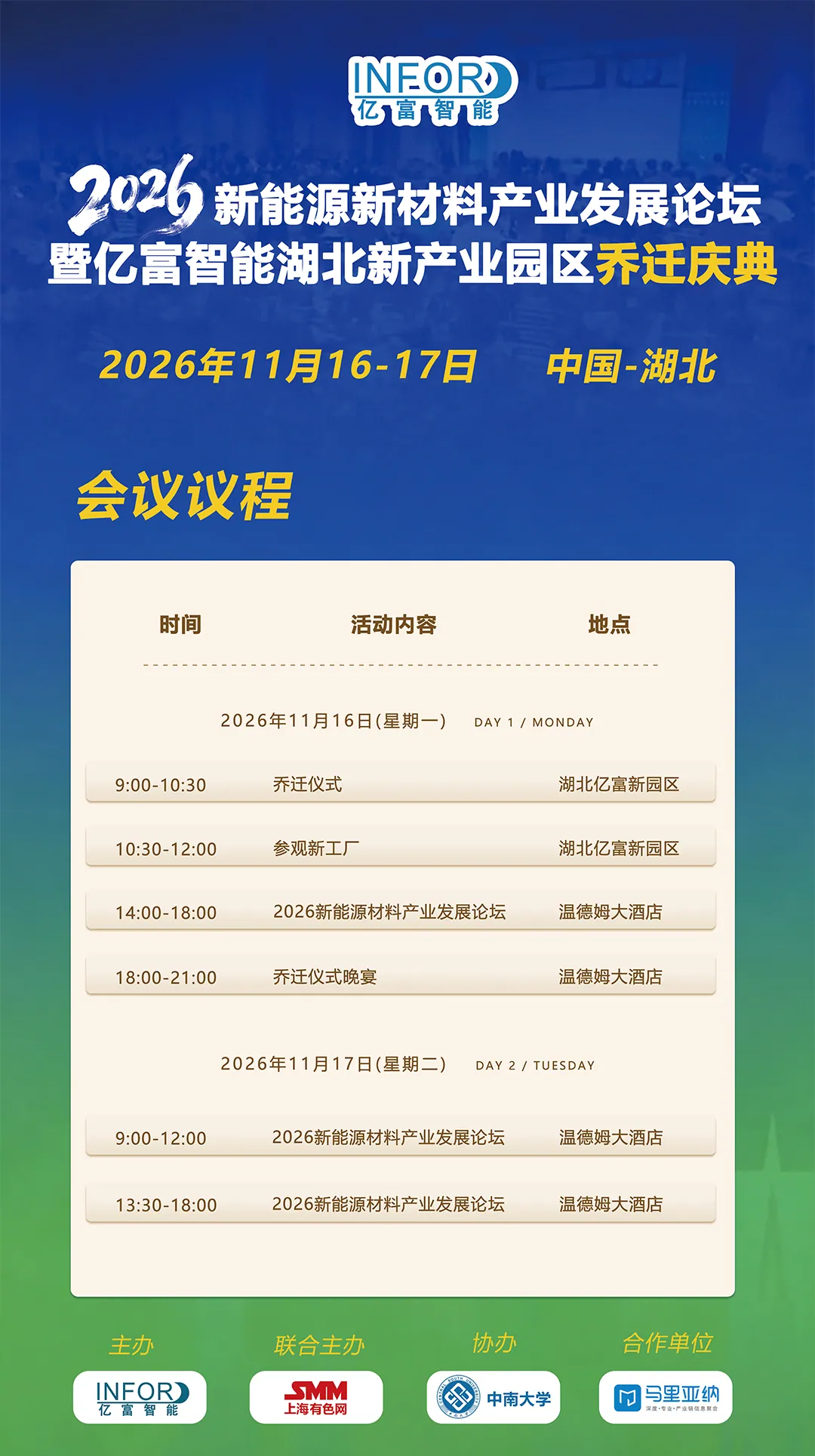
A new park in Hubei, and a forum to mark the moment.
As INFOR's new Hubei industrial park gets under way, the conversation in the new energy industry is shifting from single materials to sodium-ion breakthroughs and the coexistence of multiple battery chemistries.
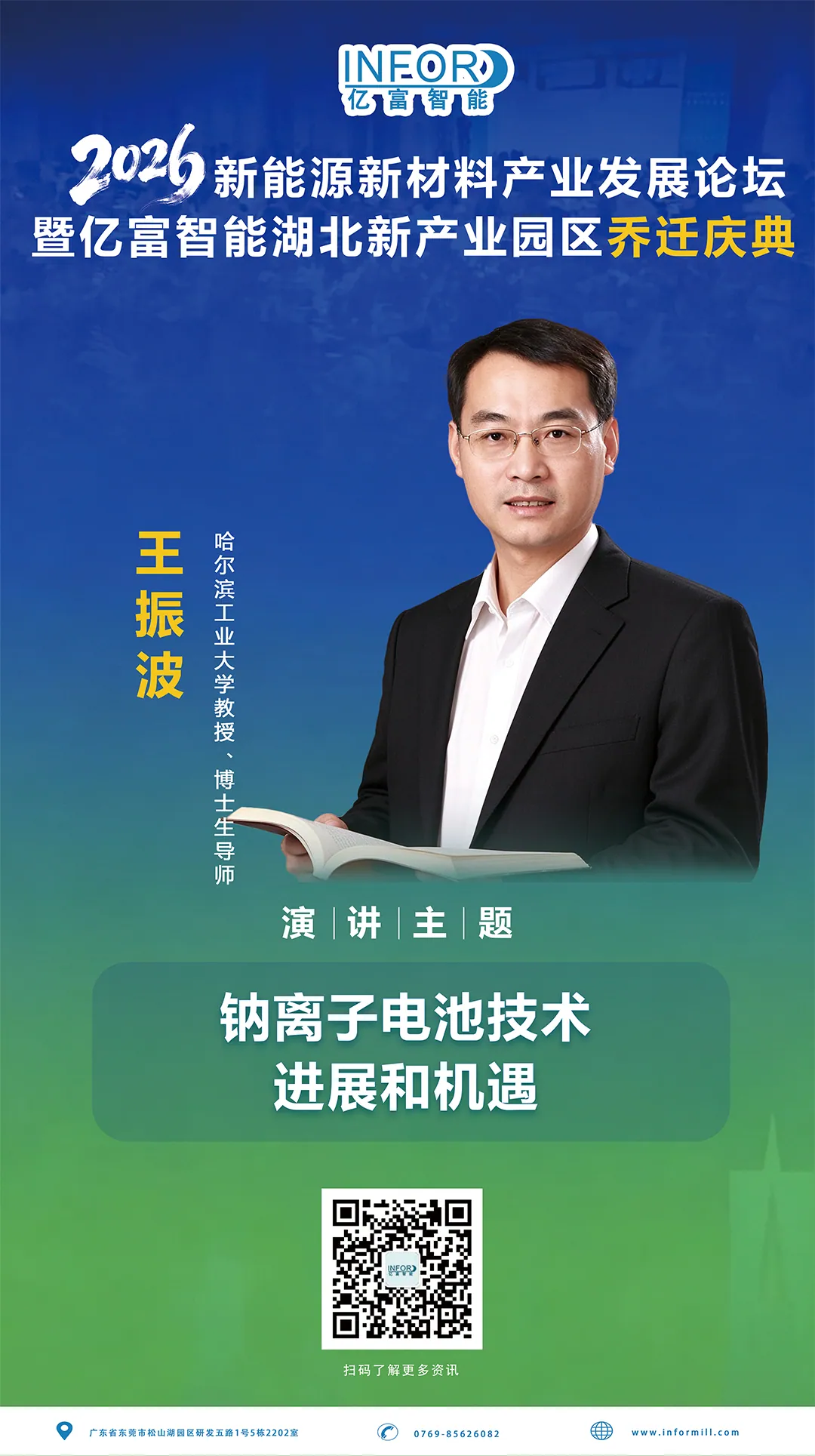
This time we are pleased to welcome an academic with a long record in advanced chemical power sources and electrochemical energy storage: Professor Wang Zhenbo of Harbin Institute of Technology (HIT) has confirmed that he will attend the 2026 New Energy Materials Industry Development Forum and INFOR Hubei Industrial Park Opening Ceremony, where he will deliver a keynote titled “Progress and Opportunities in Sodium-Ion Battery Technology”.
A Systems-Minded Scholar Who Builds Electrochemistry into Power and Storage Systems
Wang Zhenbo is a Grade II tenured professor and doctoral supervisor at Harbin Institute of Technology and a foreign member of the Russian Academy of Engineering. His research covers advanced chemical power sources, sodium-ion batteries, electrocatalysis and nanostructured electrode materials. He has been selected for national high-level talent programs and as a Leading Young and Middle-aged Scientific and Technological Innovation Talent of the Ministry of Science and Technology, has received the Innovation Award of the Hou Debang Chemical Science and Technology Award, was named a Clarivate Highly Cited Researcher in 2025, and has been listed among Elsevier's Highly Cited Chinese Researchers for many consecutive years.
His research focuses on lithium-ion batteries and next-generation energy storage materials, cathode and anode materials for sodium-ion batteries, electrocatalytic water splitting and oxygen reduction, and the optimization of advanced electrochemical storage and integrated energy systems. He has led numerous national research projects, published more than 300 SCI papers in journals including Nature Catalysis, Nature Communications, Advanced Materials and Angewandte Chemie, and holds dozens of granted invention patents spanning battery materials, electrocatalysis and fuel cells.
His work follows a clear industrial thread: electrochemistry should not stop at the published paper. From nanoscale electrode material design, to engineering cathode and anode materials, to energy management in sodium-ion battery systems, he keeps answering the same questions: how materials get into cells, how cells get into systems, and how systems connect to production lines.
Connecting Electrode Interfaces, Cell Engineering and Storage Systems
Peers describe his research as having a rare reach: it starts from surface and interface reactions at the nanoscale and extends all the way to megawatt-scale energy storage dispatch. Rather than splitting a topic into separate papers, he links the entire technology chain from active sites to complete storage systems.
• Electrode materials and interface control: Working on key materials for high-energy chemical power sources, he addresses side reactions at high voltage, sluggish ion migration and cycle fading through crystal structure design, surface modification and interface engineering, keeping material systems stable over wide temperature ranges and at high rates;
• Sodium-ion battery materials and device engineering: Targeting the core material bottlenecks of sodium-ion batteries, he develops high-capacity, long-life cathode and anode systems while optimizing electrode/electrolyte interface compatibility and ion transport pathways, balancing energy density, cycle life and cost, three goals that usually pull against each other;
• Hybrid sodium-ion and multi-chemistry storage architectures: Moving beyond single-battery thinking, he studies how sodium-ion batteries can be dynamically matched with lithium-ion batteries and supercapacitors, building a closed-loop energy flow in which sodium-ion handles peak shaving, lithium-ion provides energy top-up and capacitors deliver fast response, so hybrid systems find their optimal operating point under different loads;
• Multi-energy integrated systems: He layers the fast response of chemical power sources with the sustained output of sodium-ion batteries to design dispatchable, scalable integrated energy topologies for industrial park microgrids, distributed power stations and energy-intensive industries;
• System-level performance mapping: He builds performance transfer models from active material to electrode, cell and system, using data to translate material parameters into system metrics so that upstream material development targets the real needs of end-use storage systems.
He sums up his research logic in one sentence: “Materials set the ceiling for energy density, and systems set the floor for energy utilization. Only when you can reach both does a technology truly stand up.”
Closely Aligned with the Forum's New Energy Materials Theme
Professor Wang's view of the new energy industry closely matches the logic behind this year's forum: the industrial breakthrough for sodium-ion batteries will not come from a leap in any single material, but from materials, equipment and systems advancing together.
Several core topics of the forum map directly onto his research:
• The engineering window for new material systems: Layered oxide cathodes, hard carbon anodes, new electrolytes and functional binders are redefining the performance limits of sodium-ion batteries, but whether they leave the lab depends on whether powder processing, slurry dispersion and electrode manufacturing can provide a matching process window;
• Equipment capability for sodium-ion manufacturing: From crushing and classifying hard carbon anode material to uniformly dispersing cathode slurry, scaling up each material places new demands on grinding precision, dispersion uniformity and coating consistency. Small fluctuations on the equipment side feed directly into cell consistency and system efficiency;
• The dispatch logic of storage systems: Sodium-ion batteries are not a simple drop-in replacement for lithium-ion. Their low-temperature performance, rate capability and safety advantages call for redesigned BMS strategies, thermal management architectures and energy dispatch algorithms, which requires material properties, cell response and control systems to work together on the same timeline;
• The industrial park as a system validation site: INFOR's new industrial park is itself a working example of material-equipment-system collaboration. Here, intelligent grinding and dispersion equipment is not just standalone machinery but the first safeguard of upstream material consistency in the sodium-ion supply chain.
This is the deeper reason the forum pairs the park opening with an industry forum: to bring equipment makers, material developers and system engineers together on the same site to discuss problems openly.
A New Park Opens with a Live Conversation on the Future of Sodium-Ion
In November, INFOR's new Hubei industrial park in Gucheng will officially open. Professor Wang will take the stage with his keynote, “Progress and Opportunities in Sodium-Ion Battery Technology”, distilling years of research in advanced chemical power sources, sodium-ion materials and storage system integration into a systematic talk aimed at industry.
For the material companies, equipment manufacturers and system integrators in the audience, the real value of the talk is hearing how a scholar who understands electrode materials at the molecular level, cell engineering parameters and storage system energy management breaks down the key questions: how sodium-ion materials reach production, how cells scale up, and how system requirements feed back into material design.
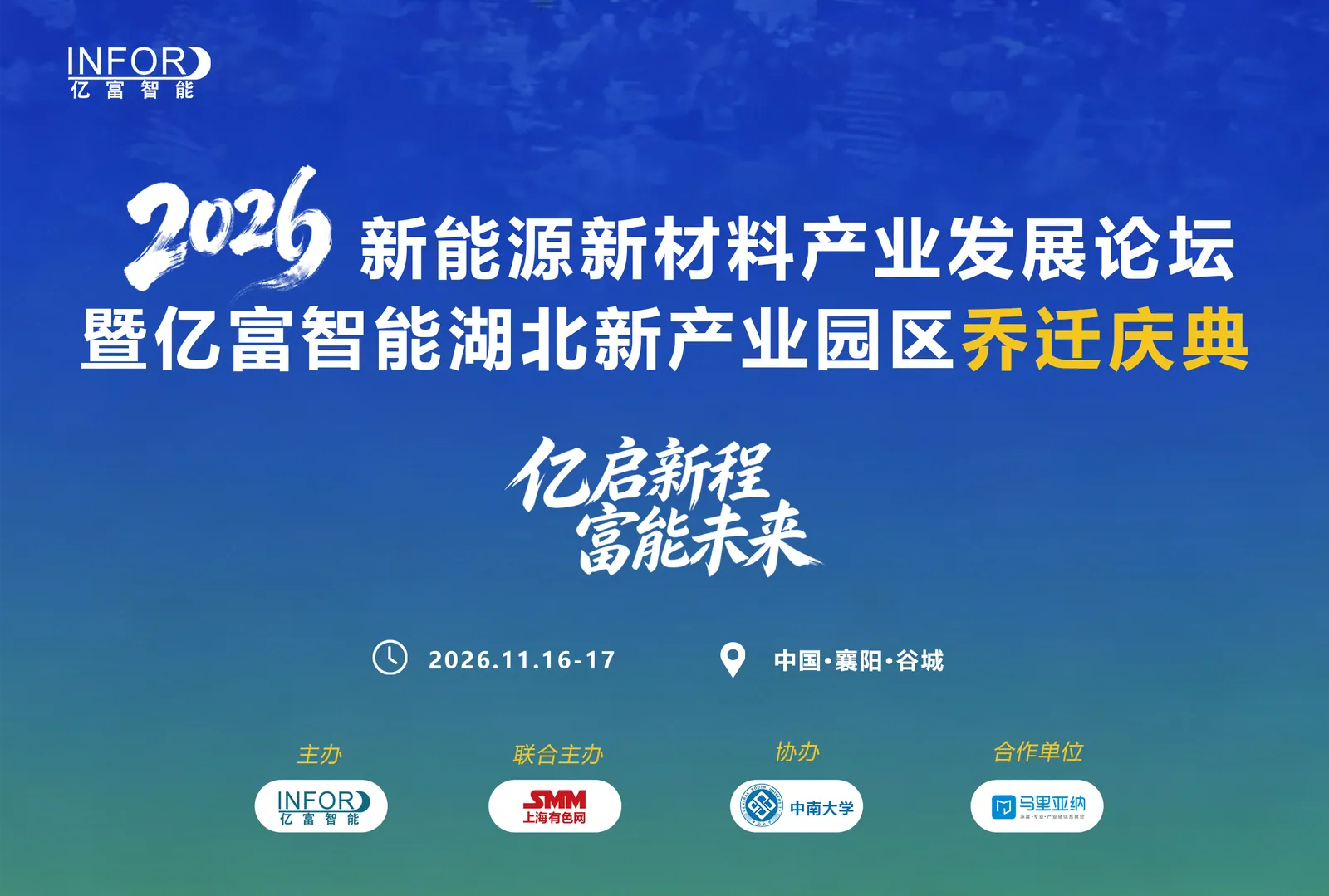
2026 New Energy Materials Industry Development Forum and INFOR Hubei Industrial Park Opening Ceremony
Date: November 16-17, 2026 | Venue: Gucheng, Xiangyang, Hubei, China
Speaker: Prof. Wang Zhenbo (Grade II Tenured Professor and Doctoral Supervisor, Harbin Institute of Technology; national high-level talent)
Topic: Progress and Opportunities in Sodium-Ion Battery Technology
Organizer: INFOR
Co-organizer: Shanghai Metals Market (SMM)
Supporting organizer: Central South University
With support from: Gucheng County People's Government