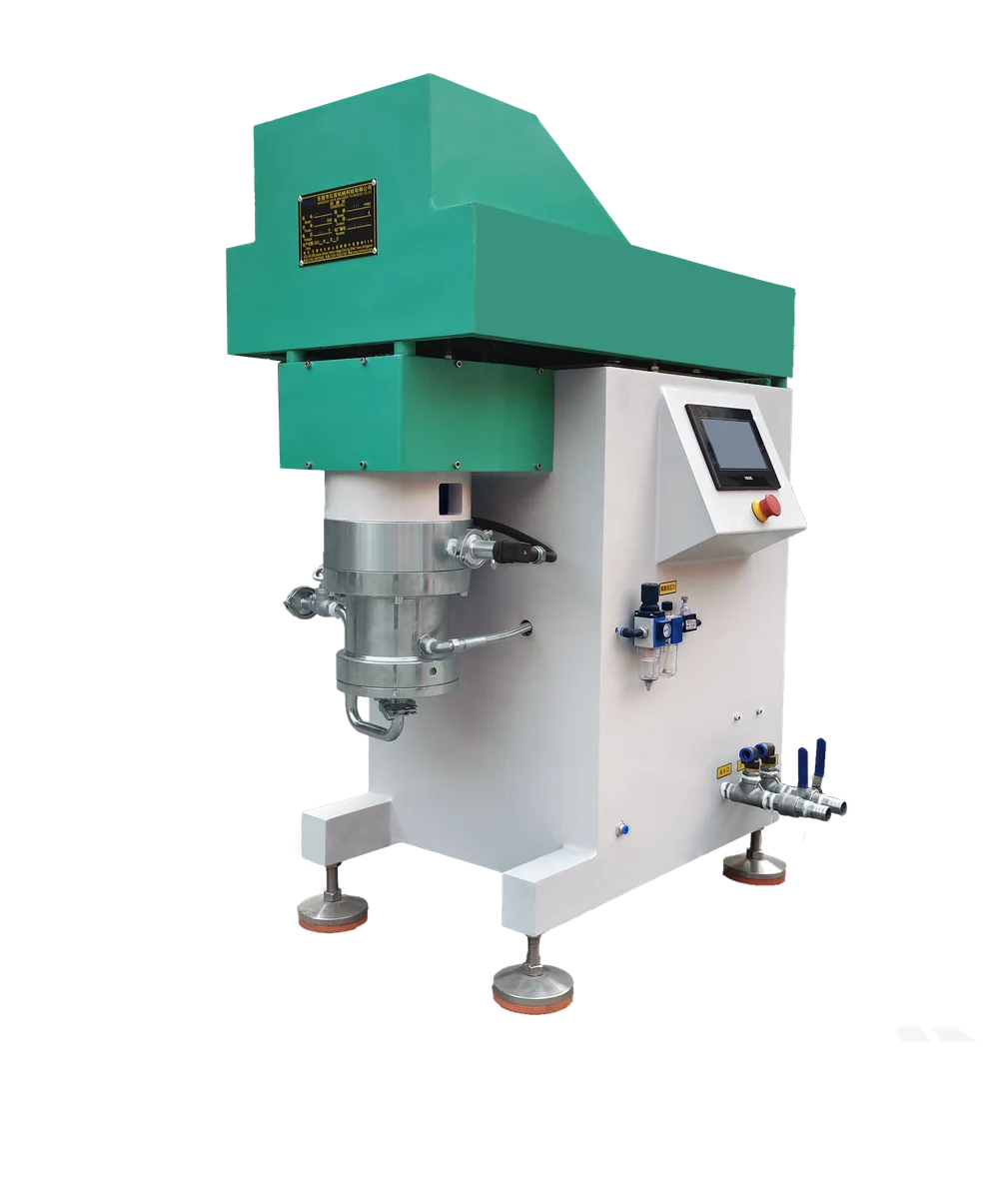
Bead mills make pharmaceutical nanosuspensions by wet milling poorly soluble active pharmaceutical ingredients (APIs) to the nano range, which increases surface area and can improve dissolution. The work starts with very small batches of expensive API, so low minimum batch volume, minimal contamination, temperature control and easy cleaning matter most. INFOR supplies all-ceramic laboratory mills and screen-free vertical mills for development and scale-up.
What the process needs
| Requirement | Why it matters | How the bead mill meets it |
|---|---|---|
| Small minimum batch | API is scarce and costly in development | Lab mills with very small chambers |
| Nano particle size | Surface area and dissolution | Micro-beads, screen-free separation |
| Minimal contamination | Product purity | Ceramic grinding zone, zirconia beads |
| Temperature control | Many APIs are heat-sensitive | Cooling and controlled energy |
| Cleaning and documentation | Quality system requirements | Easy-to-clean design; confirm documentation needs early |
Why nanosuspensions
Many new APIs dissolve poorly in water. Reducing them to nanoparticles stabilised by surfactants or polymers raises the surface area and can improve dissolution rate.
From lab to production
Formulation work starts with grams of API in a lab mill and scales to larger mills by keeping specific energy and stress energy similar. Using the same design from lab to production makes scale-up more predictable; see the lab-to-production scale-up guide.
Quality requirements
Pharmaceutical production has its own requirements for contact materials, cleaning and documentation. Agree these with the equipment supplier at the start of the project, before the mill is specified.
Recommended INFOR equipment
| Stage or need | INFOR equipment | Why |
|---|---|---|
| Small-batch development | Experimental horizontal mill (NCT-0.3) | 0.3 L chamber, 0.5 L minimum batch, all-ceramic grinding zone |
| Nano development with micro-beads | Experimental vertical mill | Screen-free, fine micro-beads, all-ceramic |
| Scale-up | LPM vertical bead mill | Same screen-free principle at production scale |
| Homogenisation | Laboratory high-pressure homogenizer | Alternative or complement for emulsions and nanosuspensions |
Related: bead mill separation systems and bead mill glossary. INFOR runs free material tests at its Dongguan and Hubei test bases; send your material, target fineness and output through the contact page.