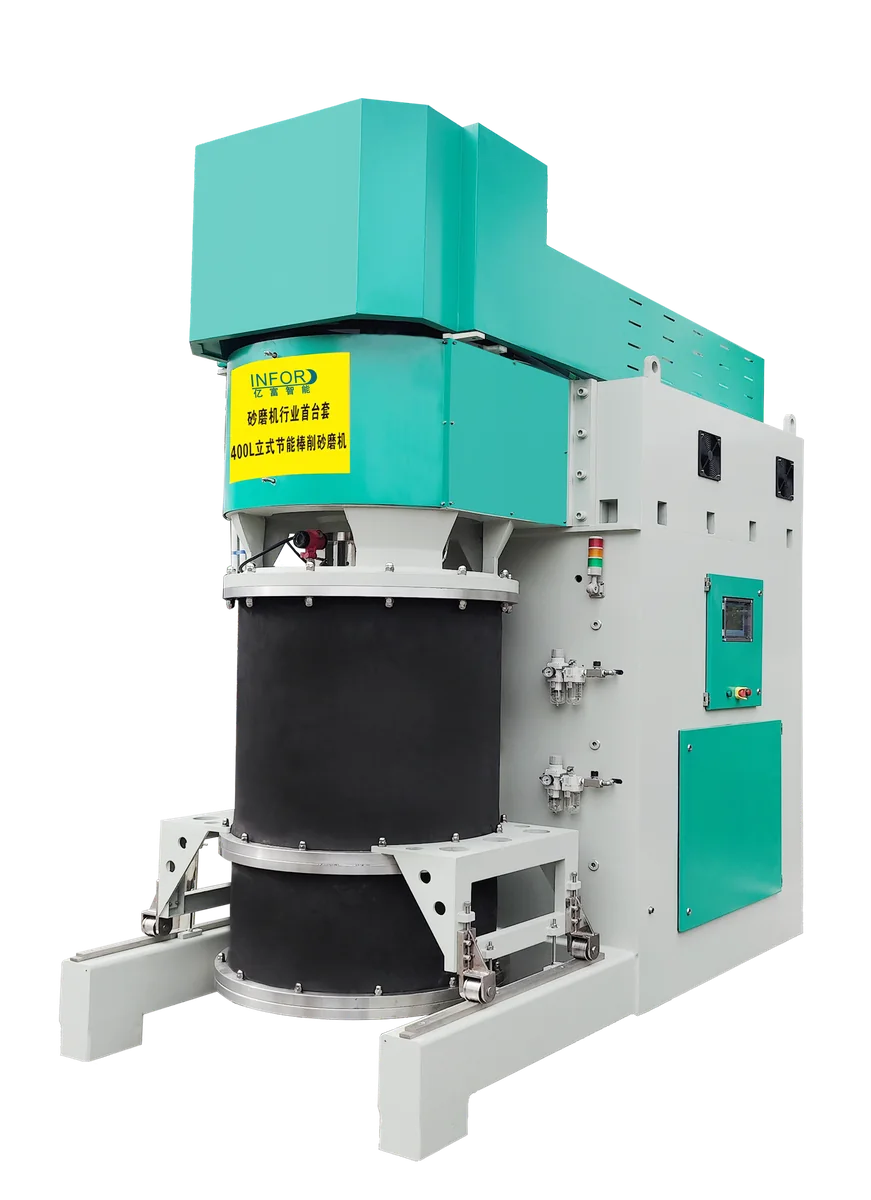
LPM Vertical Sand Mill Series
Screen-free vertical sand mills for 0.03-0.3 mm micro-media, ultra-fine grinding with no clogging and high throughput.
- Grinding fineness
- 30-1000 nm
- Zirconia beads
- 0.03-1.0 mm
- Discharge
- screen-free
- Drive
- energy-saving motor
- Ceramic materials
- zirconia / silicon carbide
Specially designed and optimized for reliable use of 0.03-0.3 mm micro grinding beads, the LPM series combines an innovative screen-free separation system with special functional components to deliver extremely high throughput and a perfect, never-clogging separation system.
4 models.
Figures from the current product catalogue. Final configuration depends on your material and process.
| Model | LPM-60 | LPM-150 | LPM-400 | LPM-1000 |
|---|---|---|---|---|
| Motor Power (kW) | 90 | 160 | 355 | 650 |
| Grinding Chamber Volume (L) | 60 | 150 | 400 | 1000 |
| Grinding Media (mm) | 0.05-2.0 | 0.05-2.0 | 0.05-2.0 | 0.1-2.0 |
| Feed Flow (L/h) | 2000 | 4000 | 6000 | 8000 |
| Cooling Water Consumption (m³/h) | 4 | 6 | 10 | 18 |
| Weight (kg) | 4500 | 7500 | 9500 | 22000 |
What is built in.
- Full range of 1-1000 L models to meet different production needs
- Stable vertical structure with vertical main shaft, no deformation, more stable running
- Screen-free centrifugal separation, never clogs, supports 0.03 mm beads for finer grinding limits
- 20-30% higher efficiency than conventional horizontal sand mills
- Permanent magnet energy-saving motor cuts unit energy consumption by over 20%
- Centrifugal classifier grades particles, smaller particles discharge first for a narrower distribution
- Up to 90% media utilization, no periodic bead sieving or replacement
- Auto-lifting grinding barrel for easy disassembly and one-person multi-machine maintenance
- Direct fine grinding without a coarse-grind stage, lowers line construction cost
Typical materials.
- Nanomaterials
- Sodium materials
- Silicon-carbon anode
- Lithium iron phosphate
- Ink
- Alumina
- Zirconia
- Silica
- ATO / ITO
- Graphene
Frequently asked questions
What particle size can the LPM Vertical Sand Mill Series achieve?
The LPM Vertical Sand Mill Series reaches a grinding fineness of 30-1000 nm. The achievable particle size depends on three things: the material system itself, the grinding media size, and the residence time in the chamber. Harder minerals and high-viscosity slurries need smaller beads and more passes to reach the lower end of that range, while well-dispersed low-viscosity systems get there faster. Because the result is material-specific, INFOR validates every application on laboratory or pilot equipment before a production machine is quoted, so the process is proven with measured data rather than estimated. A finer target also costs throughput: the same machine that meets a coarse specification at high flow will need a slower feed rate and smaller beads to hold a nanometre target, so capacity and fineness are traded against each other rather than achieved together. Tell us your material, target D50 and required throughput, and our engineers will confirm whether this series fits or recommend a different configuration.
Which materials can the LPM Vertical Sand Mill Series process?
The LPM Vertical Sand Mill Series is applied to nanomaterials, sodium materials, silicon-carbon anode, lithium iron phosphate, ink, alumina, zirconia and silica. Across these industries the common requirement is wet grinding and dispersion down to the sub-micron or nanometre range while keeping the slurry temperature and viscosity under control. Suitability is decided less by the industry label than by the physical properties of the slurry: solids content, viscosity, hardness and whether the system is water-based or solvent-based all affect bead selection, flow rate and cooling demand. If your material is not on this list, that does not mean it is out of scope. Send us the material data sheet and target particle size, and our engineers will assess it against this series and run a free laboratory trial before any purchase decision.
Which model of the LPM Vertical Sand Mill Series should I choose?
This series comprises 4 models: LPM-60, LPM-150, LPM-400, LPM-1000. They share the same grinding principle and differ mainly in chamber volume and installed power, so the selection is driven by the throughput you need rather than by the fineness you want, every model in the series reaches the same particle size range. Motor power across the series spans 90-650 kW. As a rule, laboratory and pilot work starts on the smallest chamber to establish the recipe, and the production model is then sized from the validated throughput. Scaling up on the same grinding principle keeps the process transferable. Oversizing is a common and expensive mistake: a chamber much larger than the batch wastes media and energy per kilogram, while an undersized machine forces extra passes that add heat to the slurry. Send us your target output per hour and the material, and our engineers will size the model and confirm the cooling water, power and floor space requirements.
Can INFOR test our material before we buy the LPM Vertical Sand Mill Series?
Yes, and the laboratory test is free. INFOR runs laboratory and pilot lines where your material is processed on the same grinding principle as the production machine, so the result transfers directly. The trial establishes the working recipe: bead size and material, flow rate, number of passes, achievable particle size distribution and cooling demand. The Hubei plant also has a complete lithium iron phosphate test line covering grinding, spray drying, kiln and jet milling, which suits small-batch and pilot trials for battery materials. You receive the measured particle size distribution and the operating parameters used to reach it, so the data can be checked against your own quality requirements. Testing before purchase means the equipment is specified from measured data rather than estimated, which is the difference between a machine that meets your specification and one that merely looks right on paper.
Get a quotation.
Tell us the material, target D50/D90 and hourly output. We reply within 24 hours with a model recommendation.
Test Your Material