New energy and new materials
Grinding and dispersion for battery materials and advanced ceramics: LFP and LMFP cathodes, silicon-carbon anodes, solid electrolytes, separator coatings and structural and electronic ceramic powders.
Mills for new energy and new materials.
Each field lists the mills and lines whose product pages name it as an application; general-purpose mills appear in more than one field.
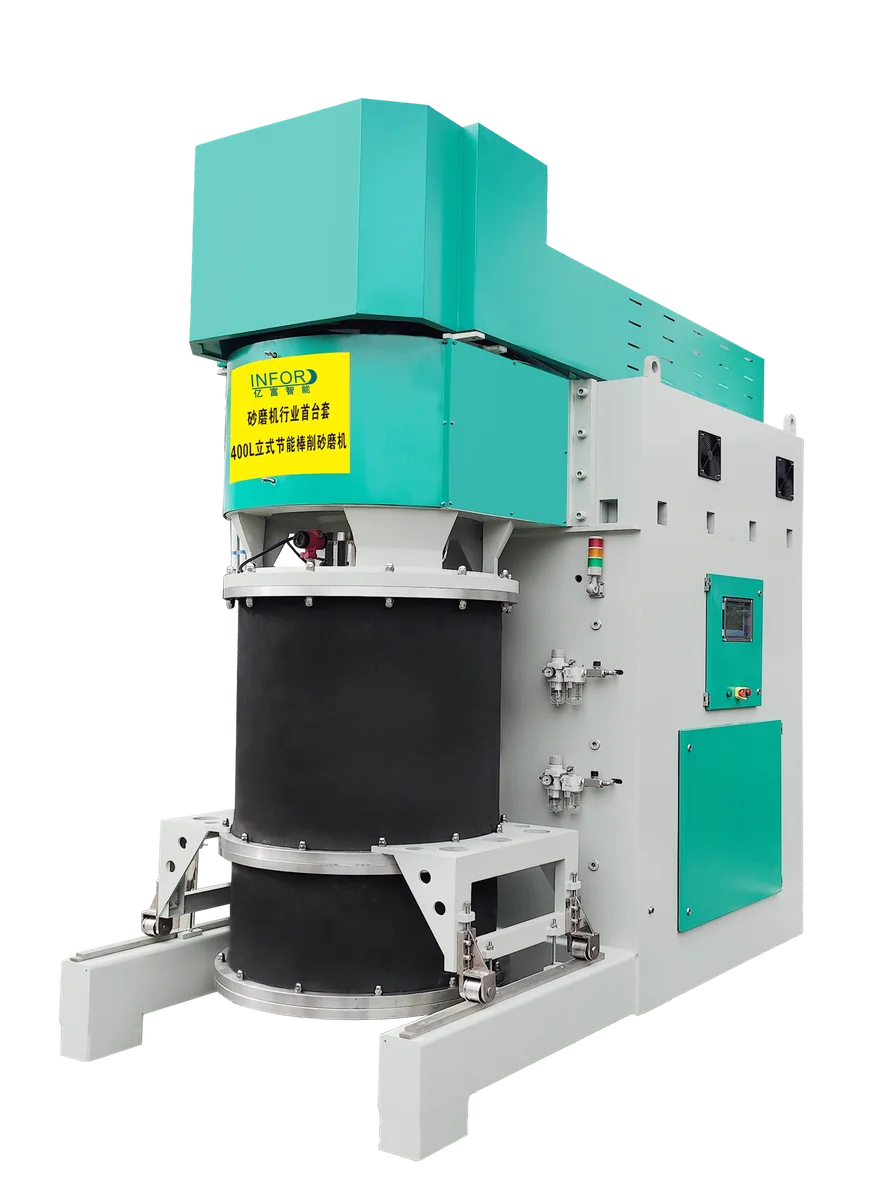
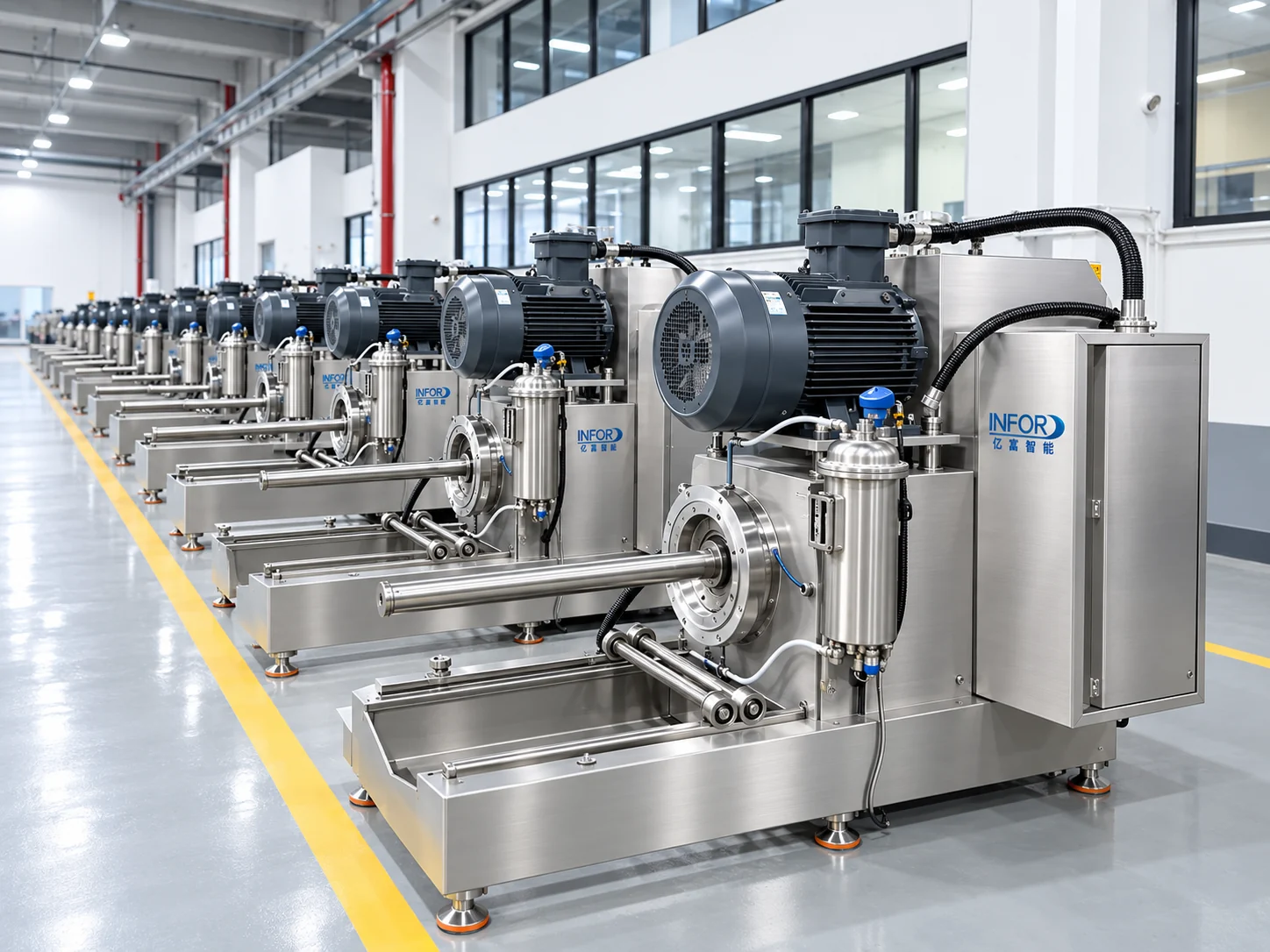
- Vertical SeriesLPM Vertical Bead Mill SeriesScreen-free vertical sand mills for 0.05-0.3 mm micro-media, ultra-fine grinding with no clogging and high throughput.
- Grinding fineness
- 30-1000 nm
- Zirconia beads
- 0.05-2.0 mm
- Models
- 4
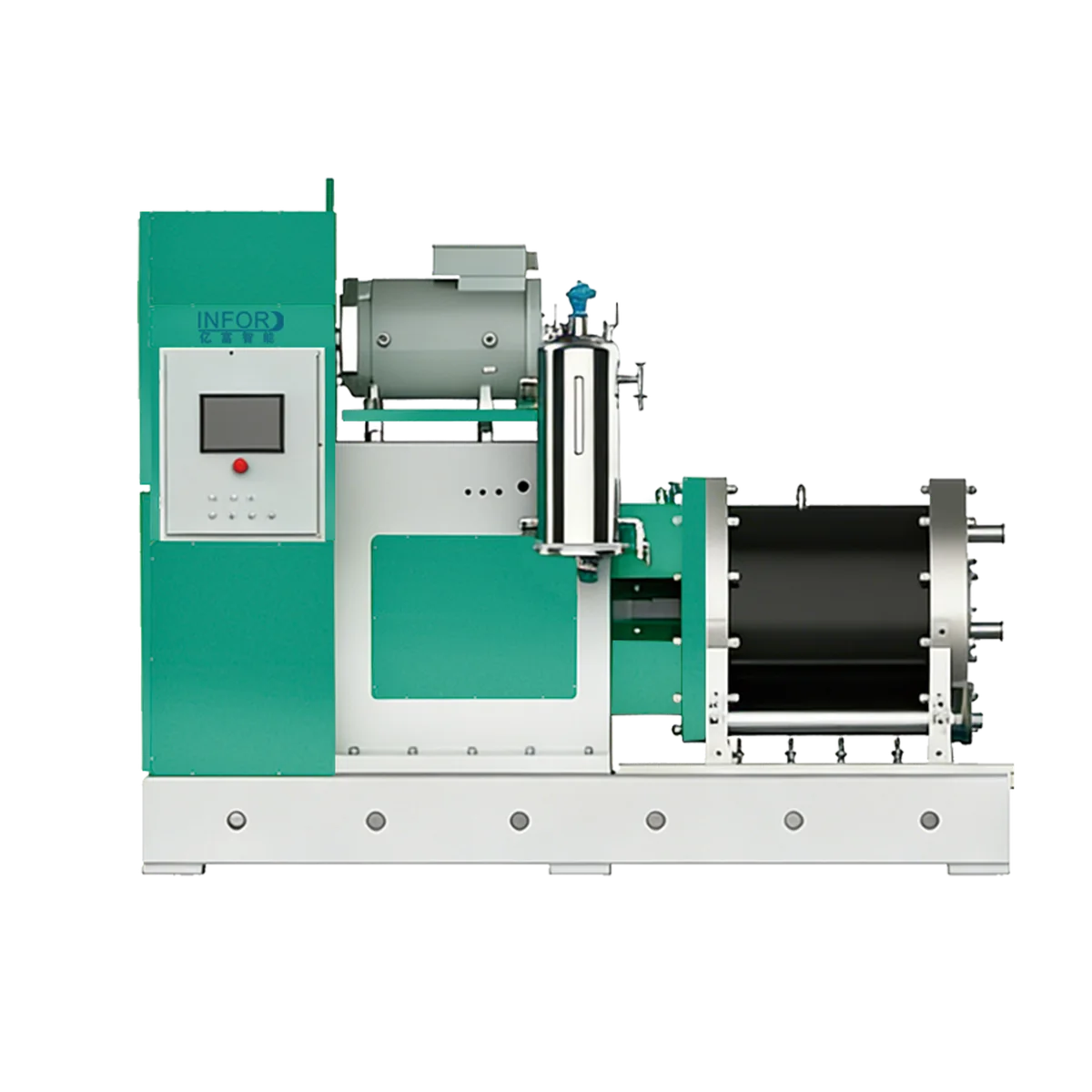 Pin SeriesNCP Pin Bead Mill SeriesPin-rod ceramic sand mills for high-flow, high-efficiency nano grinding across the full range of nano-material industries.
- Grinding fineness
- 100-1500 nm
- Zirconia beads
- 0.2-2.0 mm
- Models
- 8
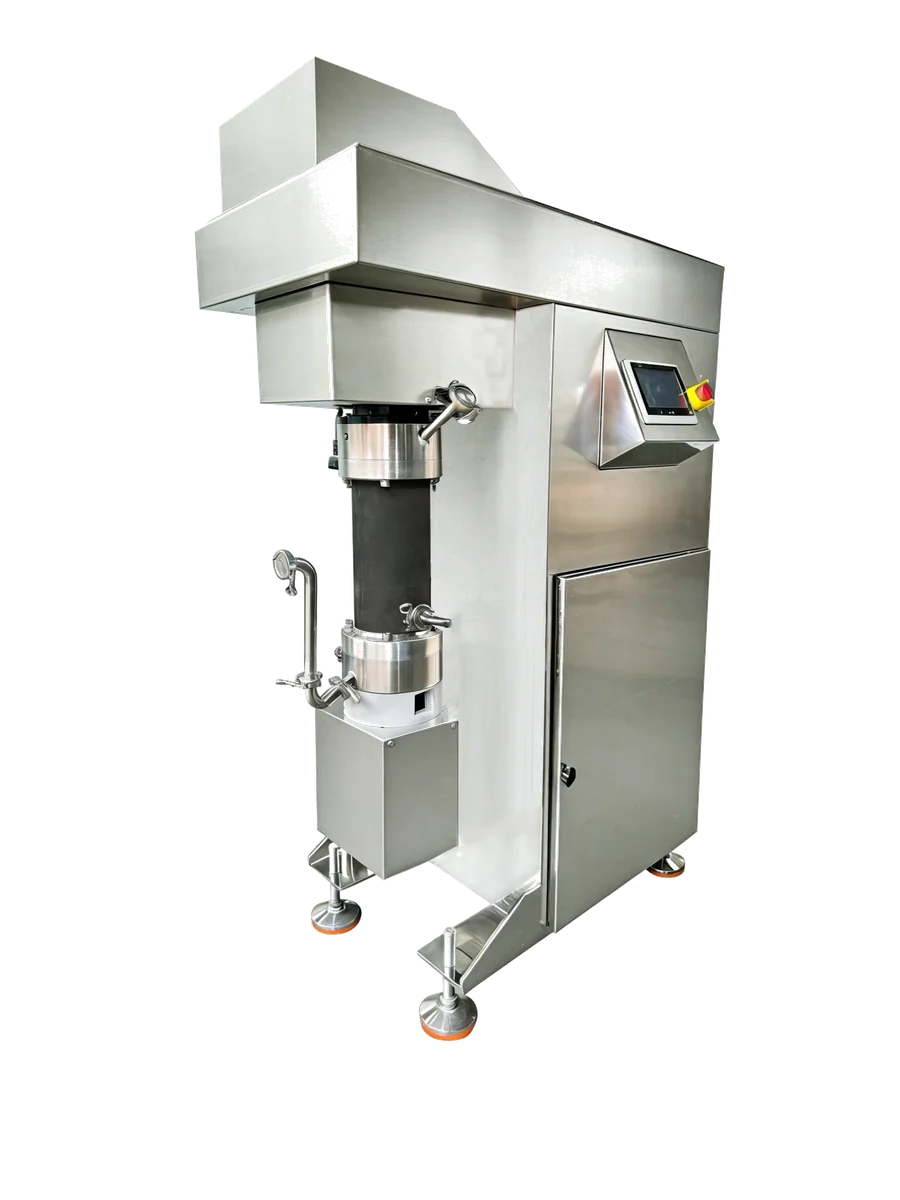 Dual-Power · VerticalVertical Dual-Power Bead Mill SeriesDual independent-drive vertical sand mill with separate motors for the rotor and separator for precise, flexible control.
- Grinding fineness
- 50-2000 nm
- Grinding media
- 0.03-2.0 mm
- Models
- 3
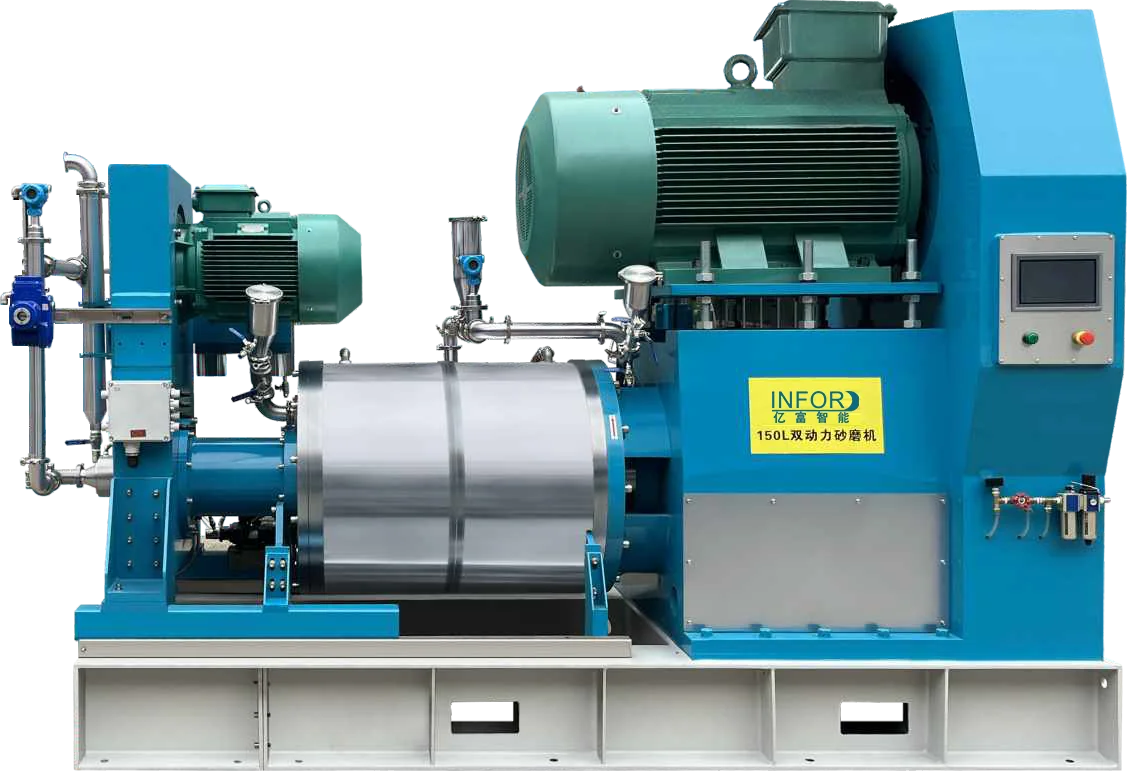 Dual-Power · HorizontalHorizontal Dual-Power Bead Mill SeriesHorizontal dual-drive sand mill with independent rotor and separator drives for forced circulation and precise control.
- Grinding fineness
- 100-1500 nm
- Grinding media
- 0.05-2.0 mm
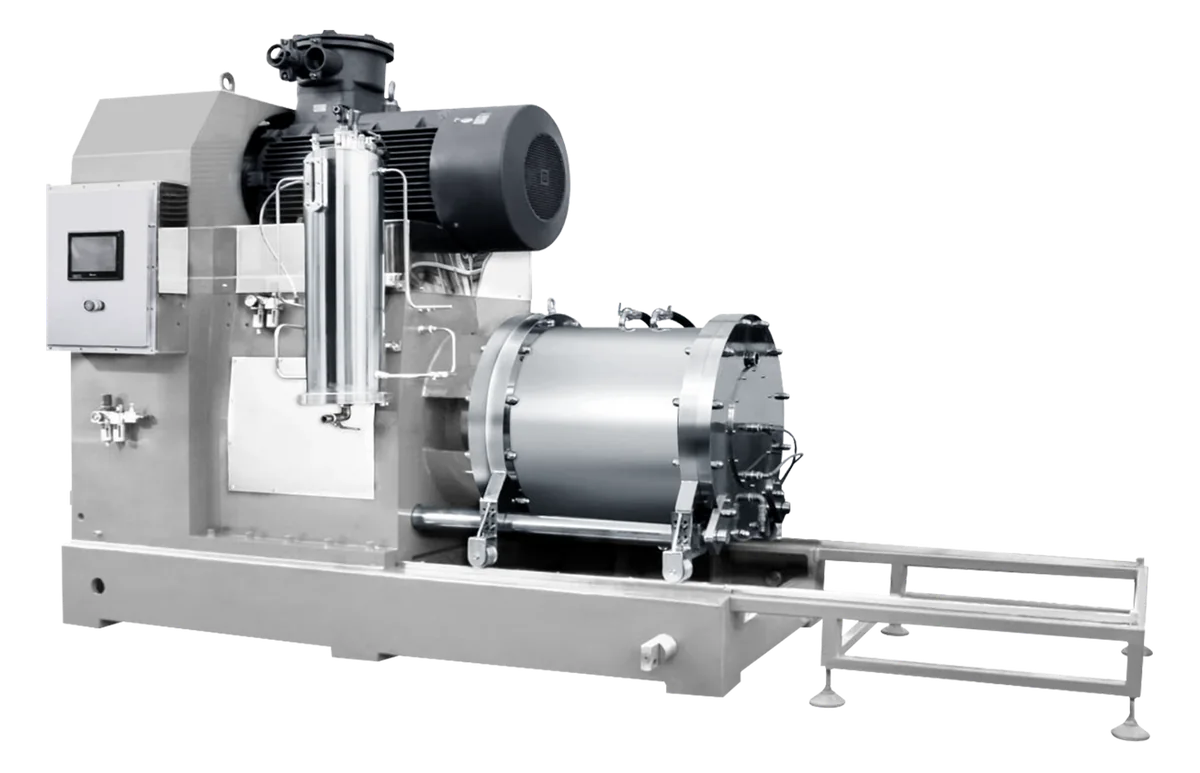 Battery CoatingCoating Slurry Bead Mill SeriesPin-rod sand mills purpose-built for battery separator and electrode coating slurries.
- Grinding fineness
- 500-5000 nm
- Zirconia beads
- 0.2-2.0 mm
- Models
- 3
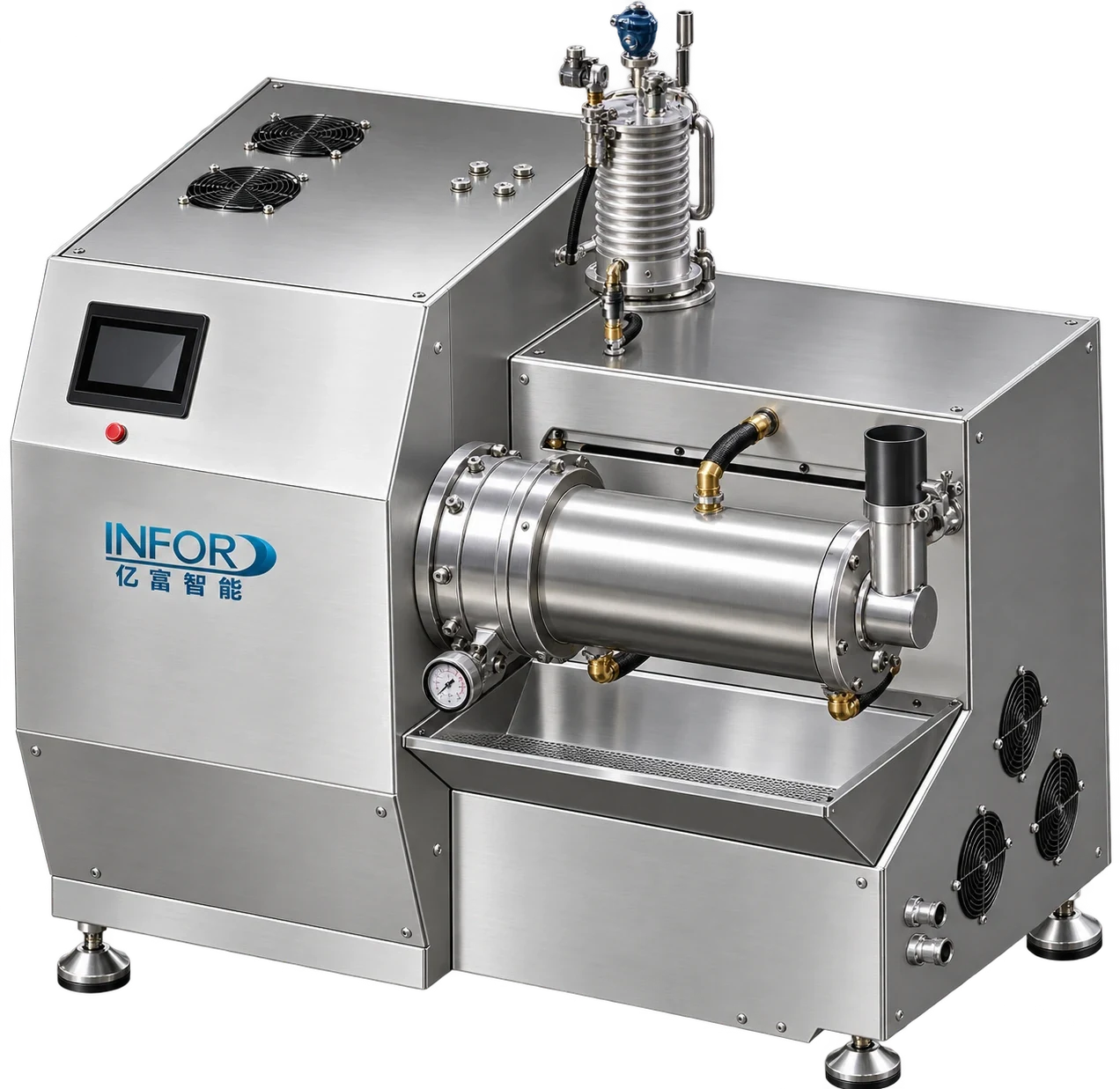 Dry GrindingDry Bead Mill SeriesDry-method sand mill for solvent-free dry milling with closed-loop classification and inert-gas anti-explosion options.
- Grinding fineness
- 1-10 µm
- Models
- 4
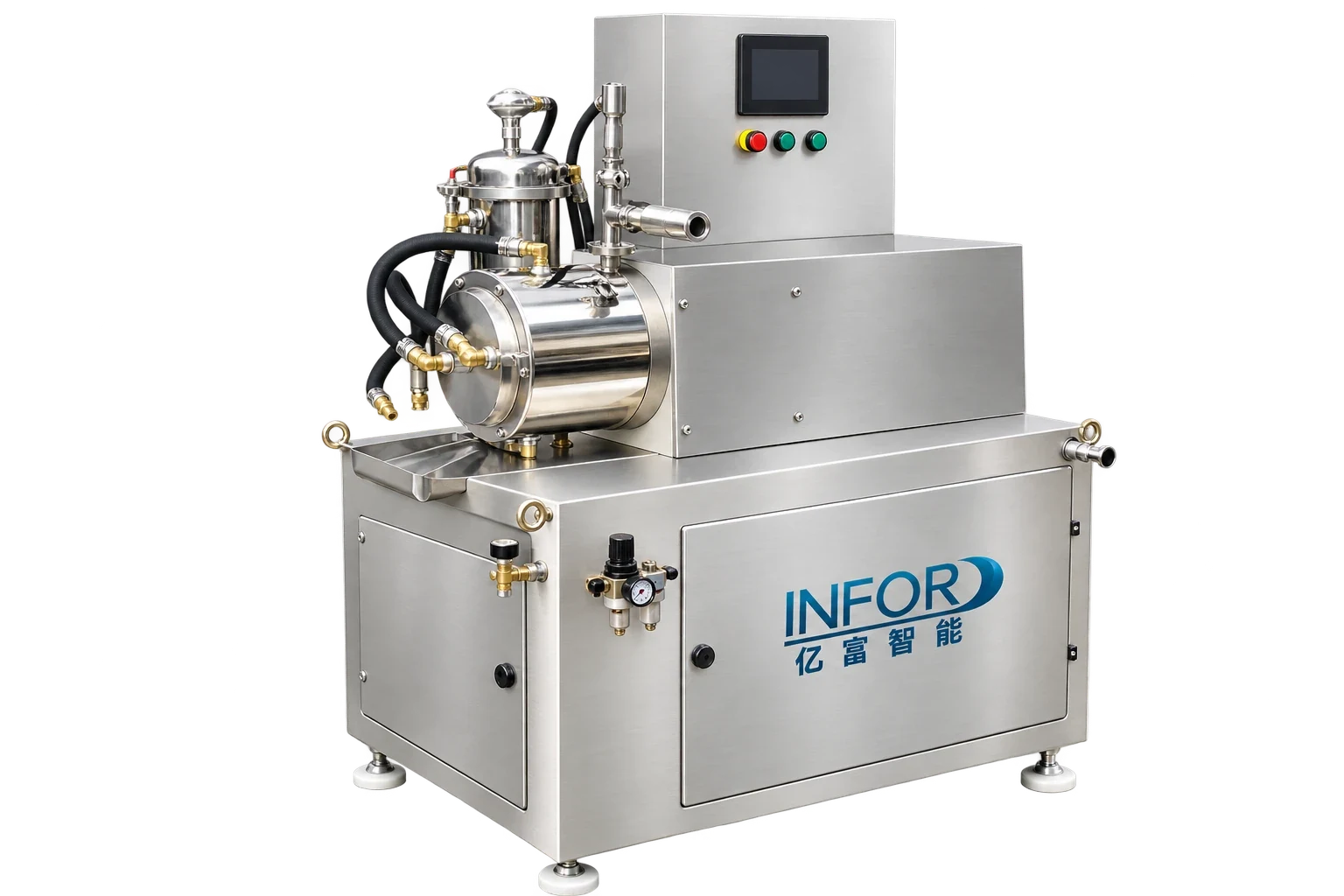 Disc SeriesDisc Bead Mill SeriesClassic disc-rotor sand mill for versatile, high-efficiency ultra-fine grinding across every industry.
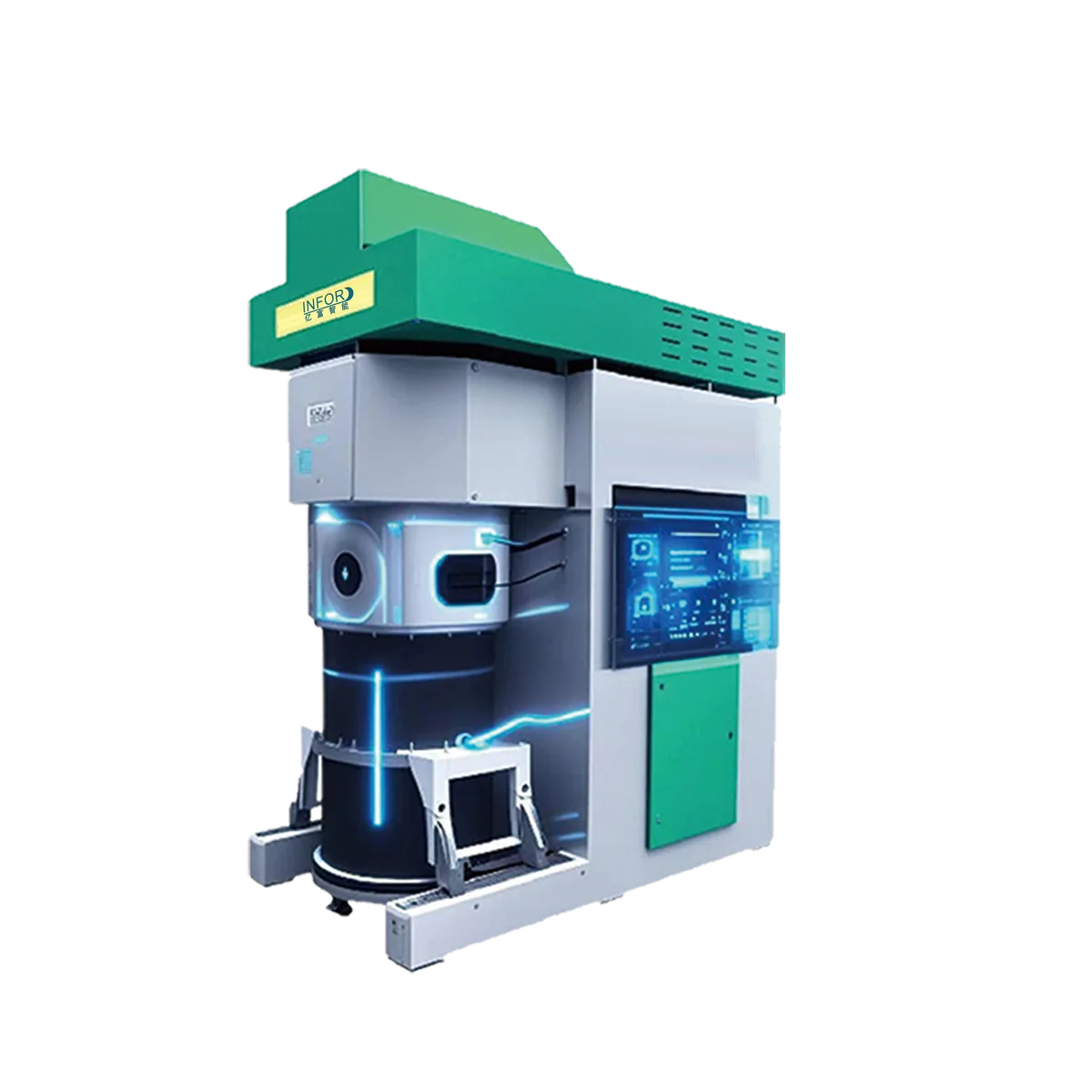 Intelligent · AI VoiceIntelligent AI Voice Bead MillAI voice-controlled sand mill (SWT series) that understands spoken commands for hands-free, multi-task operation.
- Models
- 7
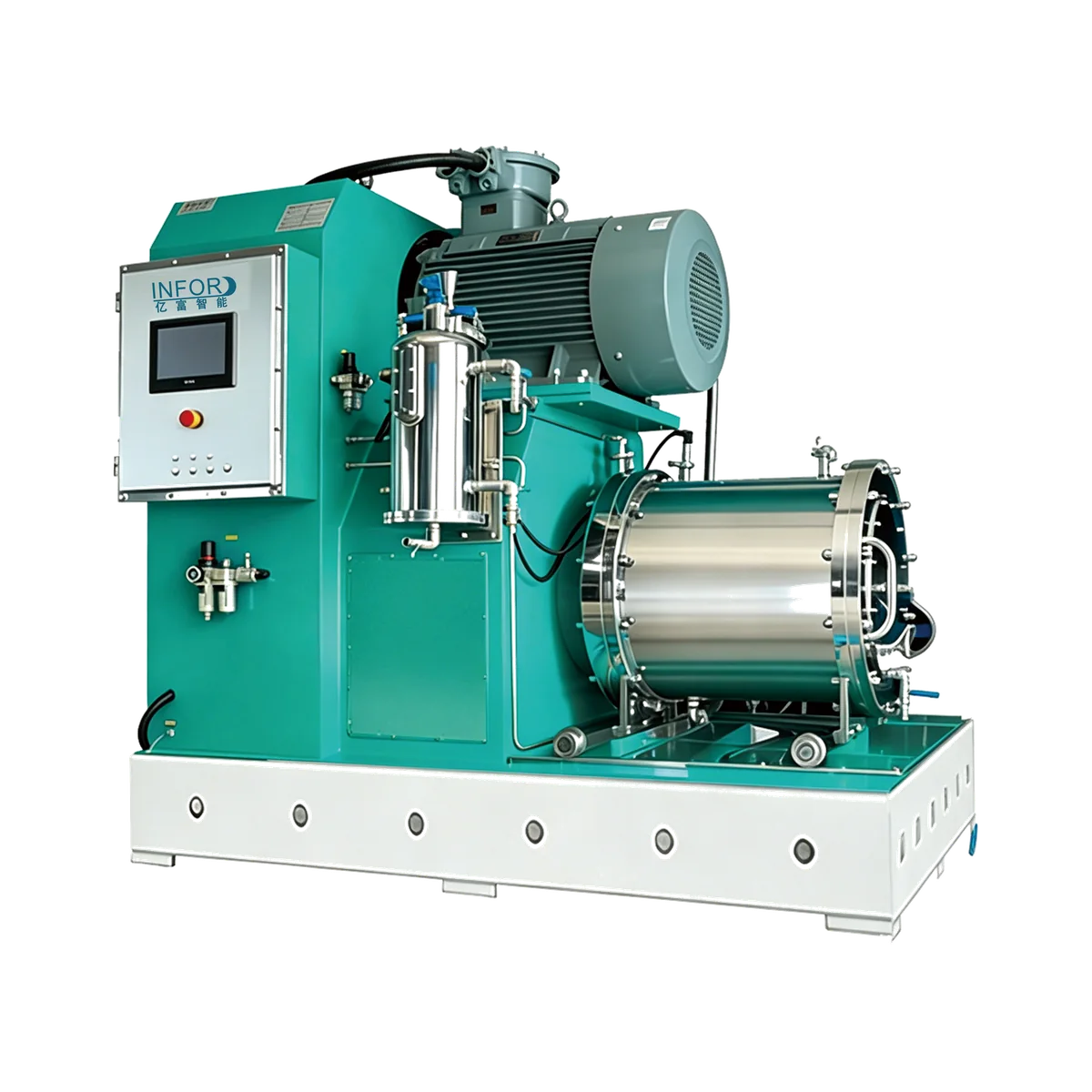 Turbine SeriesNCT Turbine Bead Mill SeriesTurbine-rotor ceramic sand mills for high-energy nano dispersion, narrow particle distribution and ultra-low energy consumption.
- Grinding fineness
- 100-1500 nm
- Zirconia beads
- 0.2-2.0 mm
- Models
- 3
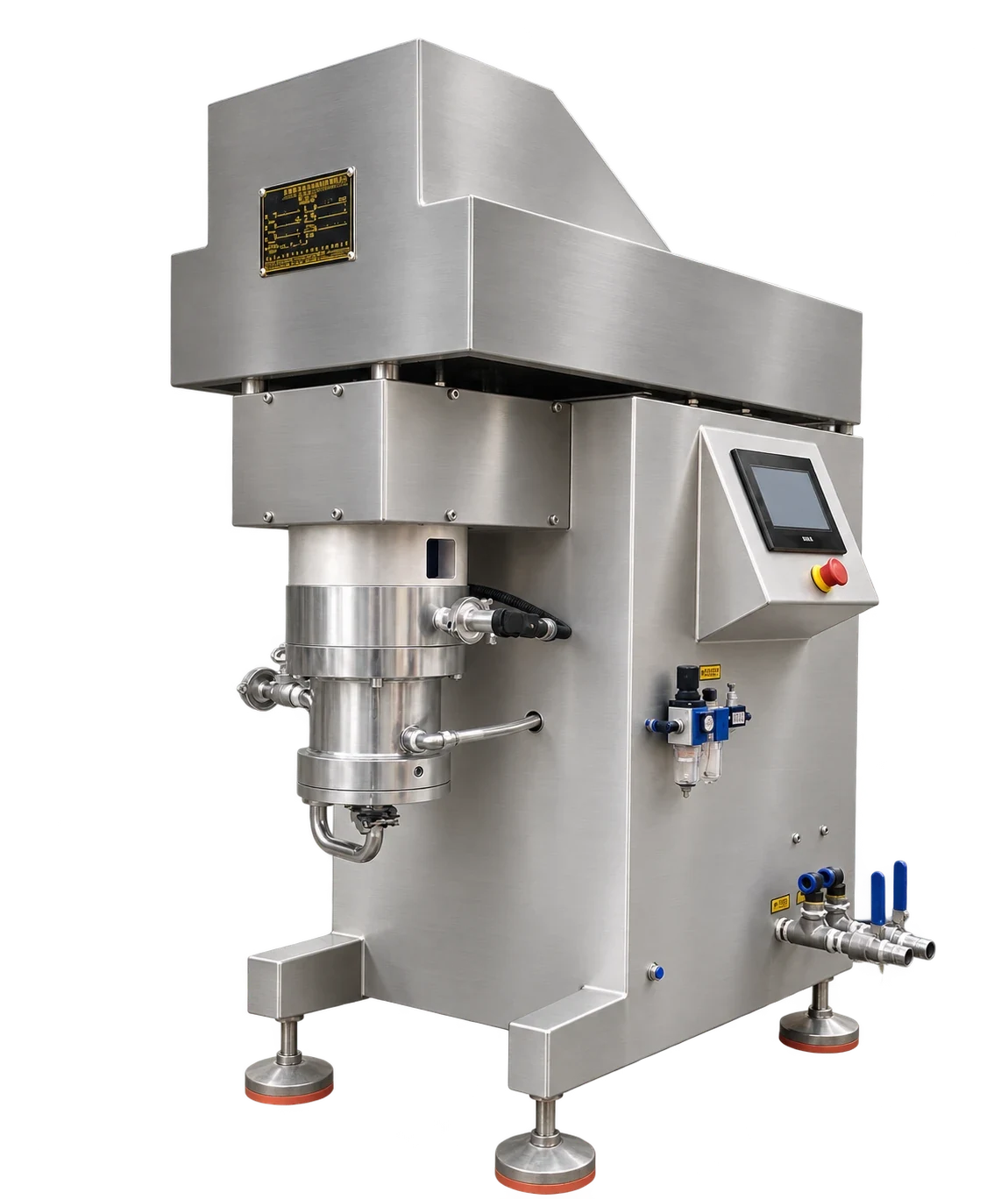 Laboratory · VerticalExperimental Vertical Bead MillVertical screen-free lab mill for ultra-fine grinding verification down to 0.03 mm zirconia beads.
- Grinding fineness
- 30-1000 nm
- Zirconia beads
- 0.03-1.0 mm
- Models
- 4
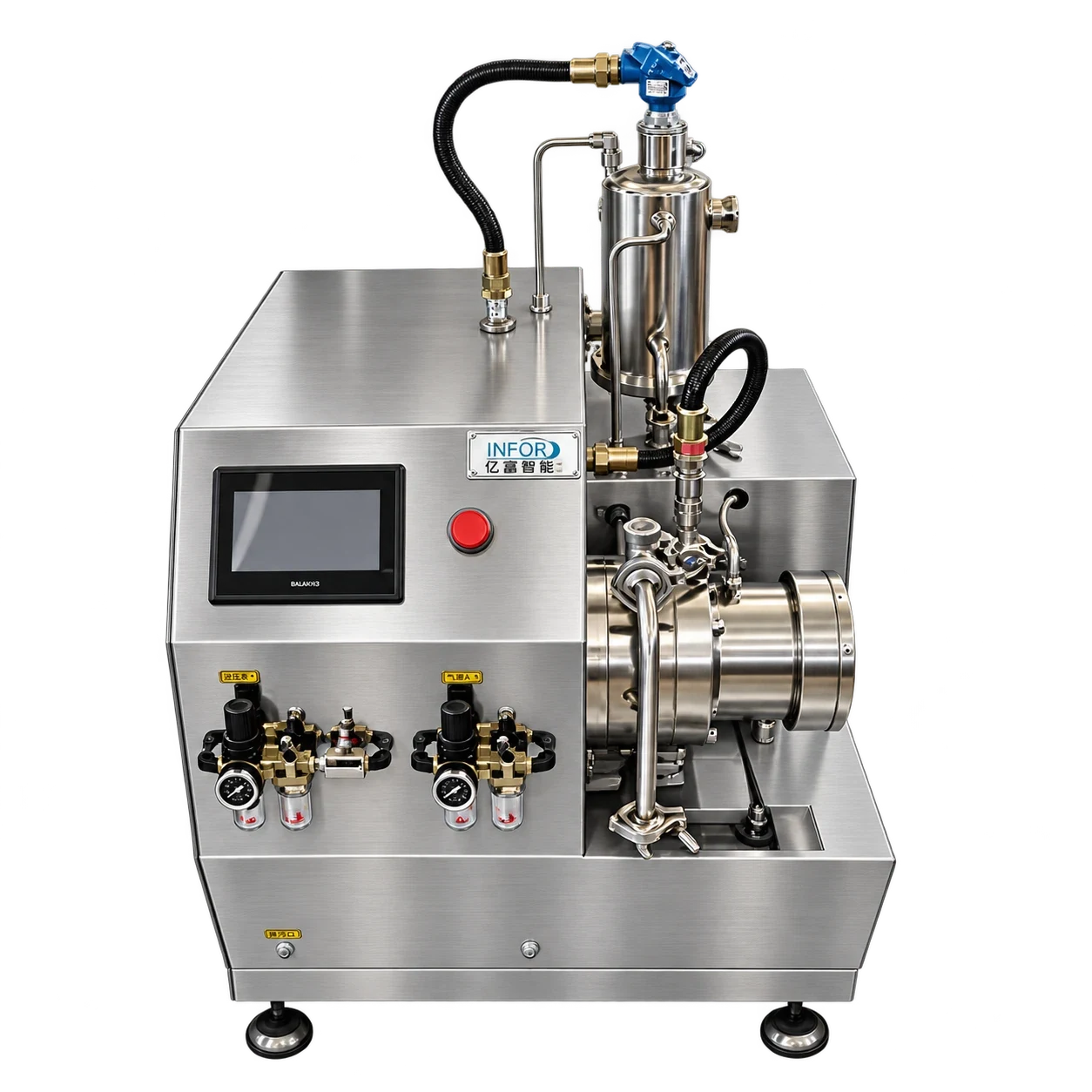 Laboratory · HorizontalExperimental Horizontal Bead MillCompact horizontal sand mill for extremely small batches and rapid nano wet-grinding trials in the laboratory.
- Grinding fineness
- 100-1500 nm
- Grinding media
- 0.1-2.0 mm
- Models
- 5
Production lines for new energy and new materials.
Each line page describes its process, scope and typical materials.
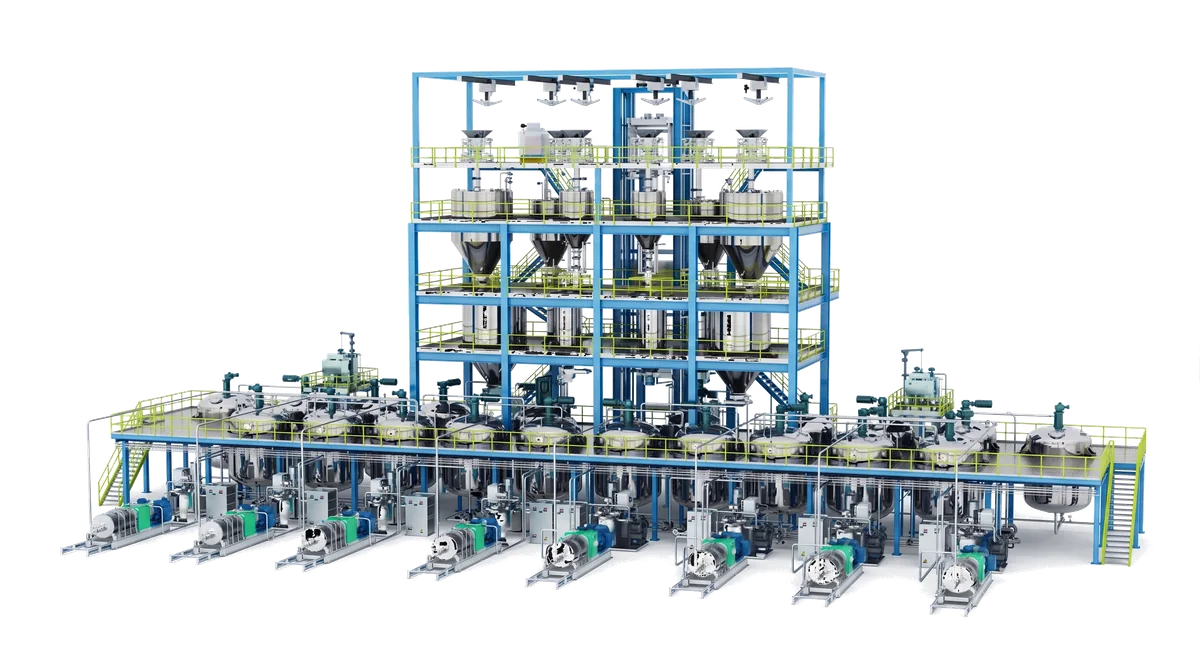
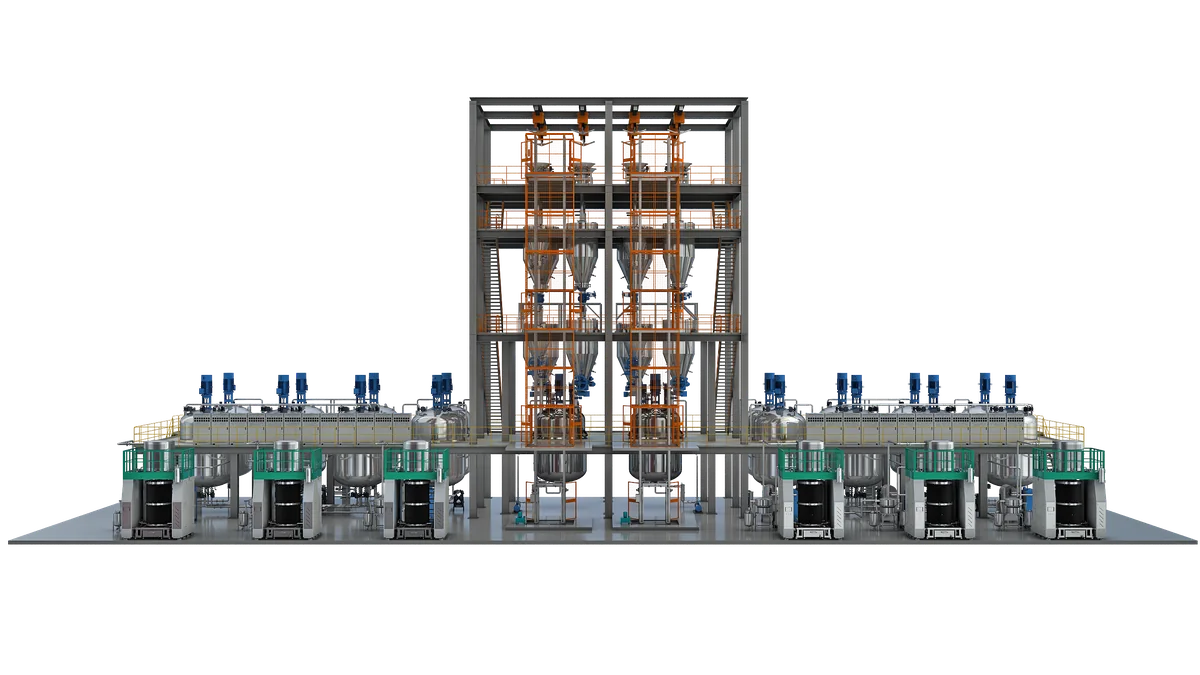 Production LineLithium Battery Vertical Sand Mill Production LineAutomated vertical sand-mill line integrating dosing, dispersion and grinding for high-quality, large-scale lithium battery production.
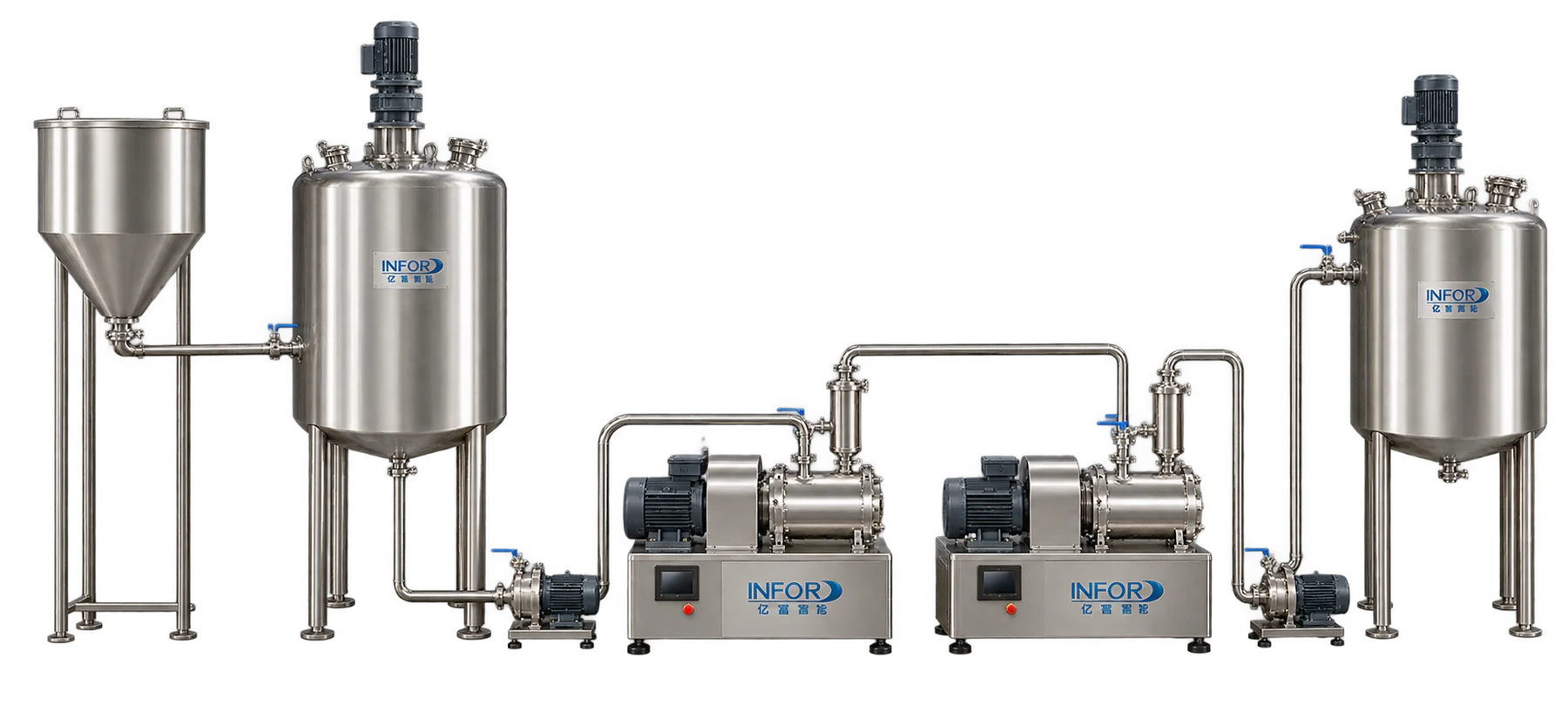
 Production LineLithium Battery Horizontal Sand Mill Production LineHigh-flow horizontal sand-mill line for continuous, large-scale lithium battery material production.
 Production LineSodium Battery Sand Mill Production LineWet ultra-fine preparation line for sodium battery cathode and anode slurries with nanoscale, narrow-distribution control.
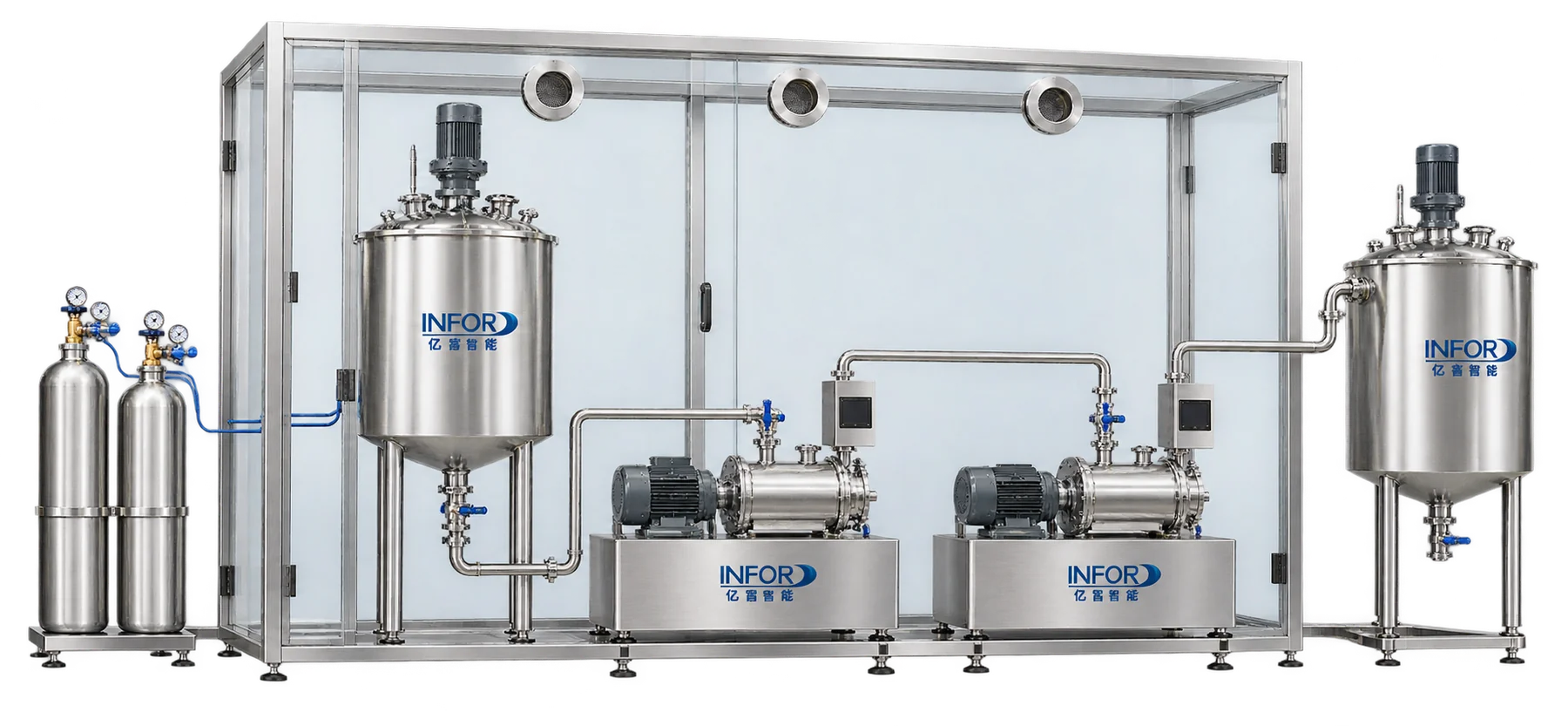 Production LineSolid-State Battery Sand Mill Production LineInert-atmosphere, water/oxygen-controlled sand-mill line for solid-state electrolyte and electrode materials.
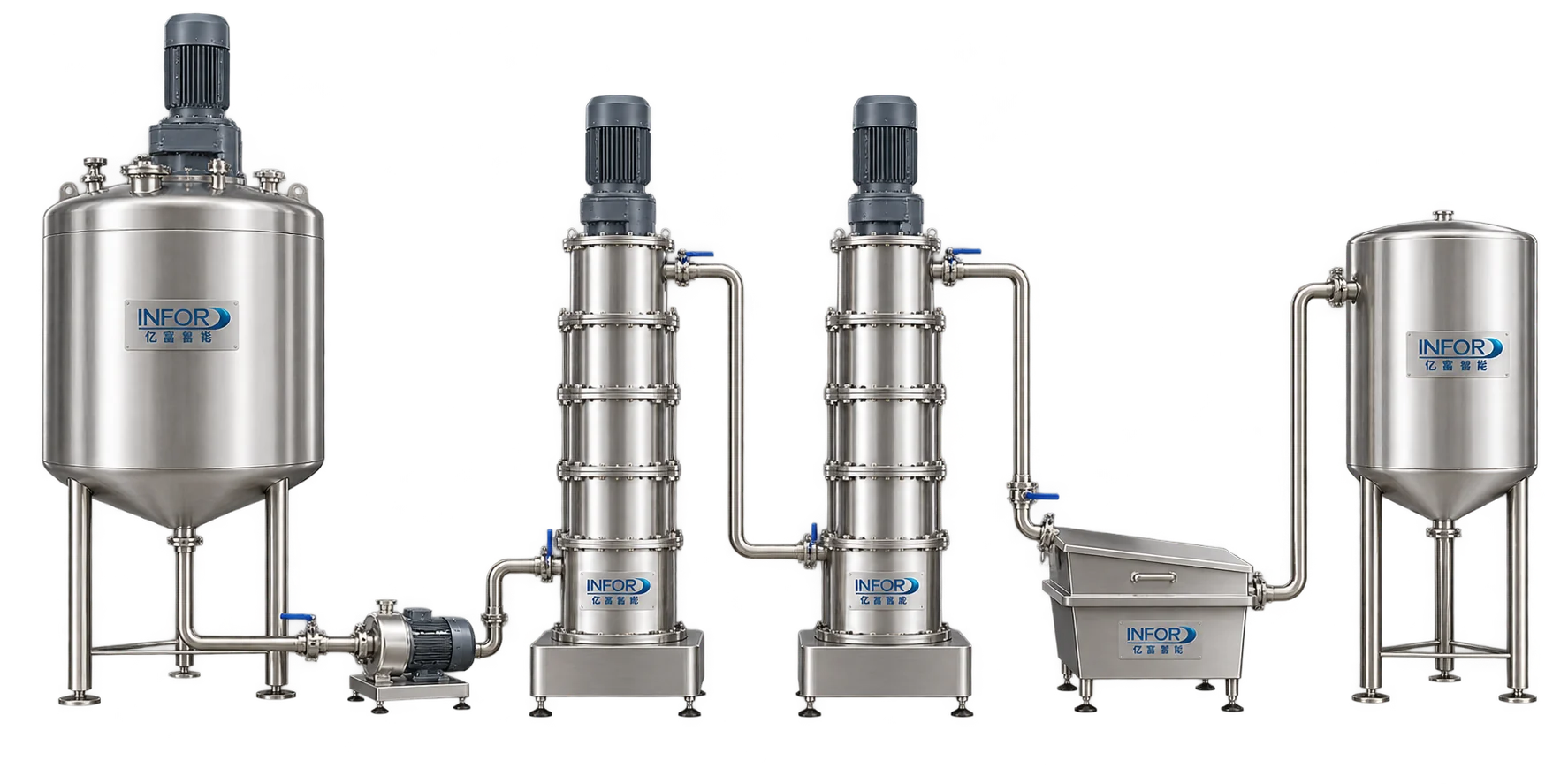 Production LineCeramic Material Sand Mill Production LineDry/wet closed-loop classification grinding line for sub-micron to nano ceramic powder preparation.
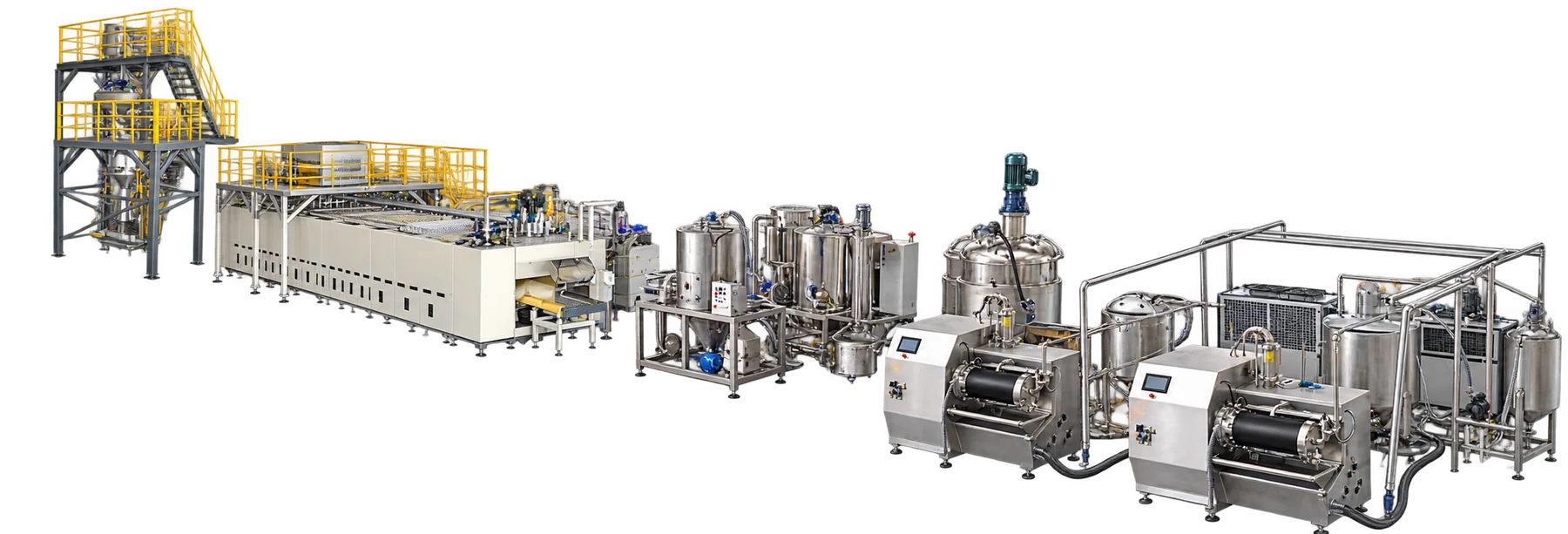
 Production LineCoating Material Automated Production LineFully automated closed-loop dispersion and grinding line for functional coating materials.
 Test LineLithium Iron Phosphate Test Line (Hubei)Complete LFP test line at the Hubei Xiangyang factory, grinding, spray drying, kiln and jet milling for lab and pilot testing.
Which bead mill for ceramic slurry?
Fineness and media from each product page; ceramic materials are those the product page lists as applications. A test grind on your own powder is the reliable way to decide.
| Series | Fineness | Grinding media | Ceramic materials listed |
|---|---|---|---|
| LPM vertical | 30–1000 nm | 0.05–2.0 mm | Alumina, zirconia, silica, ATO / ITO |
| Vertical dual-power | 50–2000 nm | 0.03–2.0 mm | Nano ceramic slurry, ceramic powder |
| NCT turbine | 100–1500 nm | 0.2–2.0 mm | Nano ceramics, barium titanate, alumina, zirconia, varistors |
| Horizontal dual-power | 100–1500 nm | — | Nano ceramic slurry, ceramic powder |
| Disc | D50 100 nm – 20 µm | 0.3–2.0 mm | Structural and electronic ceramic slurry, separator ceramic slurry |
| Lab horizontal | 100–1500 nm | 0.1–2.0 mm | Ceramic slurry (formulation trials) |
Which bead mill is best for ceramic slurry?
It depends mainly on the target particle size. For the finest ceramic slurries the screen-free vertical mills fit best: the LPM series is specified for 30–1000 nm with media down to 0.05 mm, and the vertical dual-power series for 50–2000 nm with media from 0.03 mm. For nano ceramics in the 100–1500 nm range, such as barium titanate, alumina and zirconia, the NCT turbine mill is the usual choice. Where the target is coarser, up to a D50 of 20 µm, or for structural and electronic ceramic slurries in larger volumes, the disc mill covers D50 100 nm to 20 µm. A test grind on your own powder confirms the choice.
How is contamination kept low when grinding ceramics?
Purity depends on what touches the slurry. The NCT turbine mill uses a ceramic grinding chamber for contamination-free grinding and higher material purity, and the dual-power mills offer chamber materials in silicon carbide, polyurethane, zirconia or high-purity alumina so the lining can be matched to the powder. On complete ceramic powder lines, wear-resistant materials are combined with multi-stage impurity removal. Choosing grinding media and a chamber lining compatible with the ceramic being ground is the first step.
Can a ceramic recipe be developed on a lab mill and scaled up?
Yes. The lab horizontal sand mill lists ceramic slurry among its applications and covers 100–1500 nm with 0.1–2.0 mm media. INFOR laboratory mills use the same grinding principles as the production series, so a recipe proven on a lab chamber can be transferred to an NCT or LPM production mill. INFOR also runs free material tests on customer samples before a mill is specified.
Does INFOR supply complete ceramic powder production lines?
Yes. The ceramic material sand mill production line is a fully enclosed, continuous system for sub-micron to nano ceramic powder. Its process runs from metering and pre-mixing through multi-stage classification grinding, intelligent control and impurity removal to drying and powder making, with dry or wet processes as required. It is used for structural ceramic powders such as alumina, zirconia, silicon nitride and silicon carbide, electronic functional ceramics including MLCC, piezoelectric ceramics and bioceramics, and ceramic body and glaze materials.
Start from your industry.
Start with your material.
Share the material, target particle size and required output. INFOR offers material trials, process planning and equipment recommendations.
Test Your Material