Lithium Iron Phosphate Test Line (Hubei)
Complete LFP test line at the Hubei Xiangyang factory, grinding, spray drying, kiln and jet milling for lab and pilot testing.
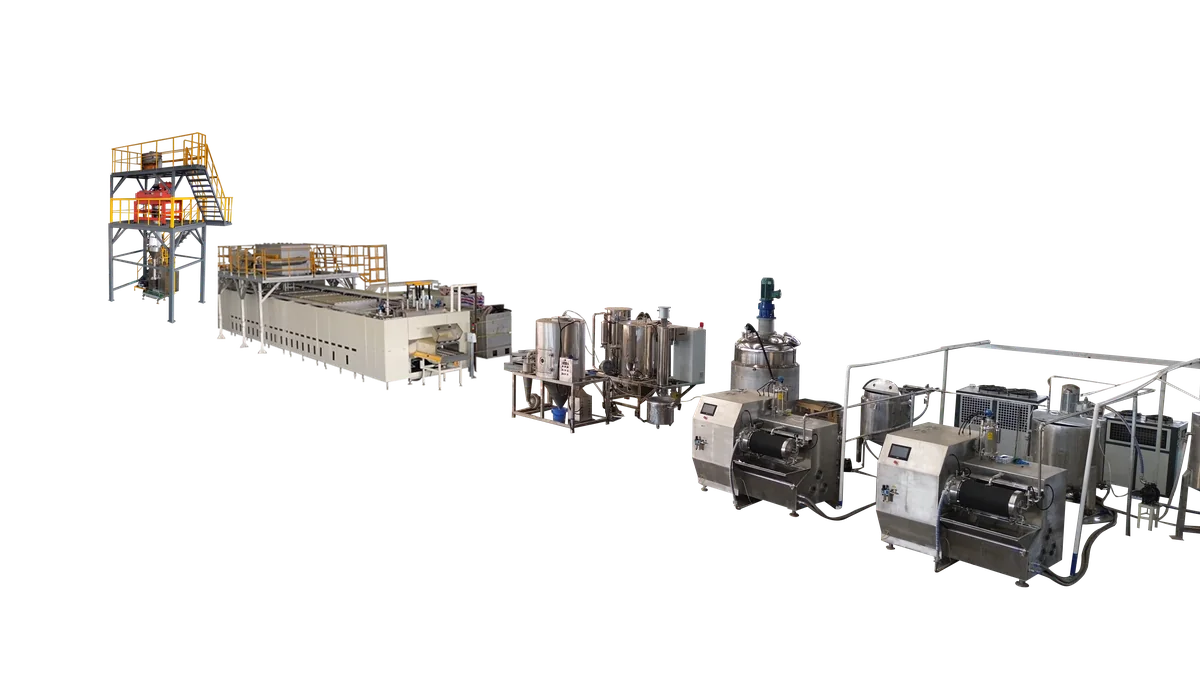
- Modules
- Sand grinding - Spray drying - Kiln - Jet milling
Located at the INFOR Hubei Xiangyang factory, this complete lithium iron phosphate test line includes the grinding system, spray drying, kiln and jet milling, the entire LFP test process. Suitable for lab and pilot testing, it uses turbine and pin-rod mills with state-of-the-art kiln and milling equipment, backed by full technical support from INFOR's expert consultants and technical team.
What is built in.
- Complete LFP test line covering the whole process
- Turbine and pin-rod grinding structures
- State-of-the-art kiln and jet milling equipment
- Full technical support from expert consultants and technical team
- Suitable for lab and pilot testing
Typical materials.
- Lithium iron phosphate material testing
- Lab and pilot-scale trials
Frequently asked questions
What particle size can the Lithium Iron Phosphate Test Line (Hubei) achieve?
The achievable particle size for the Lithium Iron Phosphate Test Line (Hubei) depends on the material system, the grinding media size and the residence time in the chamber. Harder minerals and high-viscosity slurries need smaller beads and more passes, while well-dispersed low-viscosity systems reach target fineness faster. Because the result is always material-specific, INFOR validates every application on laboratory or pilot equipment before quoting a production machine, so the process is proven with measured data rather than estimated. Tell us your material, target D50 and required throughput, and our engineers will confirm whether this series fits your process or recommend a different configuration.
Which materials can the Lithium Iron Phosphate Test Line (Hubei) process?
The Lithium Iron Phosphate Test Line (Hubei) is applied to lithium iron phosphate material testing and lab and pilot-scale trials. Across these industries the common requirement is wet grinding and dispersion down to the sub-micron or nanometre range while keeping the slurry temperature and viscosity under control. Suitability is decided less by the industry label than by the physical properties of the slurry: solids content, viscosity, hardness and whether the system is water-based or solvent-based all affect bead selection, flow rate and cooling demand. If your material is not on this list, that does not mean it is out of scope. Send us the material data sheet and target particle size, and our engineers will assess it against this series and run a free laboratory trial before any purchase decision.
Which model of the Lithium Iron Phosphate Test Line (Hubei) should I choose?
This machine is supplied as a single configuration rather than a model range, so selection is about confirming it matches your process rather than picking a size. The decisive factors are your material properties, the target particle size and the throughput you need per hour. INFOR validates the application on laboratory or pilot equipment first, which establishes the recipe, bead size, flow rate, number of passes and cooling demand, before a production machine is confirmed. That way the specification rests on measured data from your own material. Send us your material data sheet, target D50 and required output, and our engineers will confirm whether this machine fits or recommend an alternative from the wider range.
Can INFOR test our material before we buy the Lithium Iron Phosphate Test Line (Hubei)?
Yes, and the laboratory test is free. INFOR runs laboratory and pilot lines where your material is processed on the same grinding principle as the production machine, so the result transfers directly. The trial establishes the working recipe: bead size and material, flow rate, number of passes, achievable particle size distribution and cooling demand. The Hubei plant also has a complete lithium iron phosphate test line covering grinding, spray drying, kiln and jet milling, which suits small-batch and pilot trials for battery materials. You receive the measured particle size distribution and the operating parameters used to reach it, so the data can be checked against your own quality requirements. Testing before purchase means the equipment is specified from measured data rather than estimated, which is the difference between a machine that meets your specification and one that merely looks right on paper.
Get a quotation.
Tell us the material, target D50/D90 and hourly output. We reply within 24 hours with a model recommendation.
Test Your Material