Laboratory Bead Mills
Also known as: laboratory sand mills
Compact horizontal and vertical mills for nanoscale formulation development, small-batch testing and process validation.
INFOR laboratory bead mills come in two layouts: horizontal NCT lab mills with chambers from 0.3 L to 30 L (five models, 2.2–45 kW) for 100–1500 nm, and screen-free vertical LPM lab mills from 1 L to 30 L (four models) for 30–1000 nm. They use the same grinding principles as the production series, so a recipe proven on a lab chamber scales directly to an NCT or LPM production mill.
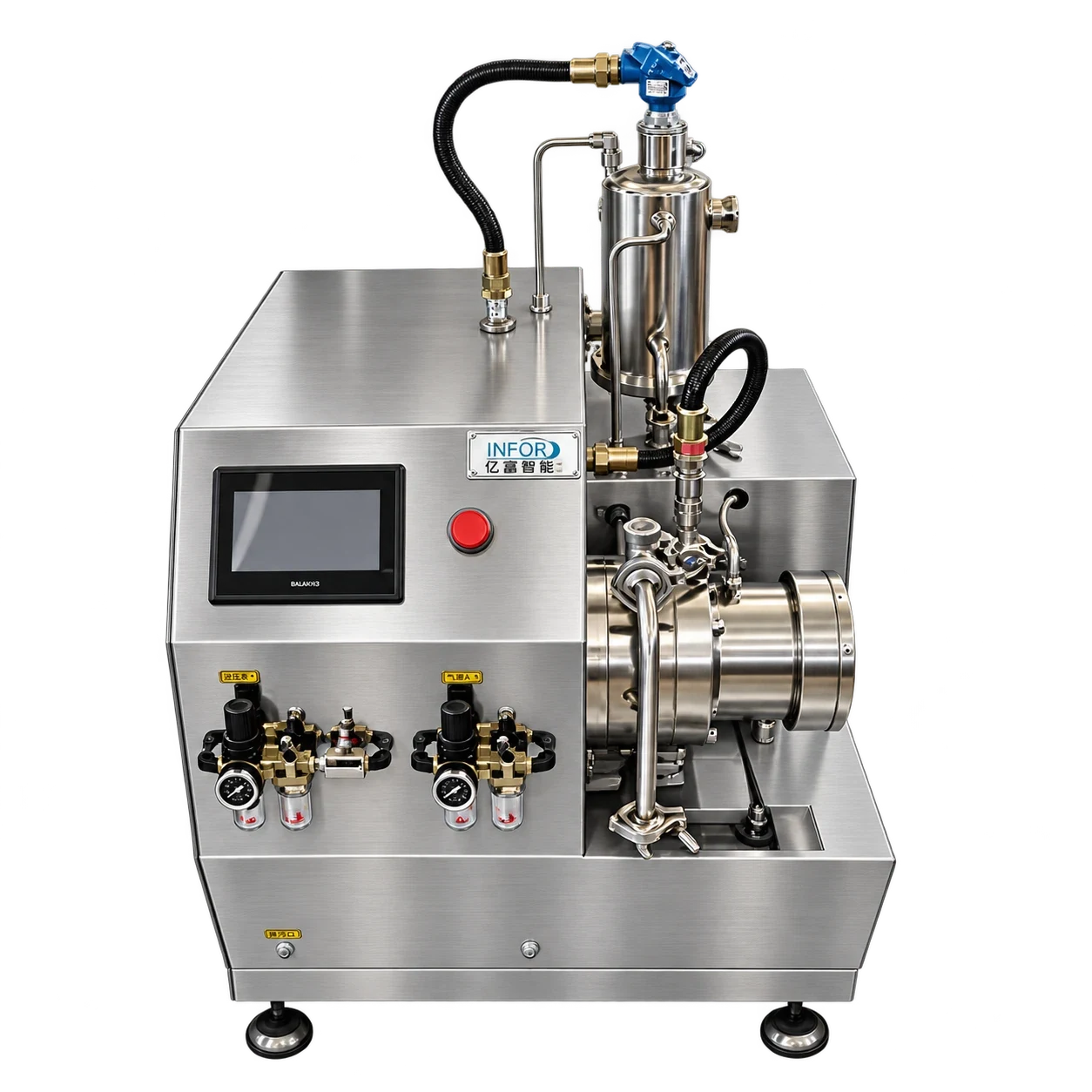
Experimental Horizontal Bead Mill
Compact horizontal sand mill for extremely small batches and rapid nano wet-grinding trials in the laboratory.
View series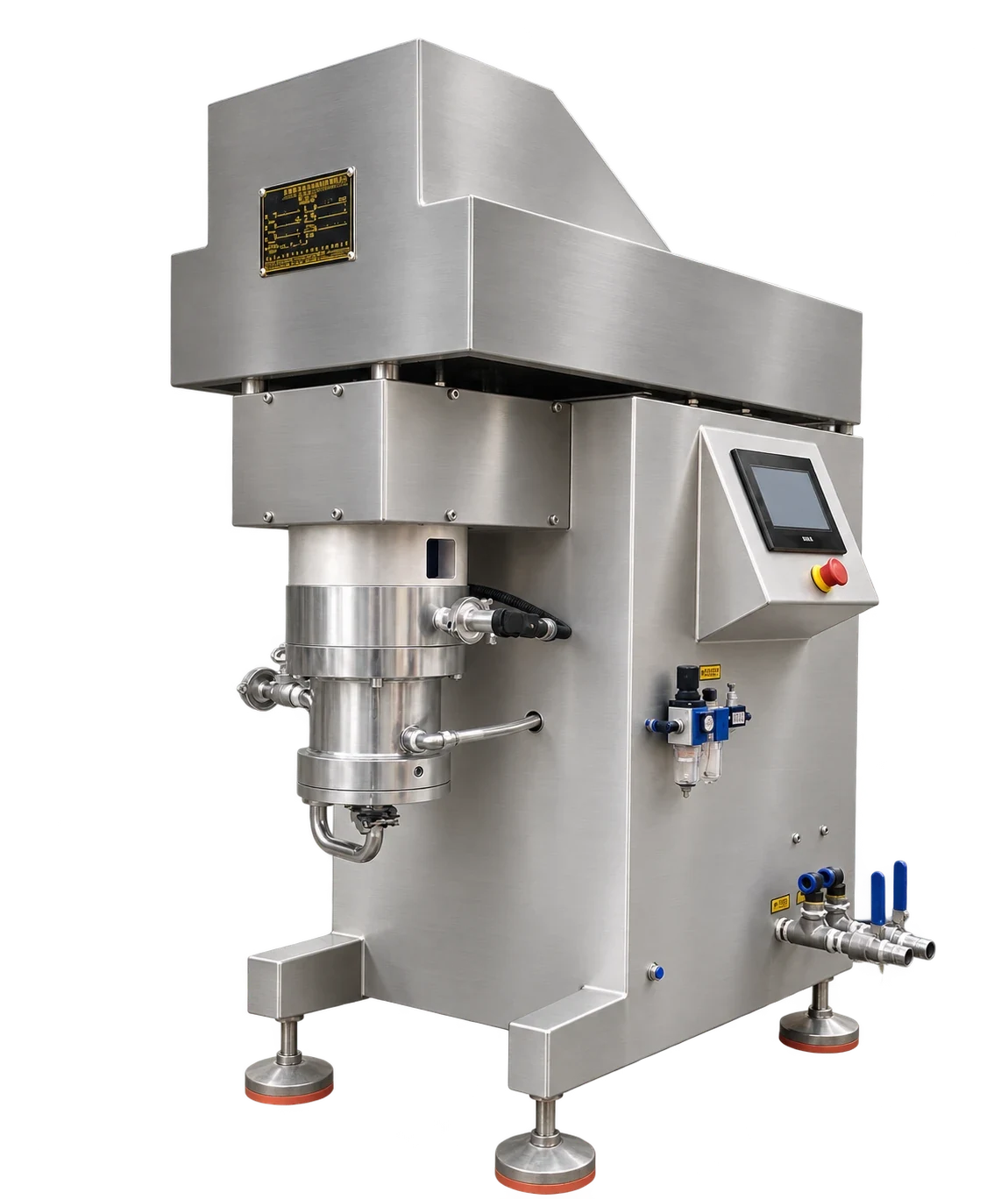
Experimental Vertical Bead Mill
Vertical screen-free lab mill for ultra-fine grinding verification down to 0.03 mm zirconia beads.
View seriesLaboratory bead mill questions.
What is a laboratory bead mill used for?
A laboratory bead mill grinds small batches for formulation screening and scale-up trials before a production mill is chosen. INFOR lab mills use the same grinding principles as the production series, so a recipe proven on a horizontal NCT lab mill (0.3–30 L chambers) or a screen-free vertical LPM lab mill (1–30 L chambers) can be transferred to an NCT or LPM production mill.
What is the smallest batch a lab bead mill can grind?
The smallest INFOR lab mill, the NCT-0.3, has a 0.3 L grinding chamber, a 2.2 kW motor and a minimum batch of 0.5 L, which suits very small samples and fast formulation screening.
Horizontal or vertical laboratory bead mill?
Choose the lab mill that matches the production series you expect to use. The horizontal NCT lab mill covers 100–1500 nm with 0.1–2.0 mm media, a turbine or pin disperser and an all-ceramic grinding zone. The vertical LPM lab mill is screen-free, uses centrifugal classification for a narrow distribution and covers 30–1000 nm.
Compare another grinding process.
Start with your material.
Share the material, target particle size and required output. INFOR offers material trials, process planning and equipment recommendations.
Test Your Material