High-Pressure Homogenizers
Plunger homogenizers that drive material through an adjustable valve at high pressure for nano dispersion, emulsification and cell disruption, from laboratory to industrial scale.
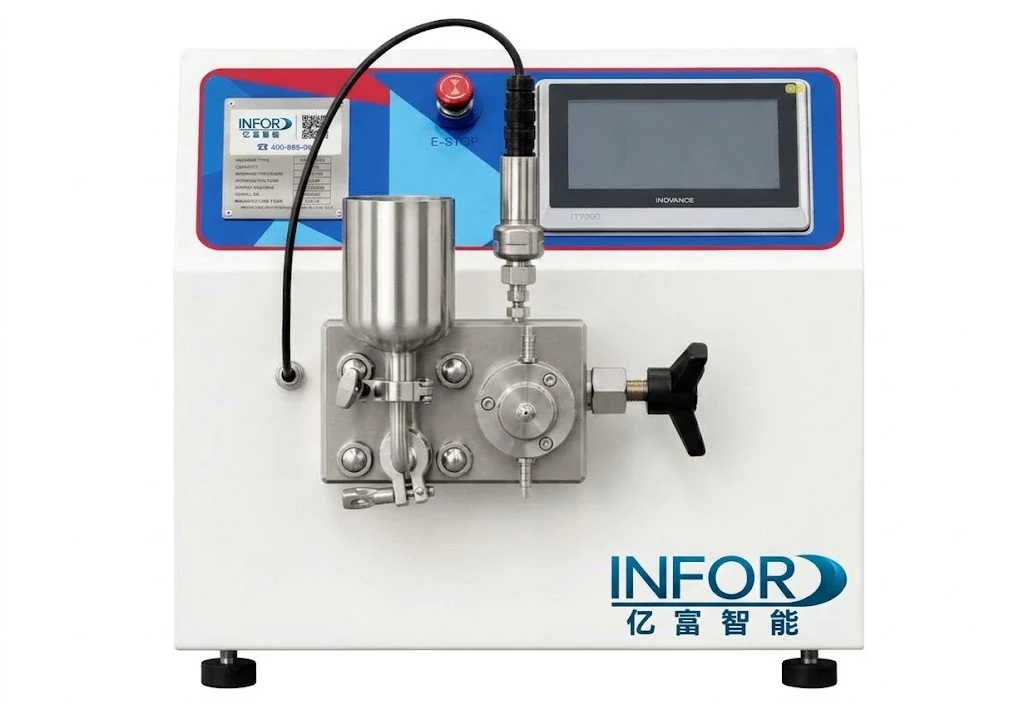
Laboratory High-Pressure Homogenizer Series
Bench-top high-pressure homogenizers with up to 2000 bar design pressure, for nano dispersion, emulsification and cell disruption from 20 ml samples.
View series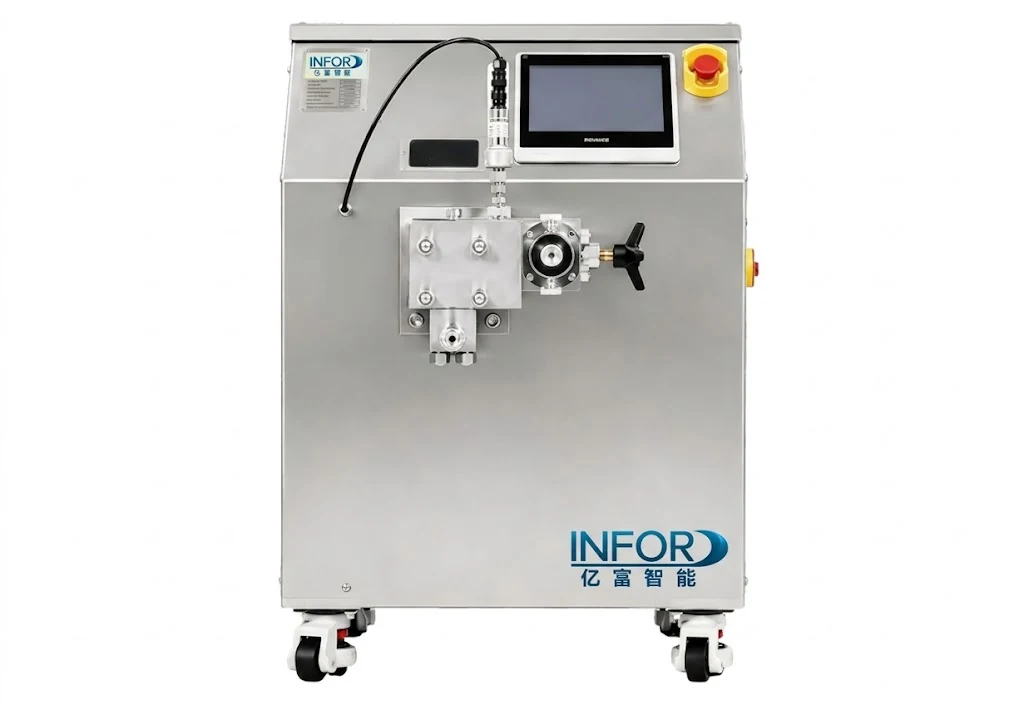
Pilot High-Pressure Homogenizer Series
Pilot-scale high-pressure homogenizers from 20 to 300 L/h, bridging laboratory trials and volume production.
View series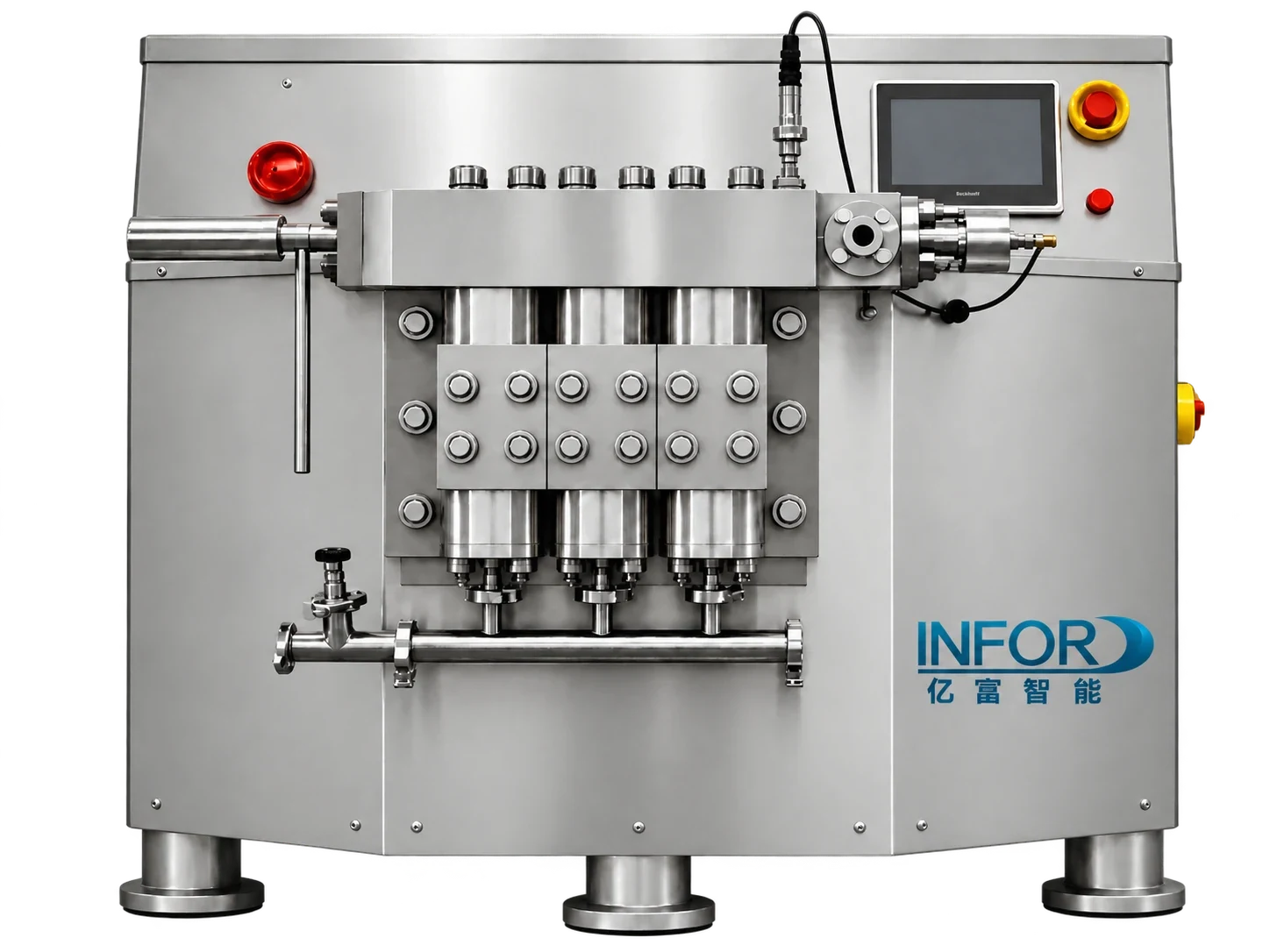
Industrial High-Pressure Homogenizer Series
Production high-pressure homogenizers from 250 to 4000 L/h at 1000-1500 bar, built for continuous industrial duty.
View series19 models side by side.
Figures from the current product catalogue. Final configuration depends on your material and process.
High-pressure homogenizer questions.
What is a high-pressure homogenizer used for?
A high-pressure homogenizer forces the product through a narrow gap at high pressure, without grinding media, for nano dispersion, emulsification and cell disruption. Typical uses include single-wall carbon nanotubes, graphene, biopharmaceuticals, food, cosmetics, emulsions and liposomes.
Laboratory, pilot or industrial homogenizer?
Laboratory units work from 20 ml samples at up to 1500 bar working pressure (2000 bar design). Pilot units handle 20–300 L/h to bridge trials and production. Industrial units run continuously, 24/7, at 250–4000 L/h and 1000–1500 bar.
What feed does a high-pressure homogenizer need?
The feed particle size must be below 500 µm. Pilot and industrial units handle product viscosities below 2000 cP, and laboratory units accept feed temperatures below 90 °C.
Compare another grinding process.
Start with your material.
Share the material, target particle size and required output. INFOR offers material trials, process planning and equipment recommendations.
Test Your Material