In September, autumn was settling over Harbin, but the new energy industry was only heating up.
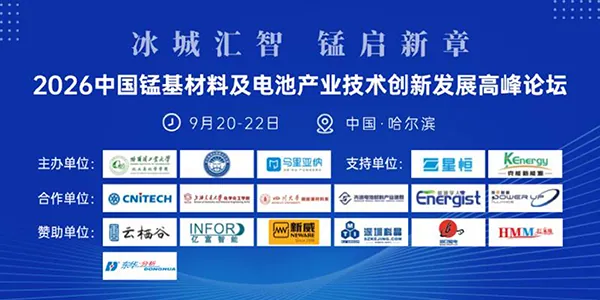
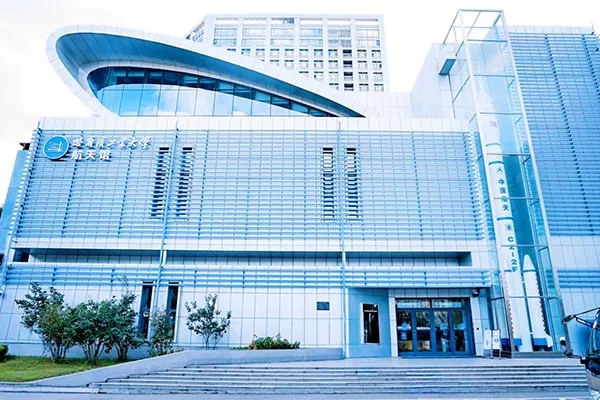
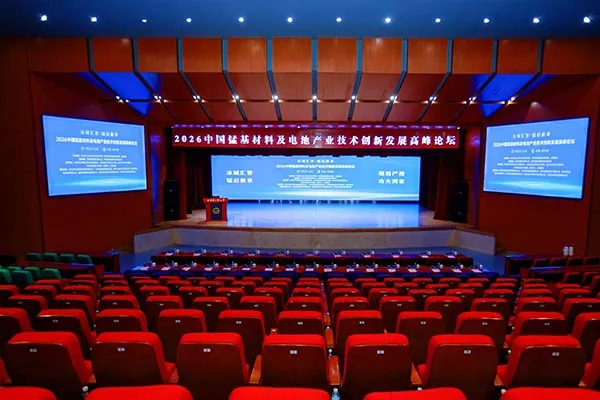
From 20 to 22 September 2026, the 2026 China Manganese-Based Materials and Battery Industry Technology Innovation and Development Summit, co-hosted by the School of Chemistry and Chemical Engineering of Harbin Institute of Technology, the State Key Laboratory of Space Power Sources and Mariana, was held at the Harbin Institute of Technology Activity Center.
Under the theme "Wisdom in the Ice City, a New Chapter for Manganese", the summit brought together experts from universities and research institutes and senior executives from across the manganese-based materials and battery supply chain to discuss the future of manganese-based materials, from fundamental research and process iteration to large-scale production, across lithium-rich manganese, lithium manganese oxide (LMO), spinel lithium nickel manganese oxide (LNMO) and lithium manganese iron phosphate (LMFP).
As a special sponsor, Guangdong INFOR Intelligent Equipment Co., Ltd. was invited to attend and brought its bead mill processes and innovative solutions for manganese-based materials to Harbin, holding in-depth discussions with experts and customers and once again demonstrating INFOR's strength in grinding and dispersion equipment for new energy materials.
One forum, a view of the next decade of manganese
Manganese is once again becoming a key variable in battery material systems.
From lithium-rich manganese, LMO and LNMO to LMFP, which is now attracting growing industry interest, manganese-based routes offer high safety, low cost, independent and controllable resources and suitability for diverse applications, making them a shared focus for power batteries, light mobility and energy storage systems.
At the summit, more than 30 experts discussed:
• Structural stability and voltage decay of manganese-based cathode materials;
• Order-disorder control and lattice oxygen stabilization in lithium-rich manganese materials;
• Matching high-voltage electrolytes with manganese-based systems;
• LMFP modification, mass production processes and supply chain collaboration;
• Manganese-based sodium-ion and solid-state/semi-solid-state frontiers
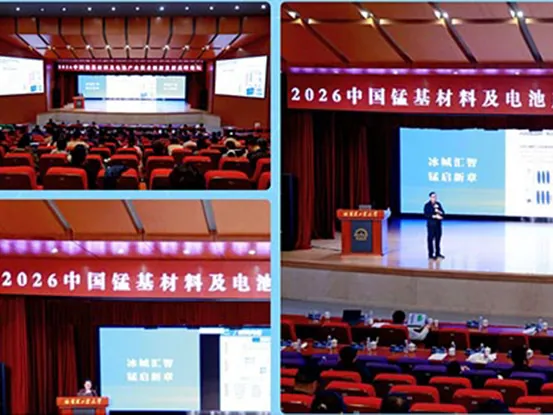
In dense academic and industrial dialogue, more than 30 experts from universities and research institutes including Peking University, Fudan, Xiamen University, Zhejiang University, Harbin Institute of Technology and the CAS Ningbo Institute of Materials Technology and Engineering, together with industry representatives from Xingheng, Keneng, REPT BATTERO, Zhongke Zhiliang and Natrium Energy, shared their work, bringing industry, academia, research and application onto the same stage.
On the floor: a busy INFOR booth
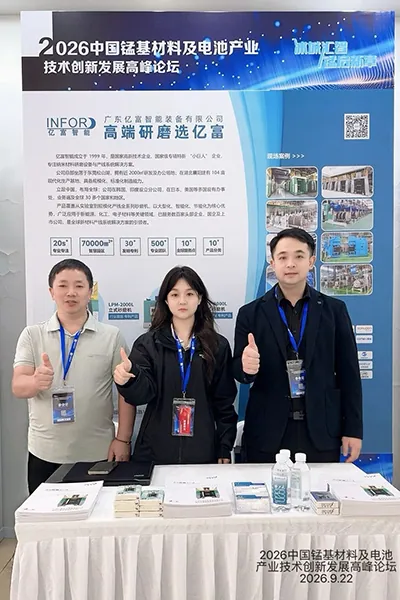
LMFP balances safety, cost and energy density; lithium-rich manganese points to a higher energy density ceiling; and LMO and LNMO are scaling up quickly in light mobility and high-voltage applications. All these routes depend on ultrafine grinding and dispersion equipment with high consistency, narrow particle size distribution, low contamination and continuous operation.
Throughout the summit, INFOR's booth was constantly busy:
• Material companies focused on particle size control in grinding precursors and cathode materials;
• Cell makers asked about line continuity, yield and energy consumption;
• Research institutes focused on equipment for scaling up from laboratory to pilot;
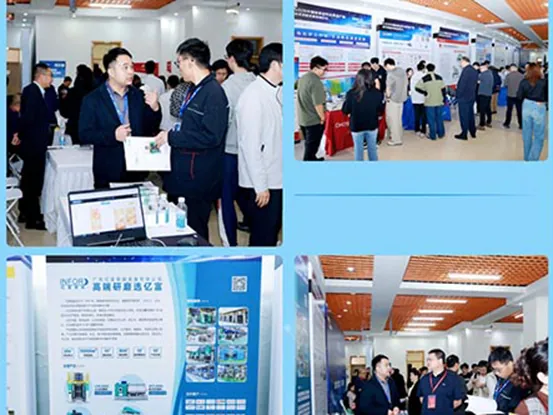
• New and existing customers held in-depth discussions covering everything from single machines and process sections to complete and intelligent production lines.
INFOR's engineers and market team answered questions on site and held several rounds of discussion with material companies, battery makers and research institutes on particle size control, dispersion uniformity, equipment wear and contamination control in mass production of manganese-based materials, from material properties, media selection and grinding chamber design to line takt time, temperature control and digital O&M. Acting as a process partner rather than just an equipment supplier, INFOR received expressions of interest in line validation and cooperation from many customers at the booth.
Discussions on site: in the manganese era, equipment is the invisible foundation of industrialization
For equipment companies, one signal from the summit was very clear:
For manganese-based materials to scale up, front-end crushing, dispersion and grinding are no longer supporting steps but core process nodes that determine particle size distribution, specific surface area, consistency and manufacturing cost. Unlike a typical exhibition, INFOR's conversations at this summit were very practical:
• A lithium-rich manganese team asked: how can high-energy materials avoid structural damage during grinding?
• An LMFP company asked: how should the bead mill process be adjusted when viscosity changes after coating modification?
• An LMO customer asked: in the light mobility segment, how can equipment depreciation and energy consumption be cut further?
• A research institute asked: how do parameters transfer when scaling from 1 L laboratory equipment to 400 L and 1,000 L?
The INFOR team offered ideas, case studies and benchmark line data on the spot, guided by these principles:
• Not chasing concepts, but delivering production lines;
• Not only fineness, but batch consistency;
• Not only equipment, but material manufacturing systems;
• Not only supporting the lab, but accompanying customers all the way to 10,000-tonne production.
INFOR turns grinding and dispersion, seemingly traditional work, into a core capability for industrializing new energy materials. What many customers said as they left the booth was: "You don't just understand machines, you understand material production lines."

Harbin wraps up, the journey continues
Three days in Harbin showed not only the evolution of manganese-based technology; the summit was also an important stop on INFOR's 2026 new energy materials equipment roadmap. With manganese-based materials riding the industry wave, INFOR's job is to make sure good materials start with good grinding.
INFOR will keep increasing R&D investment in new energy materials equipment, iterating toward larger, smarter, more energy-efficient, ceramic and system-level solutions, and providing faster, more stable and more economical equipment and production lines for customers working with lithium-rich manganese, LMFP, LMO and LNMO. The summit has ended, but the new manganese cycle has only just begun.