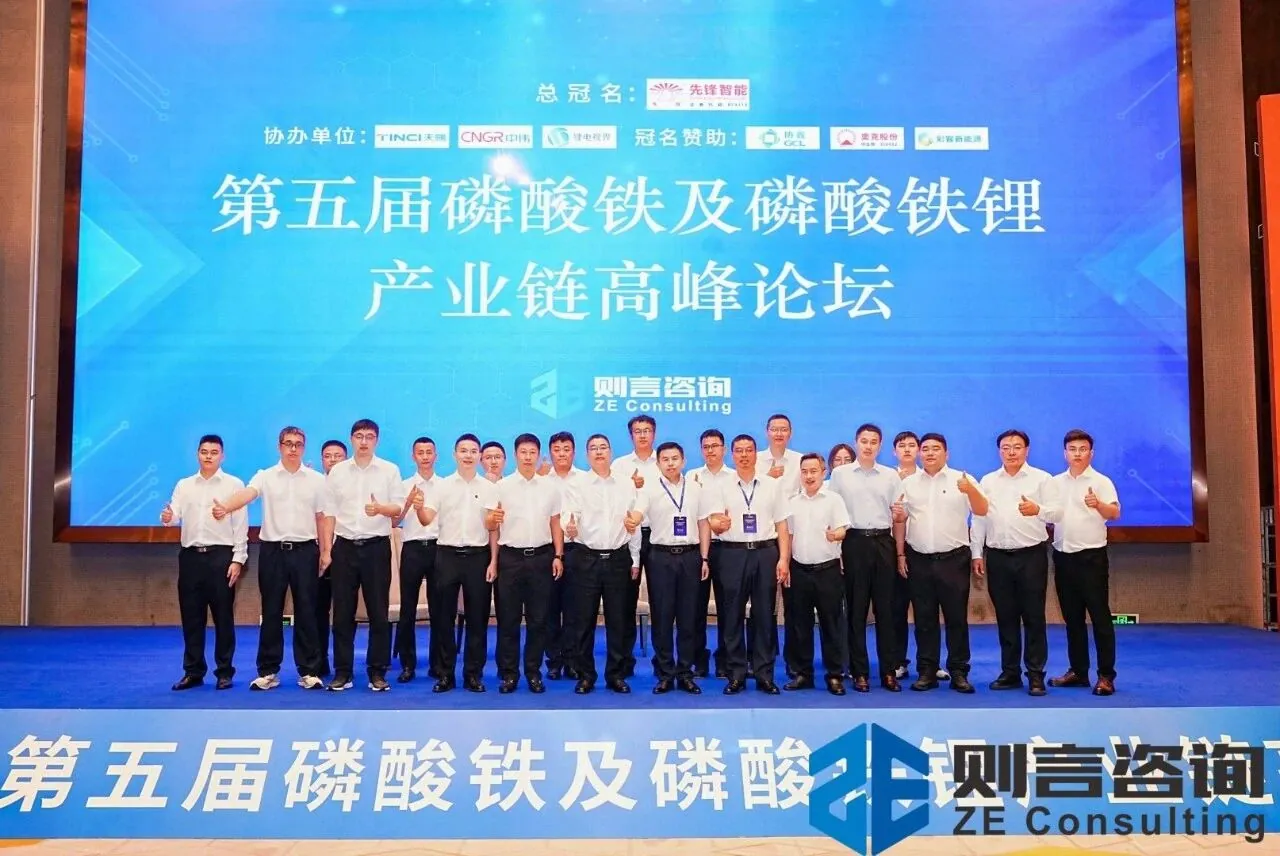
From 12 to 14 October, the 5th Iron Phosphate and LFP Industry Chain Summit was held at Meixi Lake in Changsha. Over three days, the industry brought the discussion back to the hardest questions: after the capacity shake-out, how can LFP producers raise compaction density, cut power consumption per tonne and lock in batch consistency?
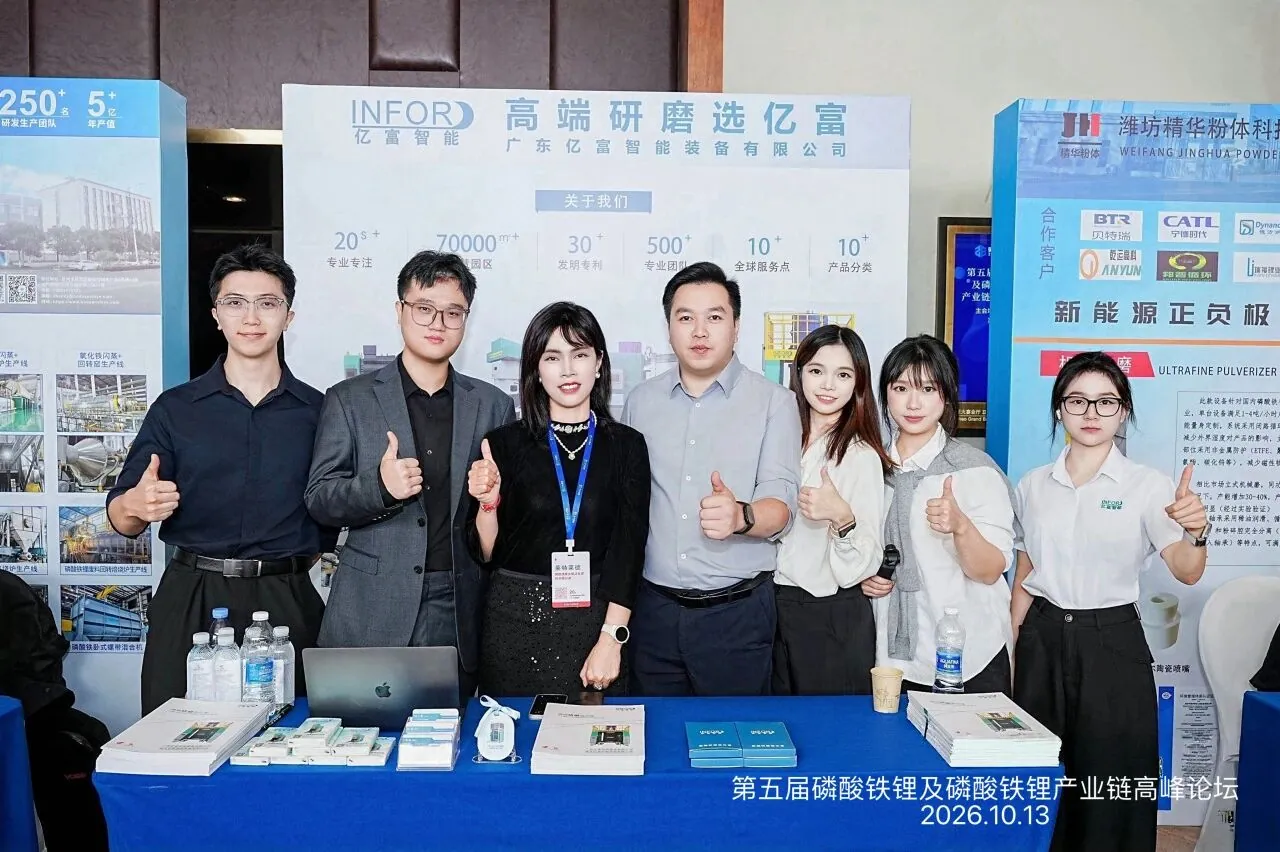
As a special equipment solutions partner, INFOR was present at booth A5 throughout the summit, holding three days of intensive discussions with material producers, cell manufacturers and research institutes on high compaction, low energy consumption and high consistency.
Booth A5: more telling than foot traffic were the process questions customers brought
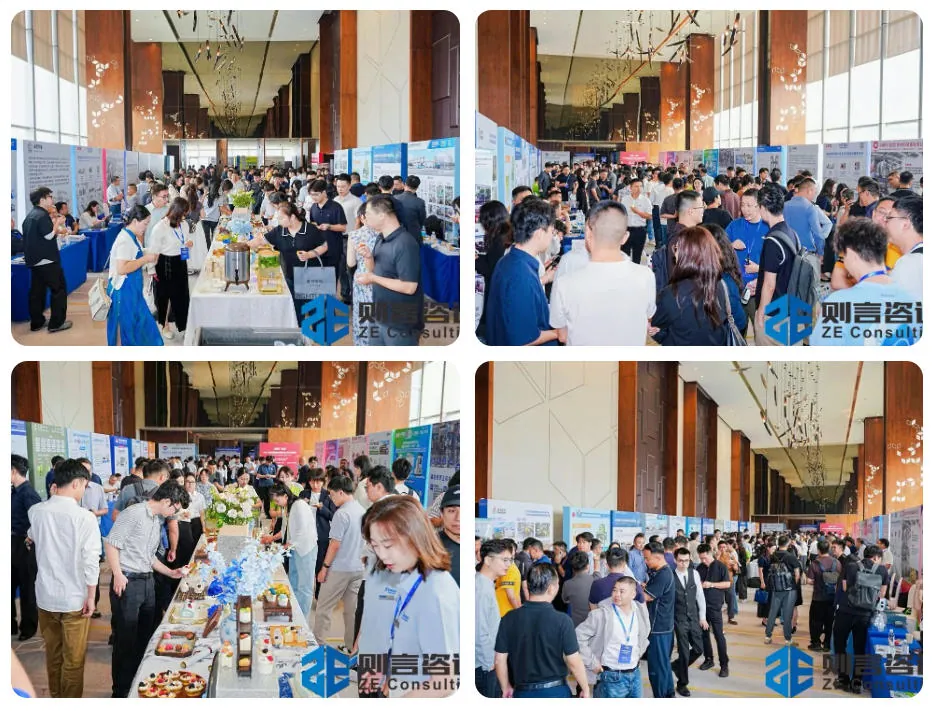
Throughout the three days, the INFOR booth stayed busy: long-standing customers came to review operating data, while new contacts brought samples and production line sketches to ask about matching solutions. We noted several questions that came up again and again:
① "Why does compaction density differ between production lines using the same formula?"
The difference isn't just bead mill parameters. It comes from how the separation structure, media size distribution, temperature control and discharge system work together. Every bit narrower in particle size distribution gives the downstream particle grading more tolerance.
② "High-compaction materials are sensitive to over-grinding. How do we balance fineness with crystal integrity?"
INFOR's LPM series uses a screenless design with a special centrifugal separation structure and can operate with micro-beads finer than 0.03 mm. It achieves finer grinding while reducing agglomeration and secondary breakage, helping customers reach target fineness without damaging the crystal structure.
③ "Power consumption on our older lines won't come down. How can we reduce clogging and downtime?"
We worked through the same problem with several customers on site: unit energy consumption more than 20% lower than conventional equipment. Clog-free operation isn't a slogan; it comes from upgrading three things together: centrifugal separation, a ceramic chamber and online maintenance.
Rather than handing out business cards, we prefer drawing process flow diagrams on a whiteboard:
As LFP enters its fifth generation of competition, the bead mill is no longer auxiliary equipment but the lifeline of precursor yield.
In LFP, INFOR delivers a replicable equipment solution
As LFP moves from "able to produce" to "stable mass production at low operating cost," INFOR showcased four capability lines at the summit:
🔹 LPM Series Vertical Nano Ceramic Bead Mills
Covering the full range from 1L to 1000L/2000L, scaling on the same principle from laboratory trials to production lines of tens of thousands of tonnes, relying on parameter transfer rather than re-tuning.
🔹 Integrated precursor dispersion, grinding, classification and conveying
Addresses frequent pain points such as viscosity changes in iron phosphate slurry, metallic contamination control and batch-to-batch D50 drift.
🔹 Clog-free operation + narrow particle size distribution
A screenless design with a special centrifugal separation structure suits high-solids, high-viscosity systems and reduces the impact of screen-cleaning downtime on continuous production.
🔹 AI Intelligent Grinding System
Closes the loop on current, temperature, flow rate and media top-up, so production managers can check on their phones whether a machine is running at its optimal operating point today.
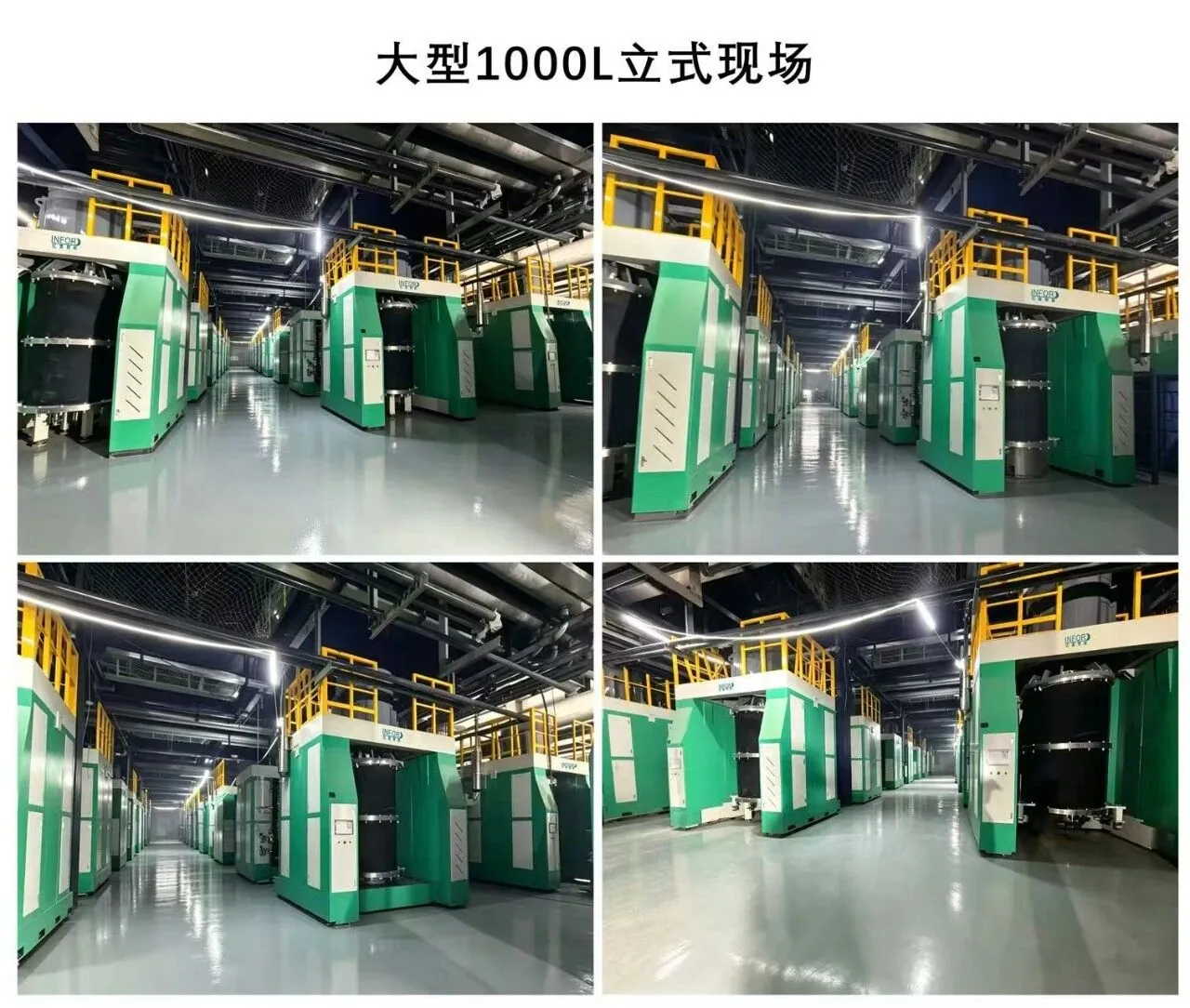
The on-site logic in one sentence:
For the same LFP tonnage, how to configure the line, cut power consumption and reduce clogging and downtime: INFOR delivers a system solution, not a single machine.
The close of the summit marks the start of production line validation
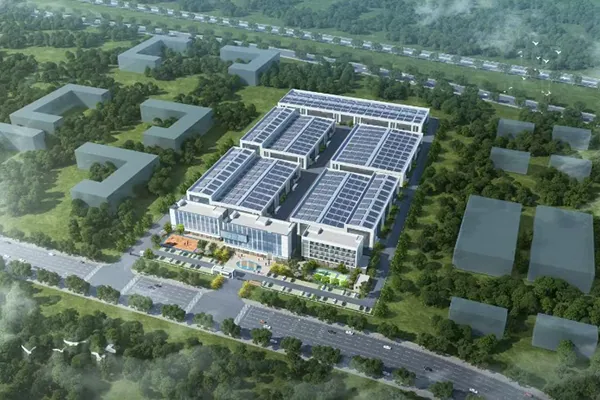
The Changsha summit has ended, but testing of the samples customers left is still under way, and process alignment meetings for several projects of tens of thousands of tonnes are already being scheduled.
One clear signal we observed:
The LFP industry is redefining equipment suppliers as process partners. Front-end crushing, dispersion and grinding are no longer supporting operations but core process steps that determine particle size distribution, specific surface area, consistency and manufacturing cost.
INFOR's goal is not to chase concepts, but to support new energy materials through the toughest stretch: from pilot data to yield at a scale of tens of thousands of tonnes.
See you next on the production floor
📍 Changzhou | 14-16 October: 8th Carbon Materials Summit & Silicon-Carbon/Porous Carbon Industrialization Forum (Booth A20)
📍 Chengdu | 15-16 October: 2026 SMM Lithium Battery Raw Materials Conference (Booth A20)
📍 Shaoxing | 23-25 October: 20th China Renewable Energy Conference & New Energy Technology and Products Exhibition
If we didn't get to talk everything through in Changsha, bring your process challenges and capacity plans to our booths in Changzhou, Chengdu and Shaoxing. We look forward to seeing you!